Welcome to the Folk Atlas. This page contains elements that are not accessible for mobile use. To ensure you get the best experience, we therefore recommend you to use a desktop.
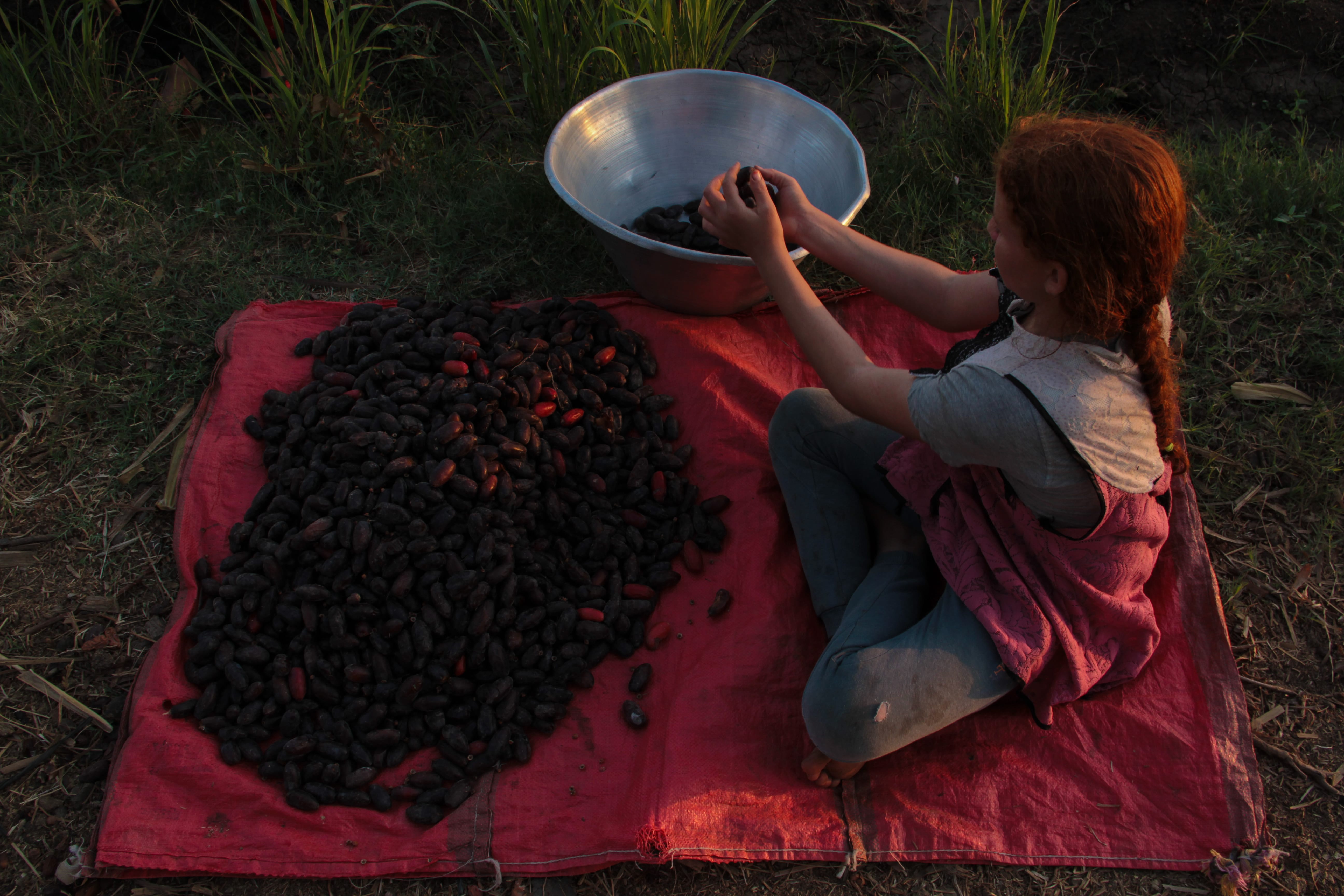
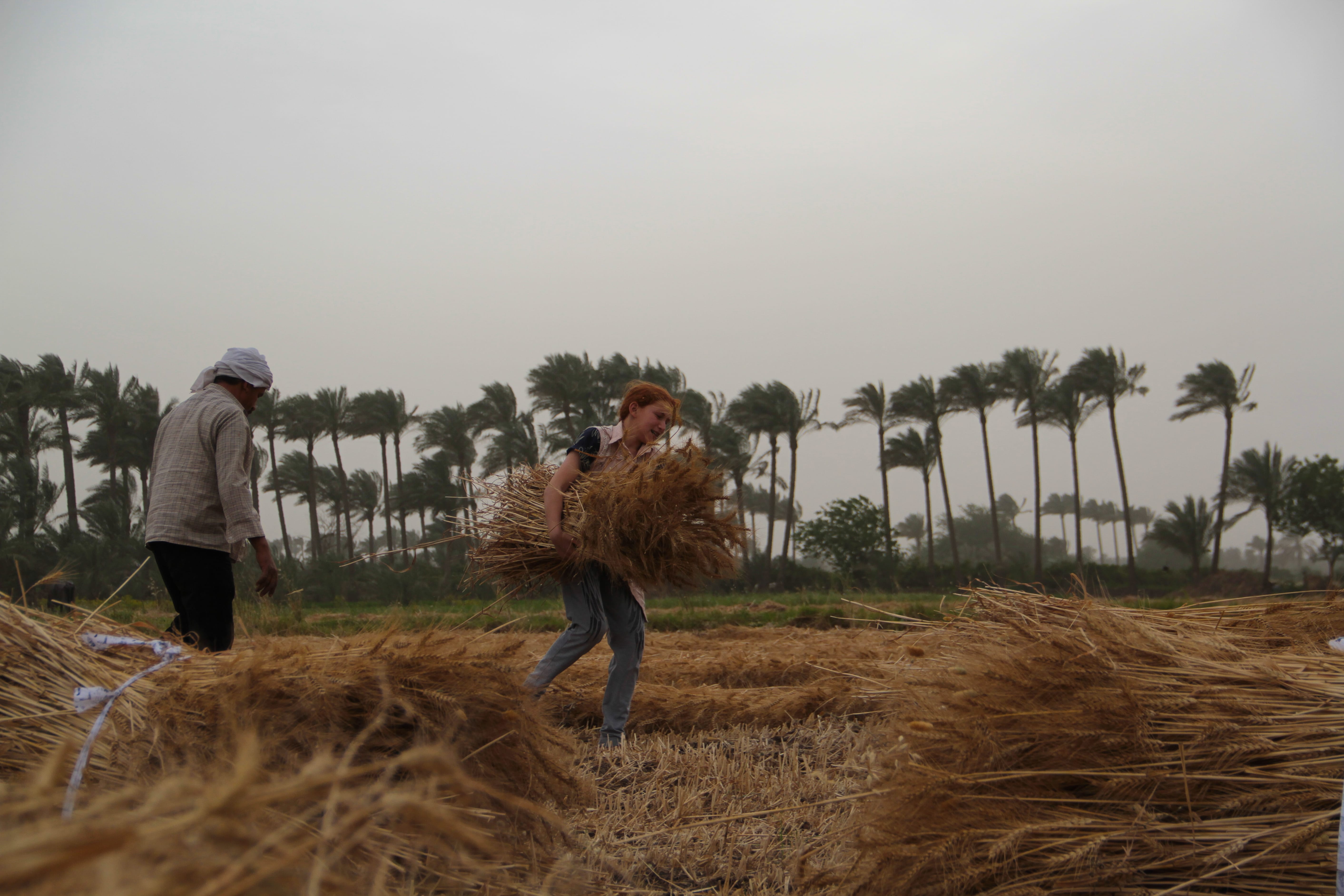
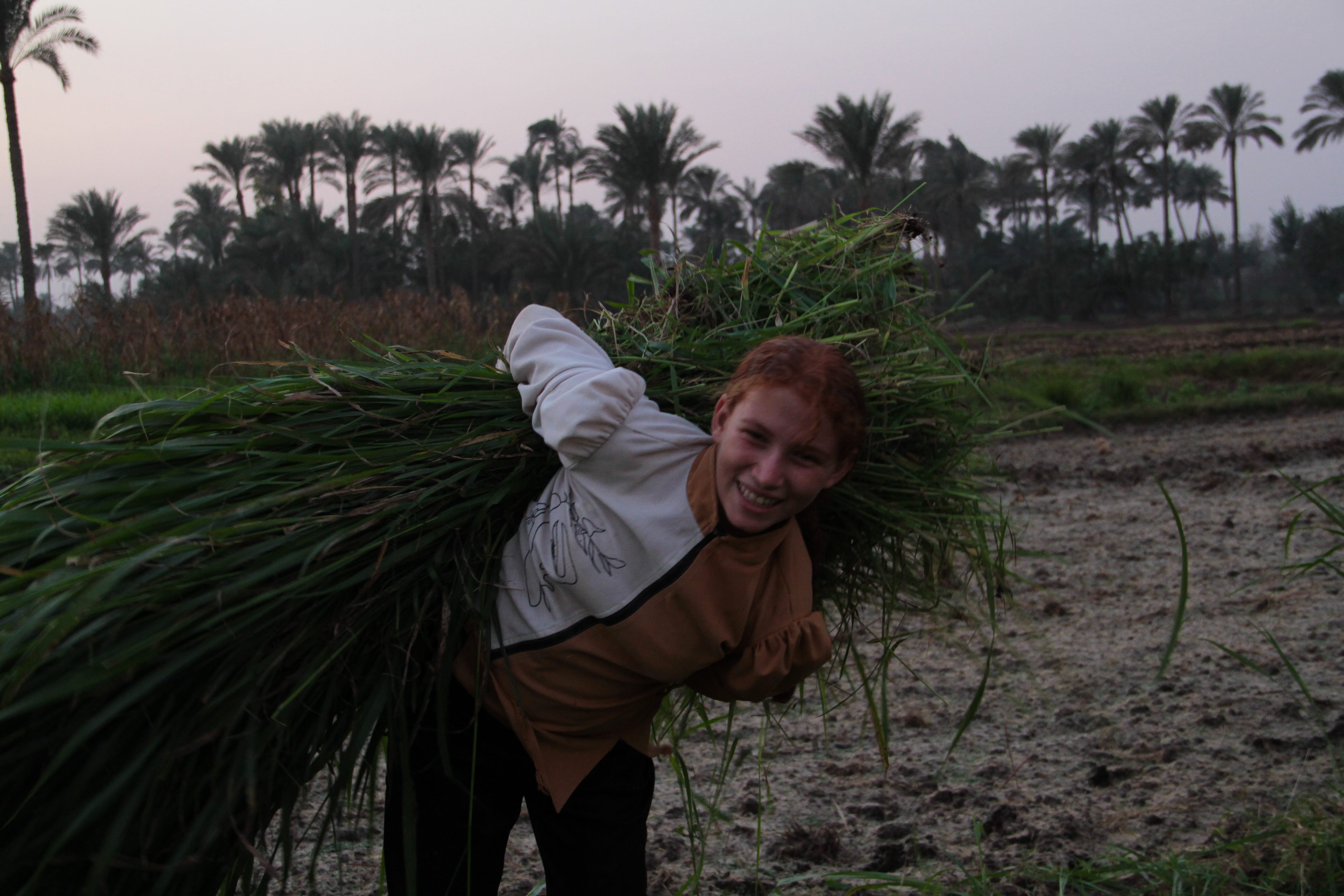
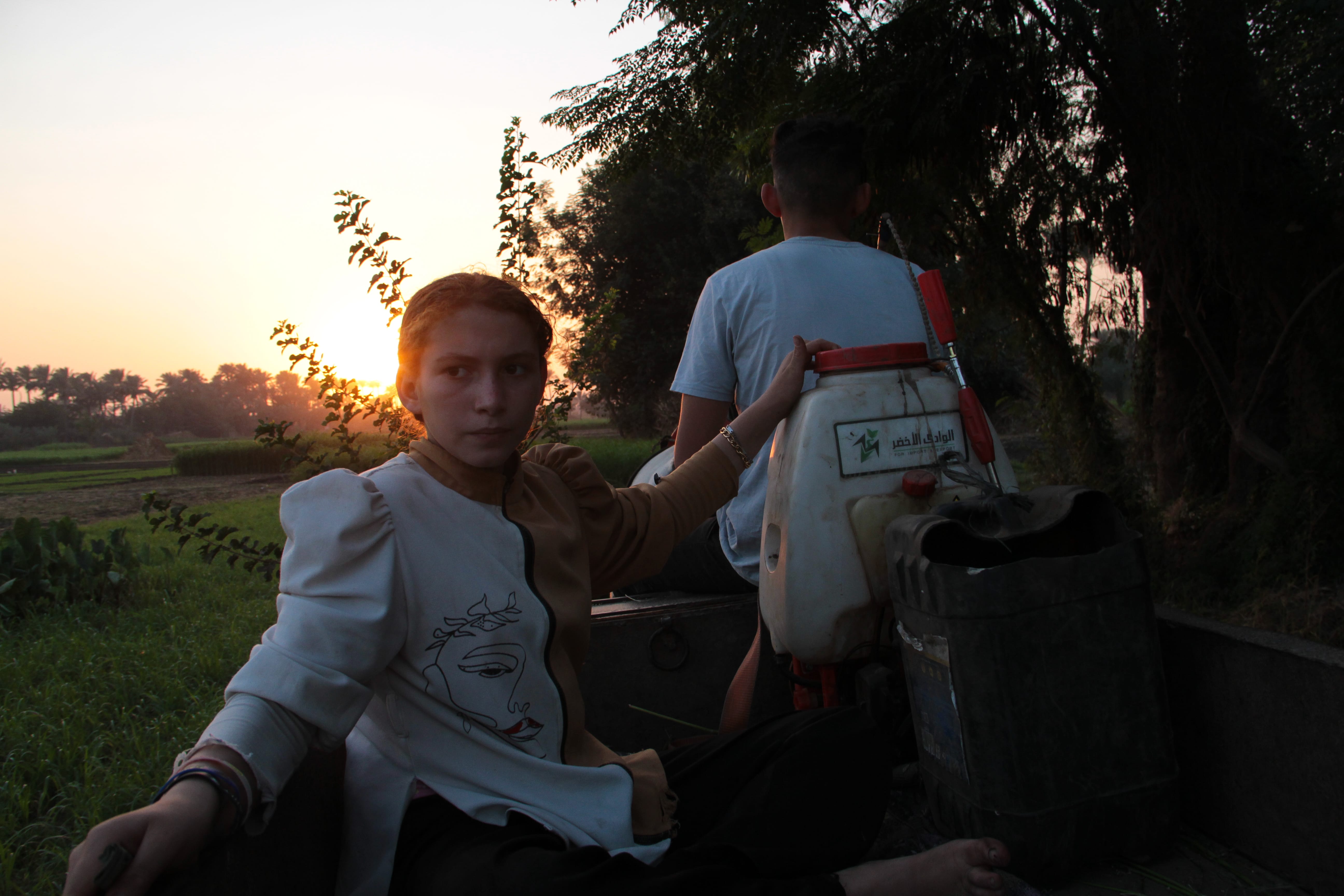
With each new ray of sunlight, Ruqayya sets out to help her father in their farmland and returns home as the sun sets.
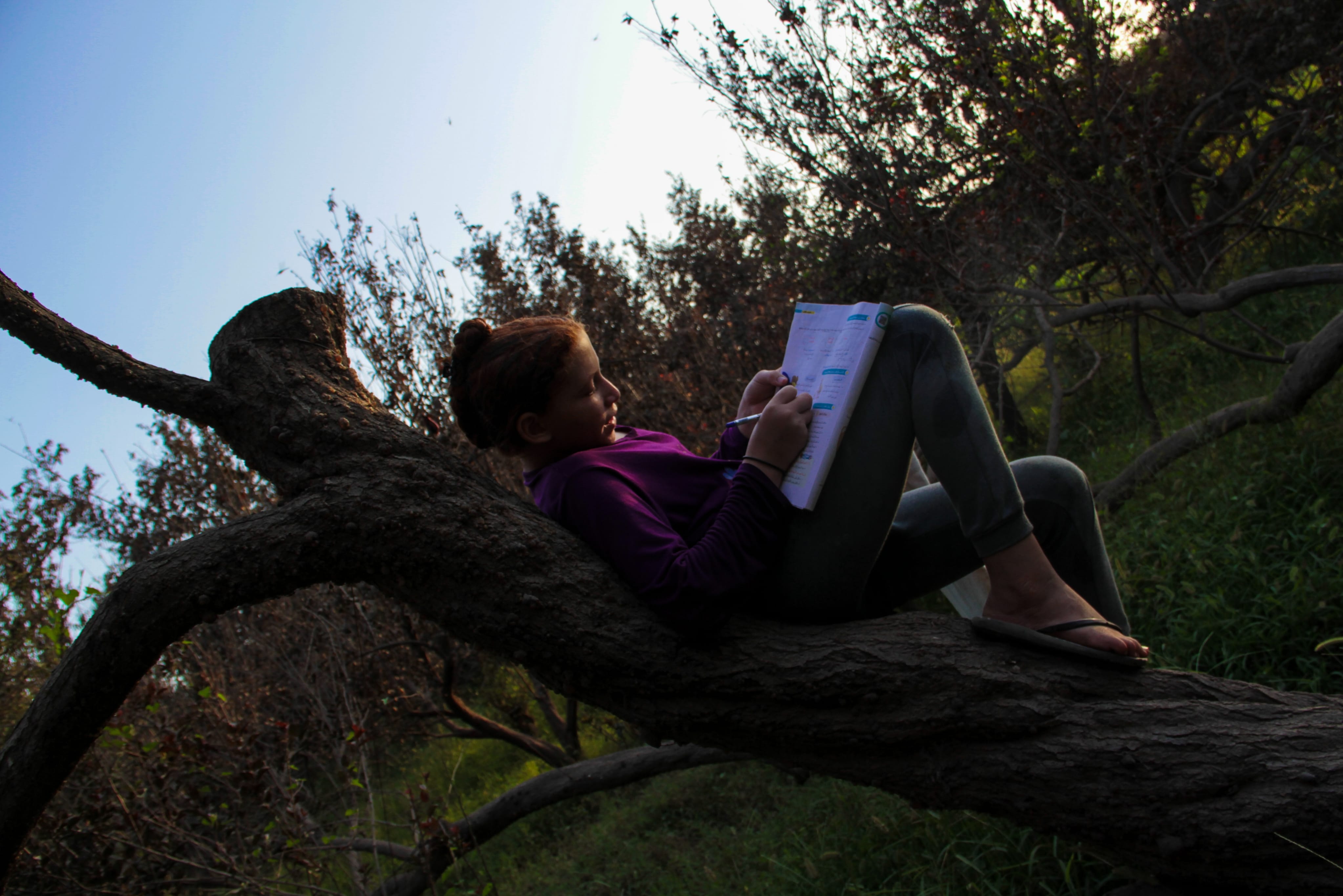
Ruqayyah is a sixth-grade student, yet she spends most of her day engaged in farm work, just like the grown-ups in her family do. She only studies during her spare time. And while her peers spend their days in play and fun, she finds joy in helping her father.
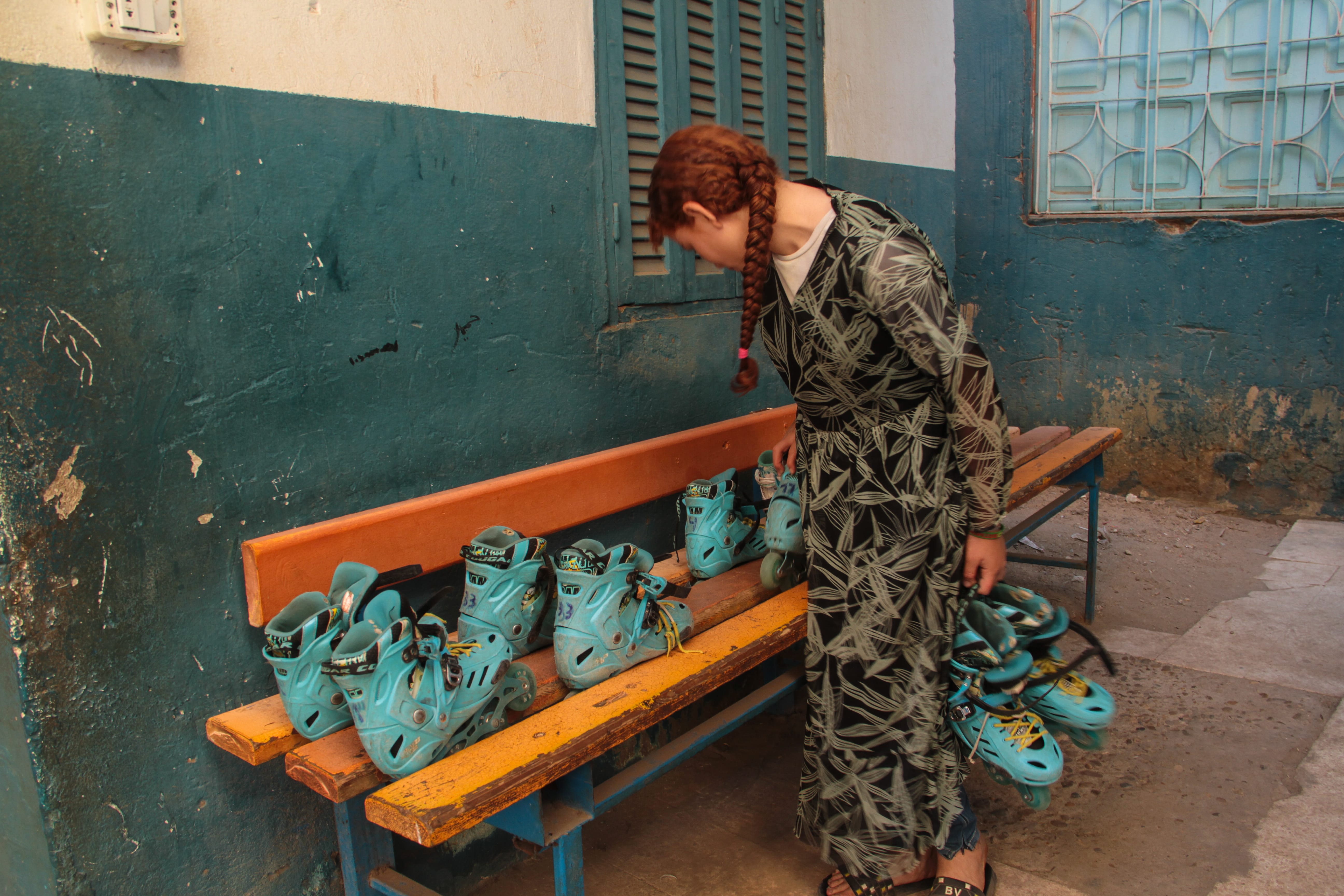
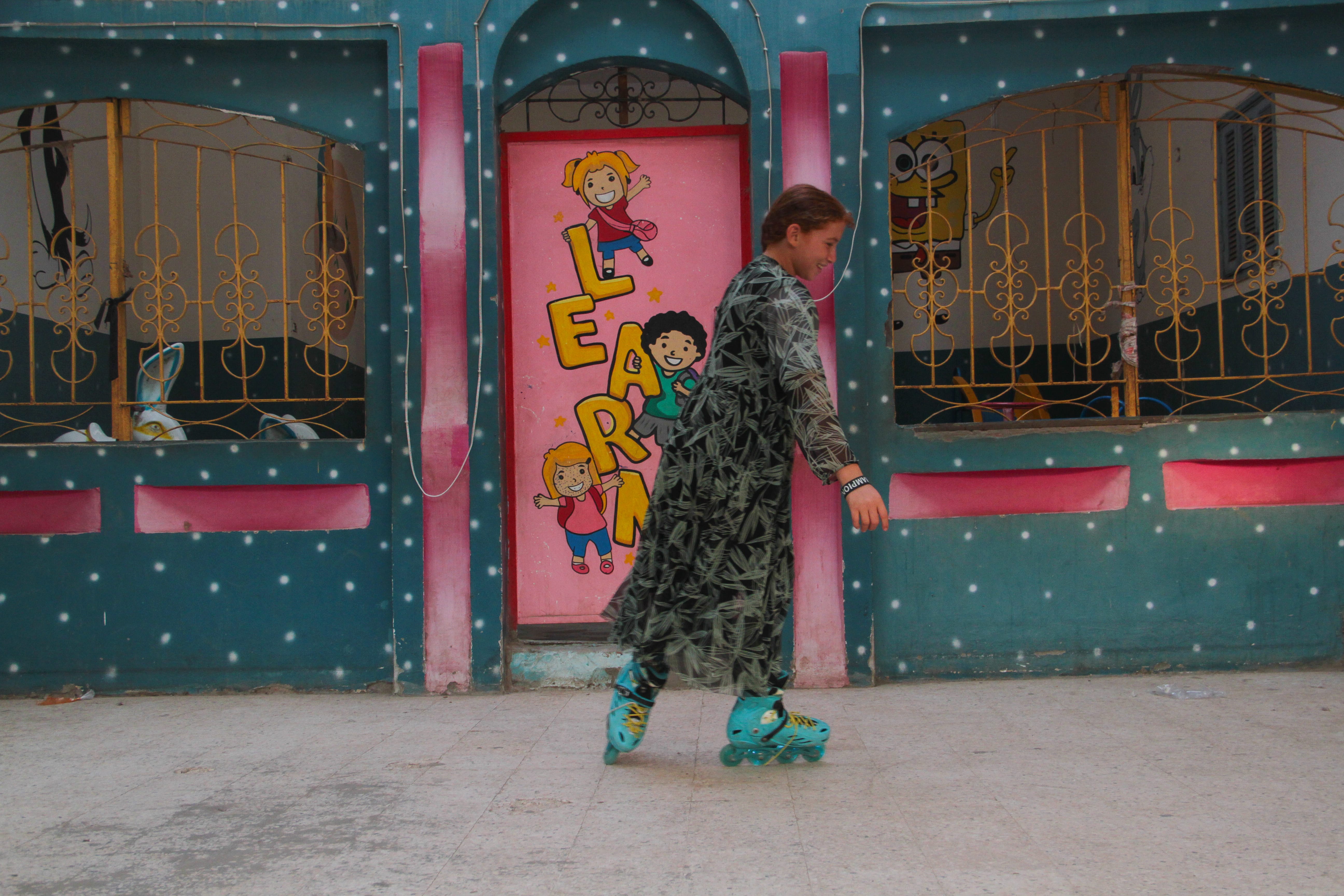
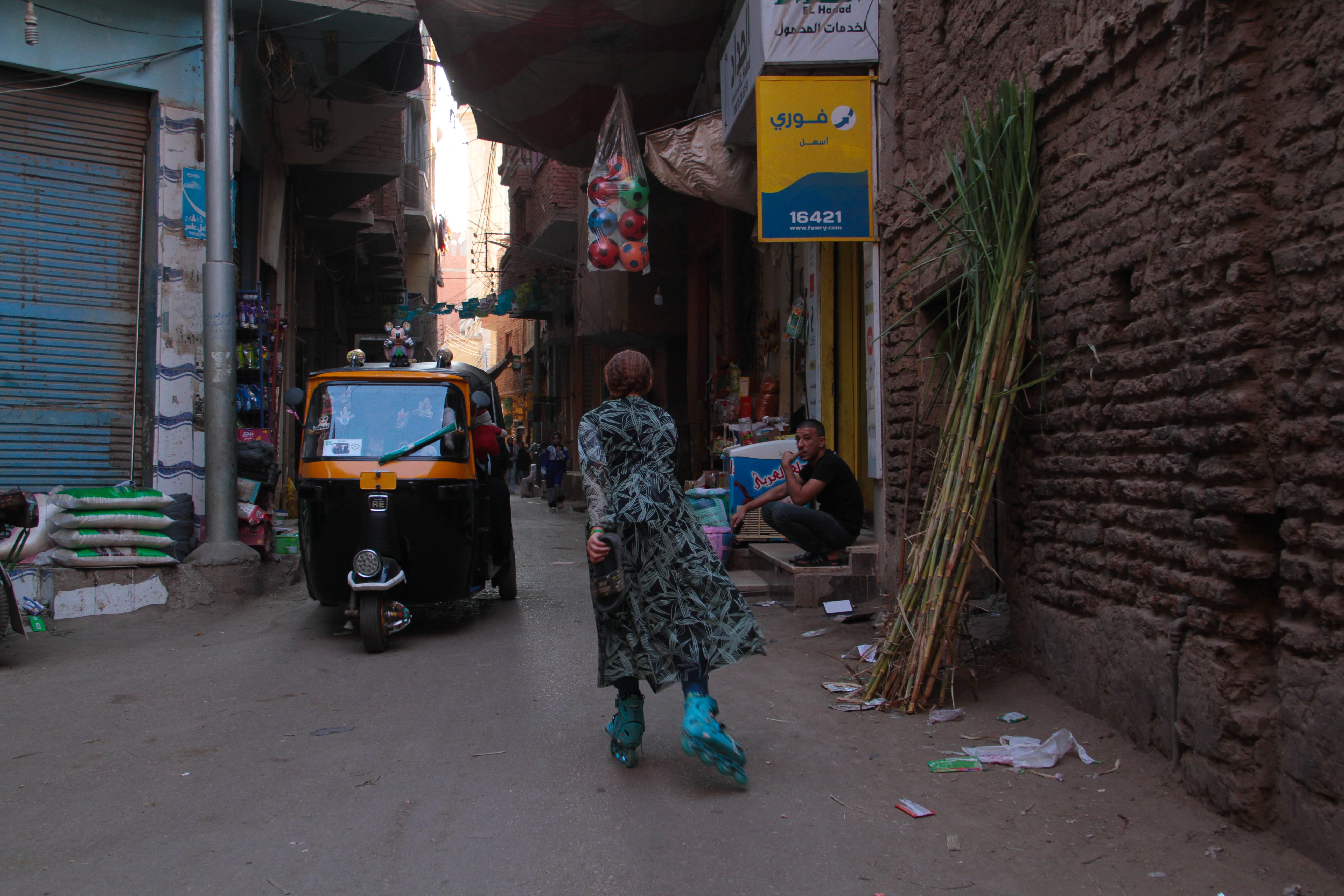
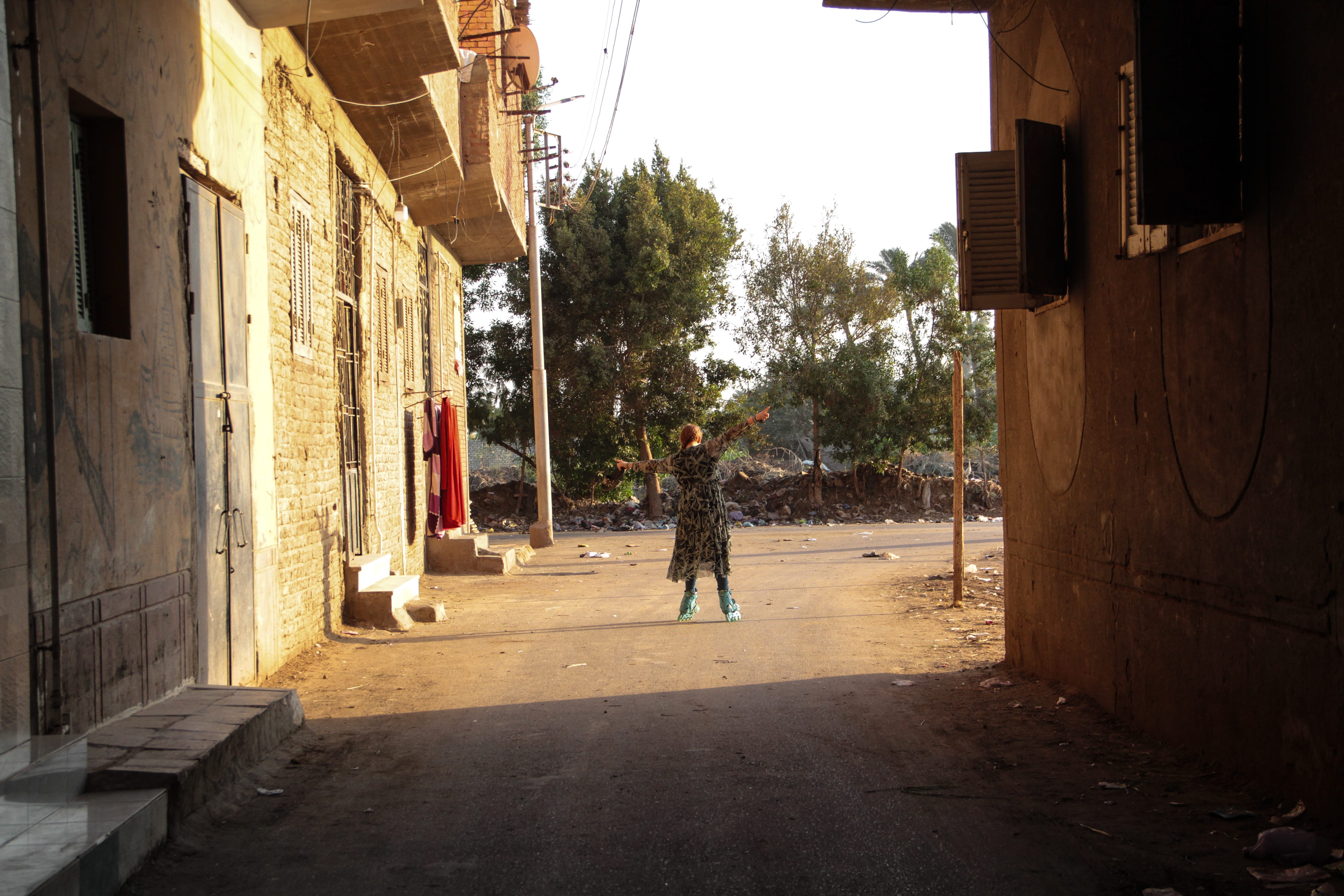
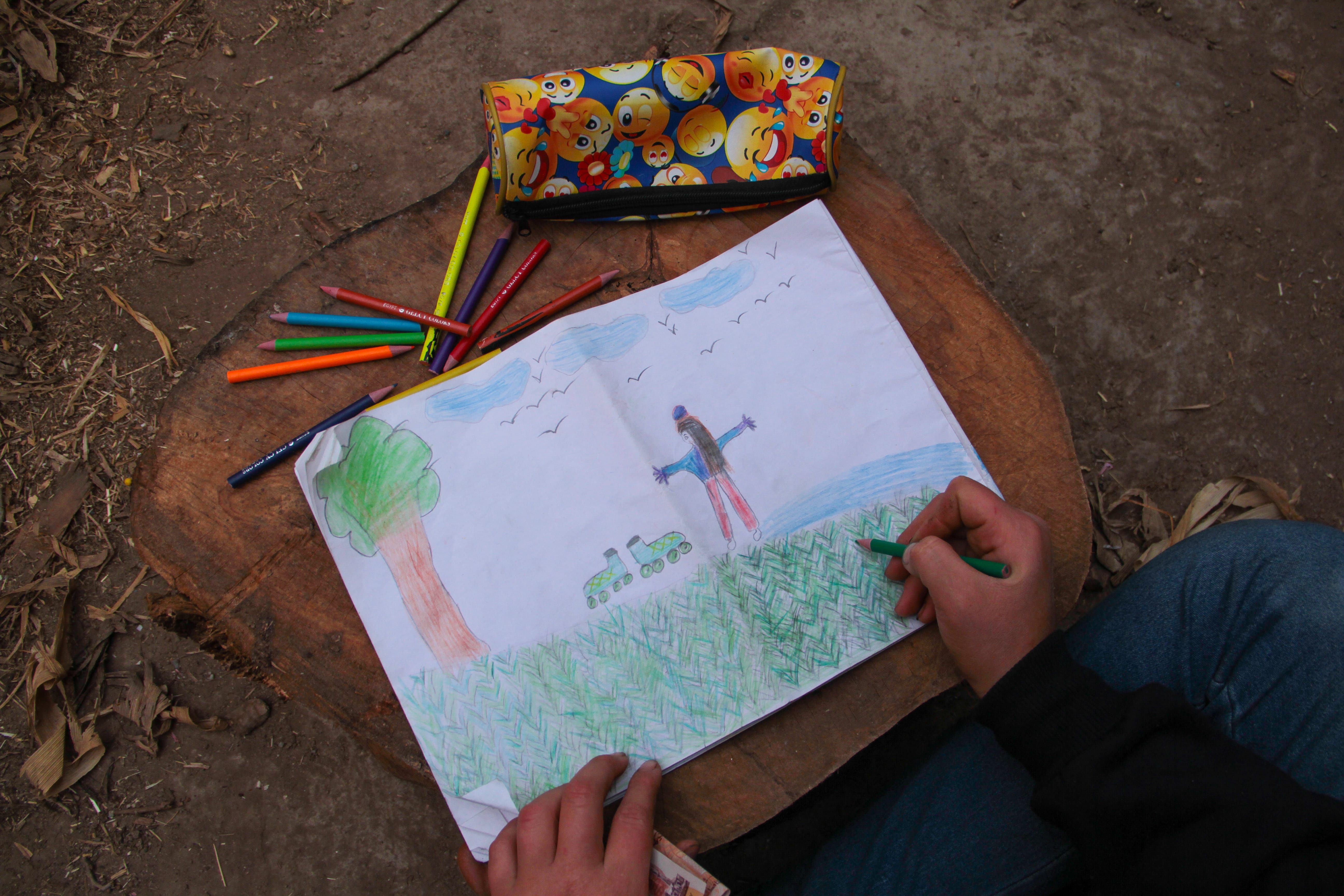
Beyond working in the fields and studying, Ruqayya has a special love for roller skating. She first discovered it during a village festival, watching children glide with wide smiles at a small rental rink. That moment sparked something in her, and she longed to experience it herself. But she often faces challenges rooted in the traditions of her rural community
The weight of disapproving gazes: "You're a girl, it's inappropriate." The resistance to anything different: "Stop playing around, do something useful."
What lingered in my memory from childhood was nothing but play, and I always thought it was a fate shared by all children until I met Roqayya.
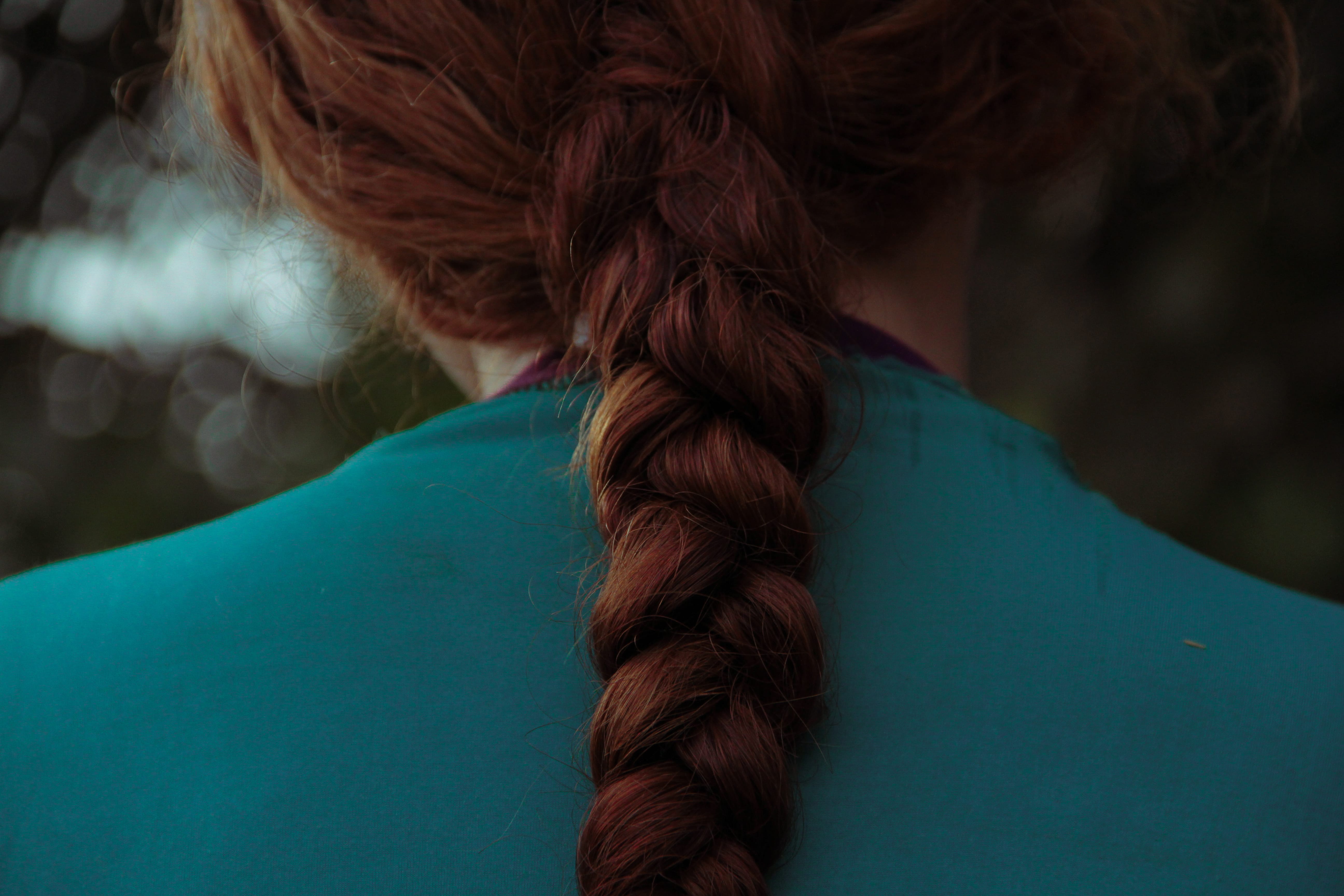
The first time I met Ruqayya was by chance. I was out photographing the foggy landscapes of my governorate and was drawn by her red braided hair that looked magical in the environment.
She told me she was twelve years old. Despite her young age, her day begins with every sunrise, as she prepares her horse Sokkar, her daily companion, harnessing him to the cart before setting out. “This one I love, I ride on his back and wander with him.”
Since her brothers have left farming, Roqayya has helped her father in the fields.
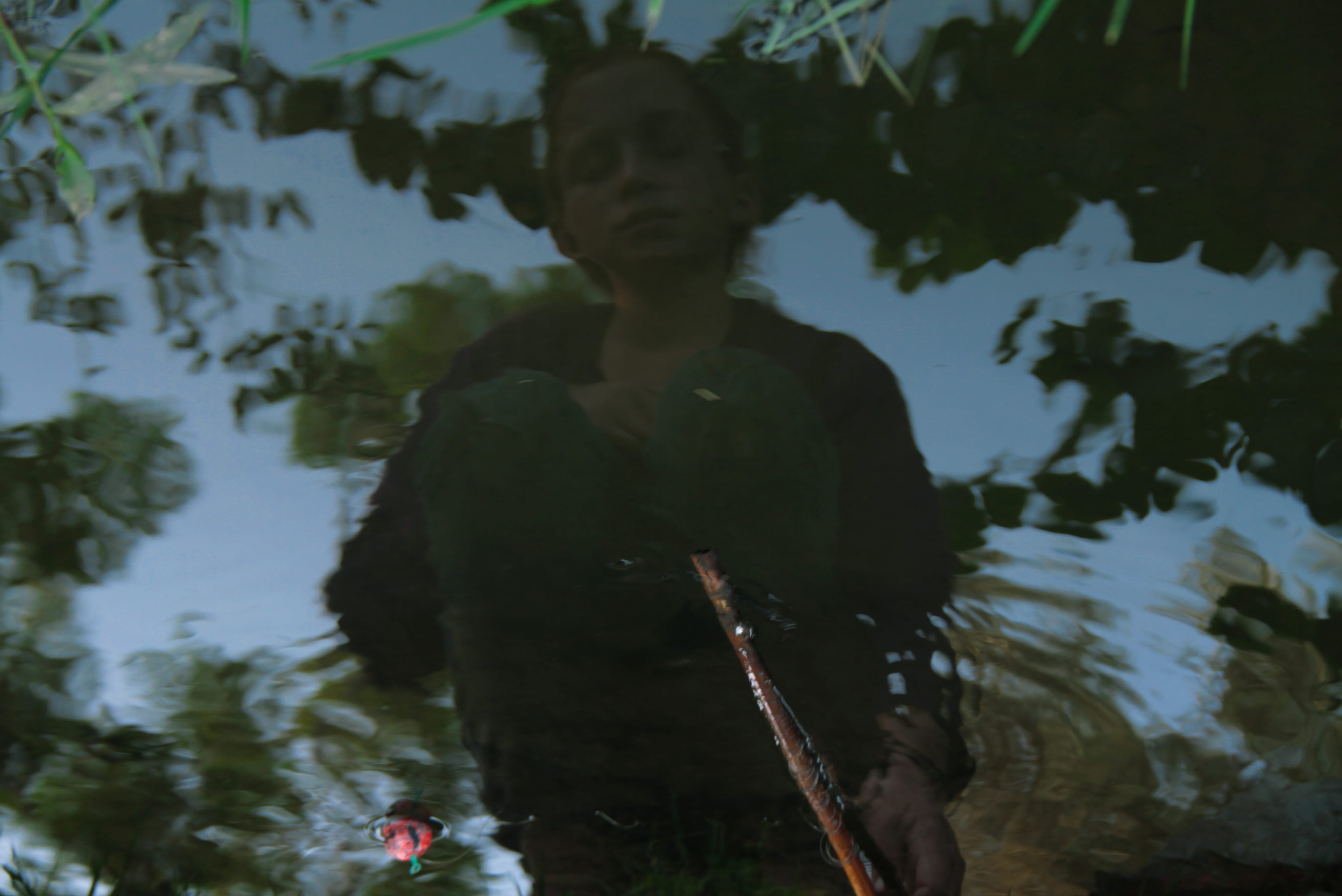
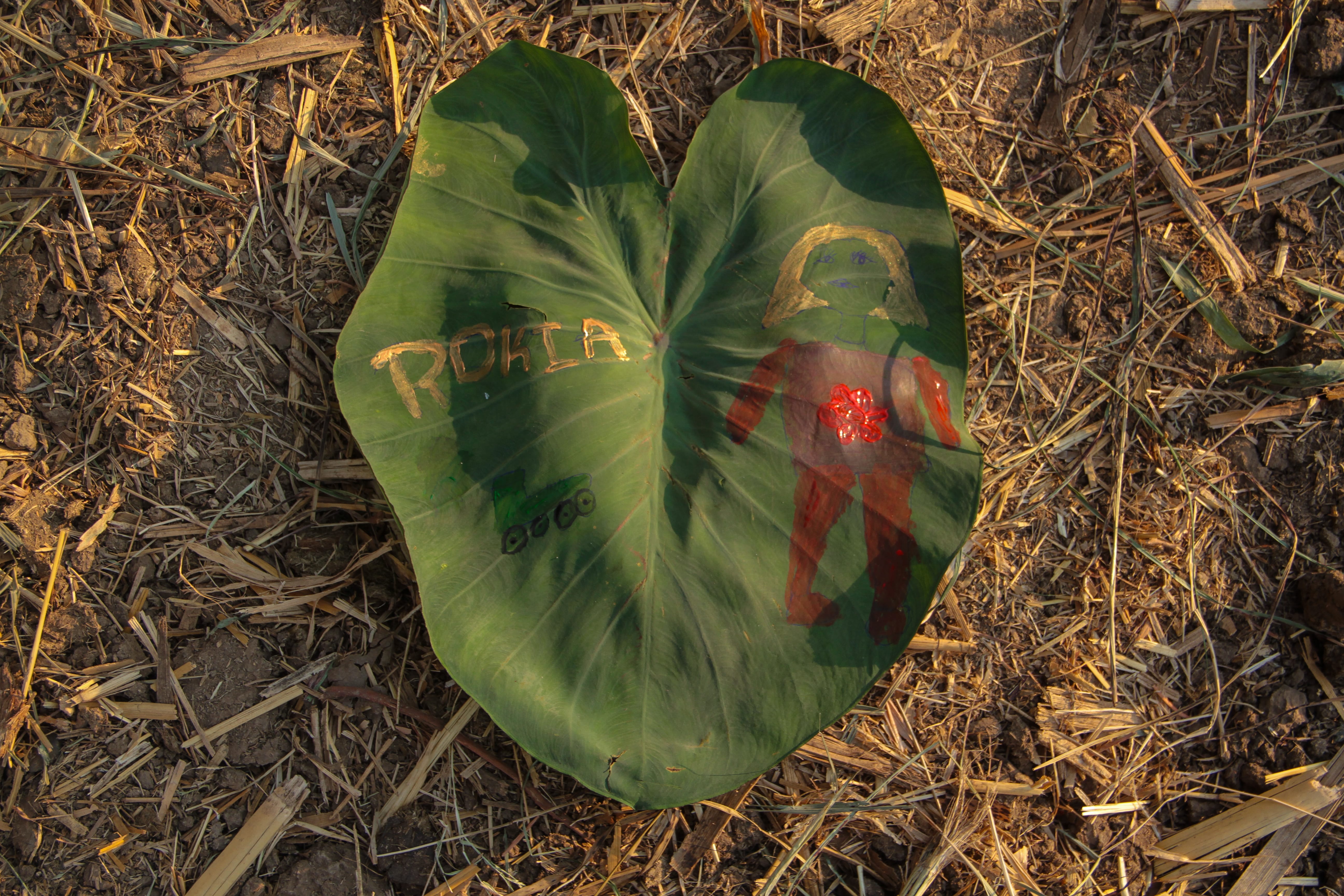
Ruqayya draws whenever she finds time and with whatever materials are at hand, like here, sketching on a leaf. She draws what she sees around her: the trees, the water, the green fields. Once, I asked if she had any writings or notes that I could photograph. "No," she said, "I like drawing better".
One day, we stitched together – I had brought some pictures that we could work on. She was looking at mine the whole time, clearly bothered. After some time with silent discontent, I asked her what was wrong. She was angry that hers wasn't as good as mine. We didn't take many photographs that day.
.jpg)
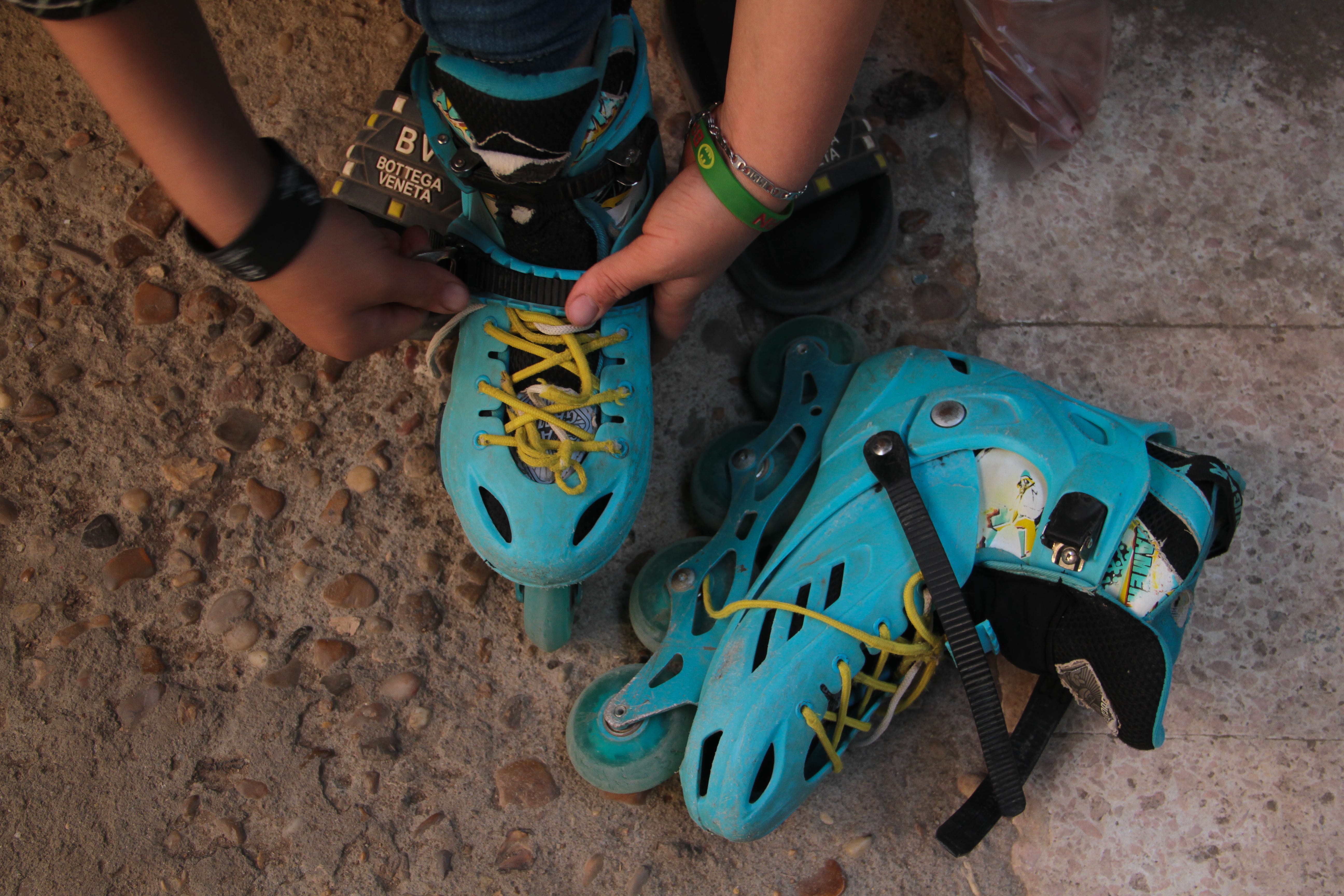
On my second visit to Ruqayya, I found her more cheerful and joyful than the time before. When I asked her about the reason, she told me that for the very first time, she had seen girls and boys her age playing with roller skates, full of laughter and delight. Curious, she followed them and discovered a place where they rented those skates. She tried it herself and described it to me as a wonderful, happy experience.
“O Lord, for the sake of Your beloved Prophet, let it be open.”
This prayer always comes before Ruqayya’s steps whenever she heads to the skate rental shop, hoping to find it open since its owners are often absent, busy with their studies. It is her little refuge.
“Look how I can run now, I'm not afraid like before.”
After many attempts at skating, Ruqayya feels she can finally move with confidence. But when she stands at the shop’s door, Hazem, the owner, approaches her and says:
“You have to tell your father and mother you can’t just go out on your own now.”
At the age of twelve Ruqayya had to find her work/life balance, living up to the expectations of her family and the school. Talking sometimes with the weight and maturity of a grown-up, she sometimes reminds me of her age, when she is skating like no one is watching and getting angry at stitches.


.jpg)
.jpg)