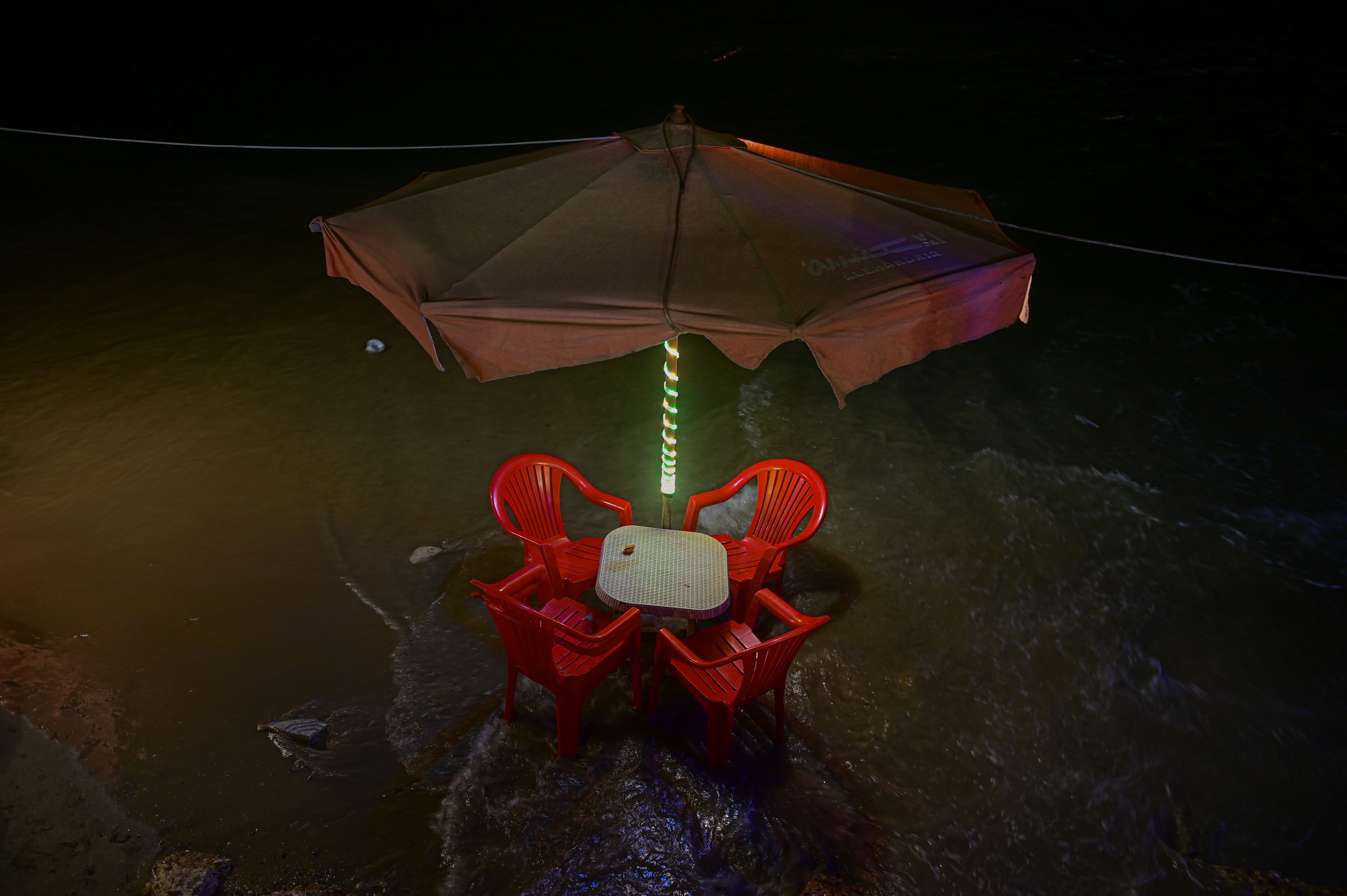
Thirty years ago, in the heat of summer, a grandfather would take his grandchildren to Sidi Bishr beach in the east of the city. Luay, one of the grandchildren, recalls: “That trip to the beach was part of our summer tradition. We’d carry the umbrella and chairs, walking there in the morning full of excitement, and returning at sunset, tired but happy.” This tradition ended with the grandfather’s passing. Even if they wanted to, his grandchildren could never repeat this ritual because in 2023, the beach itself disappeared as the sea level rose. That shore also held memories of many Alexandrians, including myself. It set the scene for my first kiss, and many of my childhood memories are like Luay's. We share the same memories in the city.
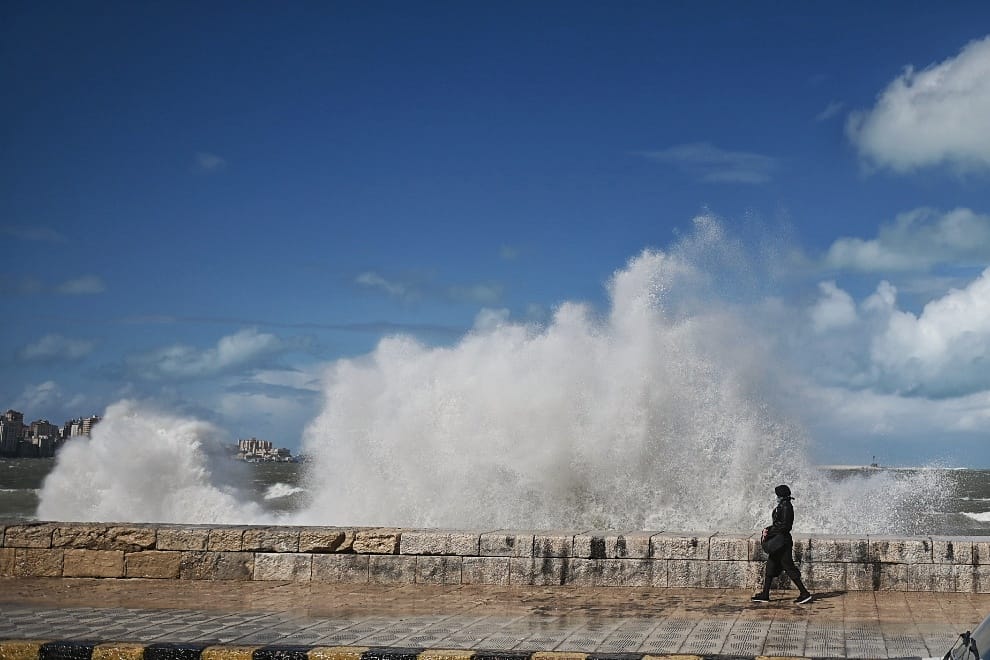
When I first saw the scene of this beach sinking, I realized that denying the fact that the city would sink was useless. I felt sad and helpless, and I remembered dozens of articles predicting the sinking of Alexandria in the coming years, as earth.org points out in its map simulating the sinking that will swallow the entire city by the year 2100. The sinking of this beach is a tangible beginning of the city's future. Researcher Yasmine Hussein of the Alexandria Center for Human and Urban Studies says that the number of beaches that have shrunk due to natural factors has reached 40% of the city's total beaches over the past thirty years.
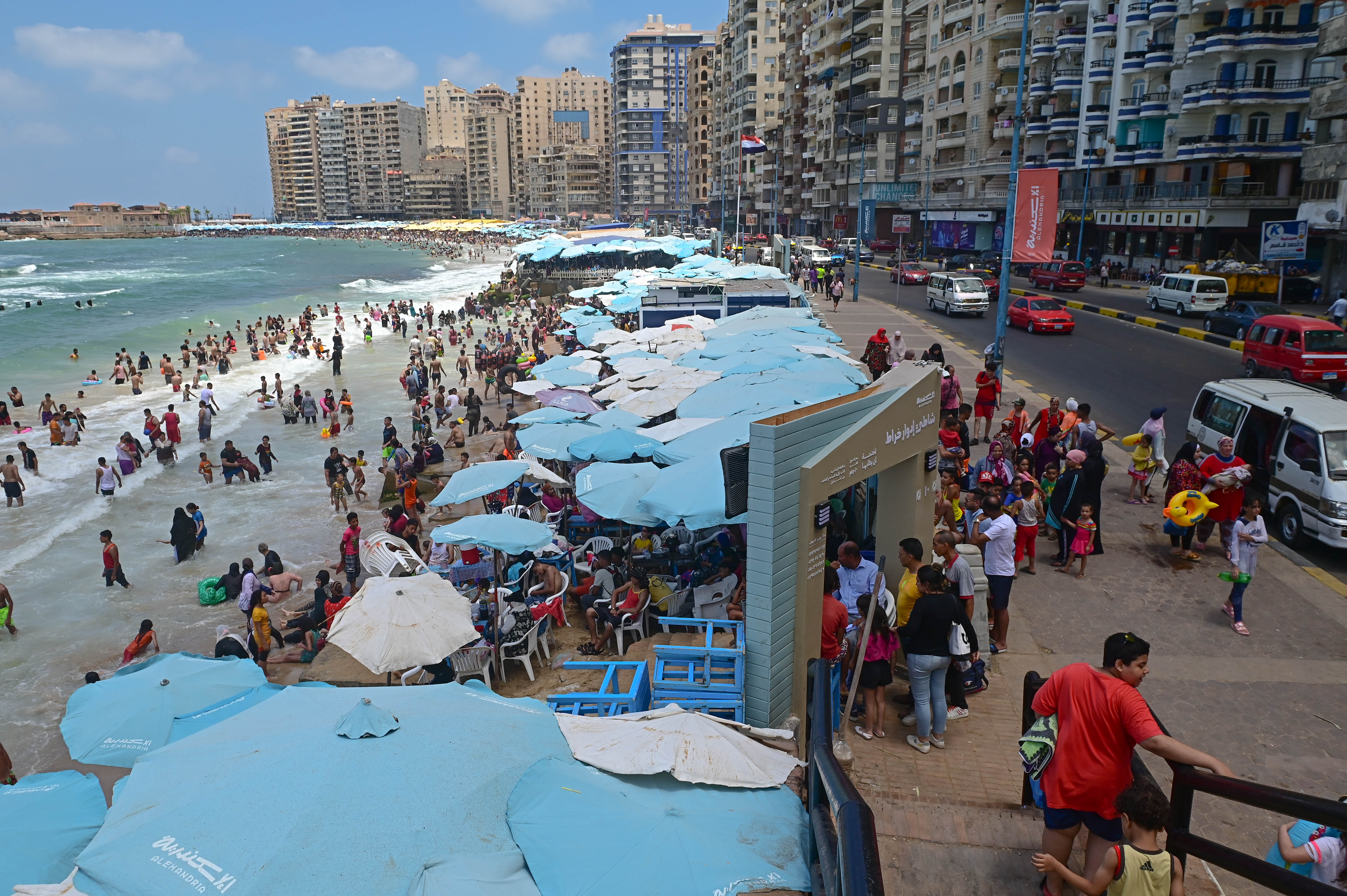
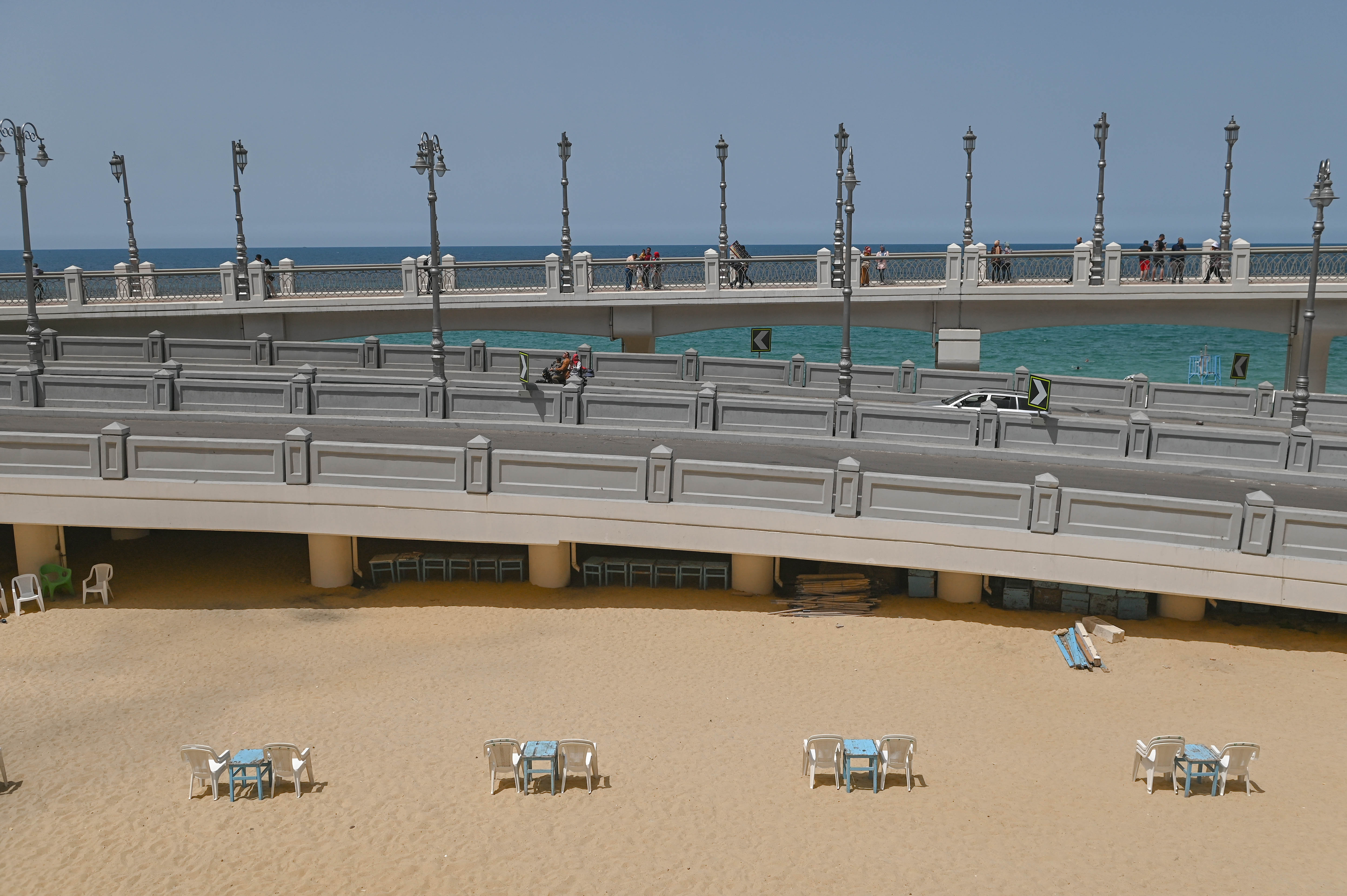

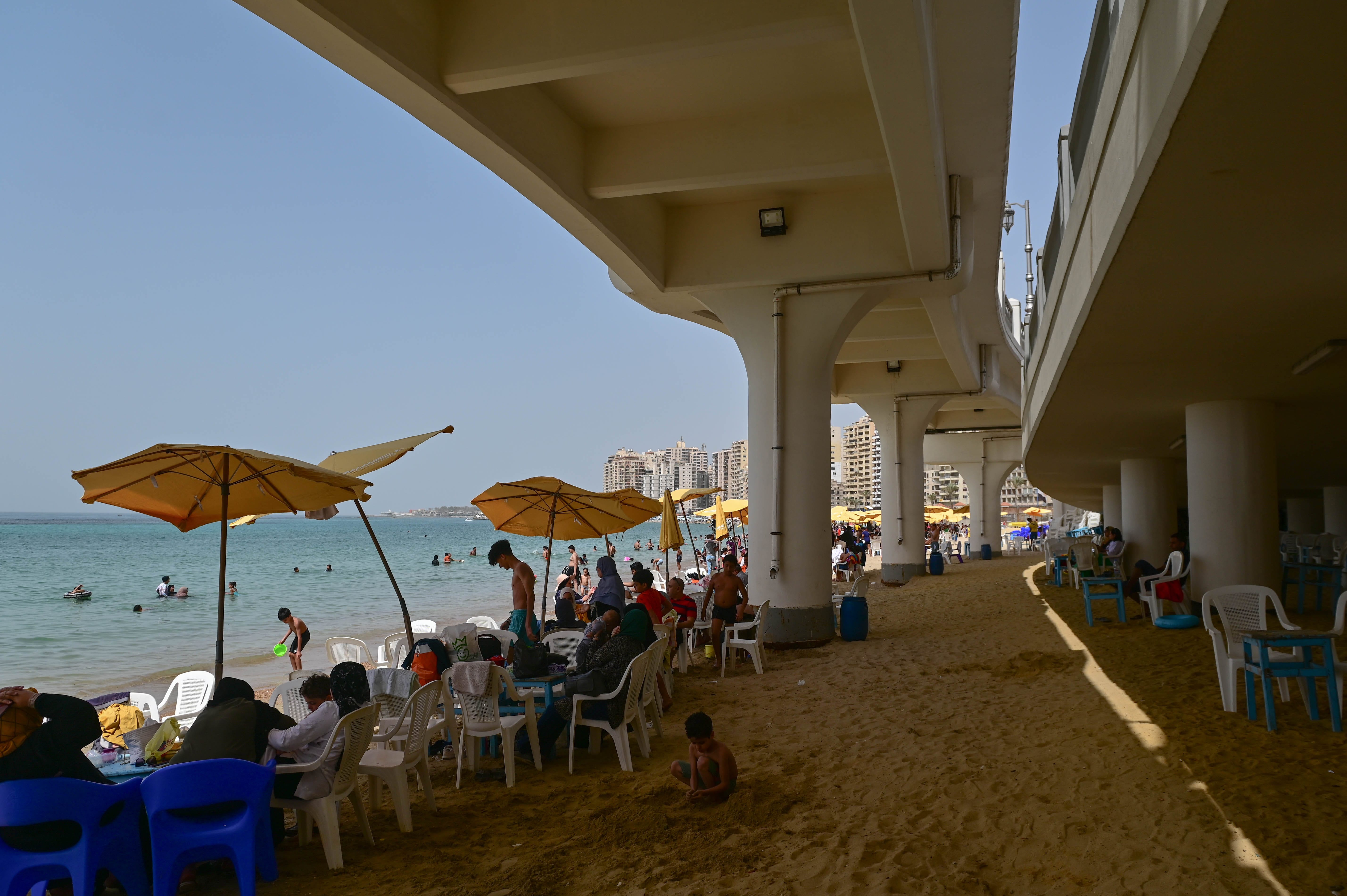
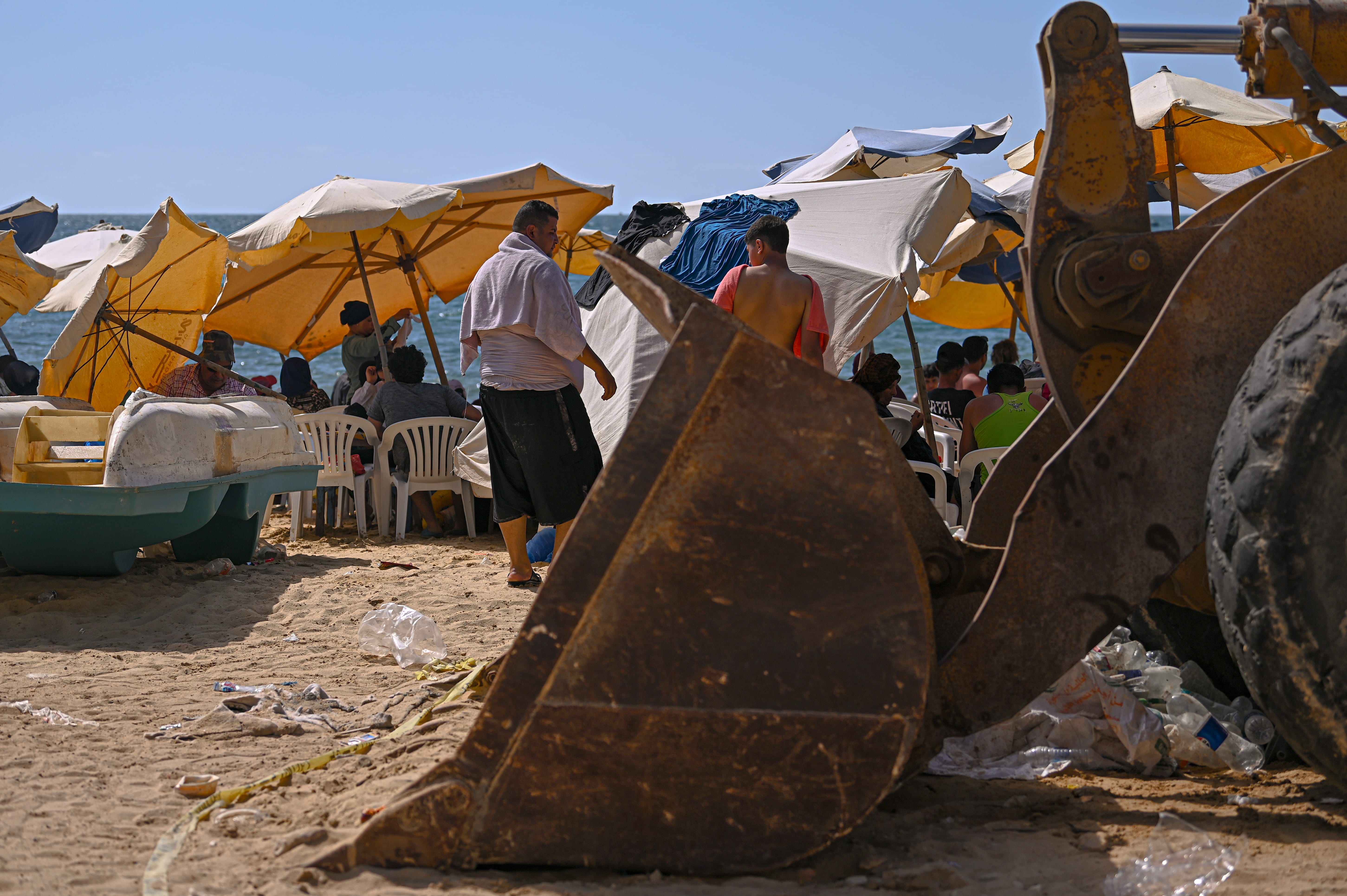
Not far from the sinking Sidi Bishr beach, a family from a nearby city sits on Miami Beach, spending a few days of their summer holiday. The eldest brother swims in the sea near his family, while beside them, the younger son builds shapes from sand mixed with construction debris. They sit in the heavy shadow of a vehicle overpass built directly on the beach's sands. The sound of waves battles with the noise of the cars passing above. This family, like many others, is unaccustomed to this scene. The recently built overpass, intended to ease traffic on the road, has blocked the sun's rays and the horizon of the sky.

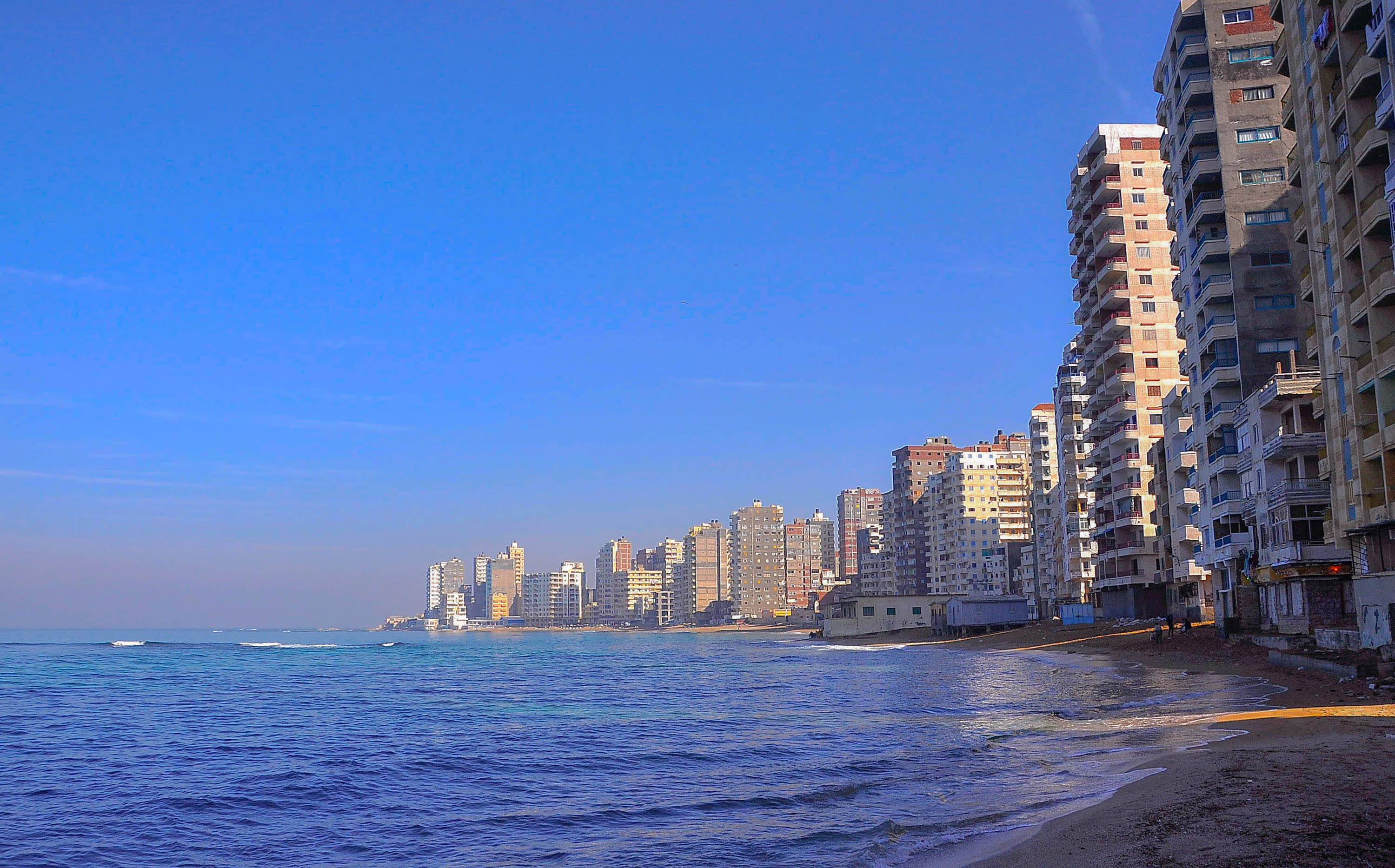
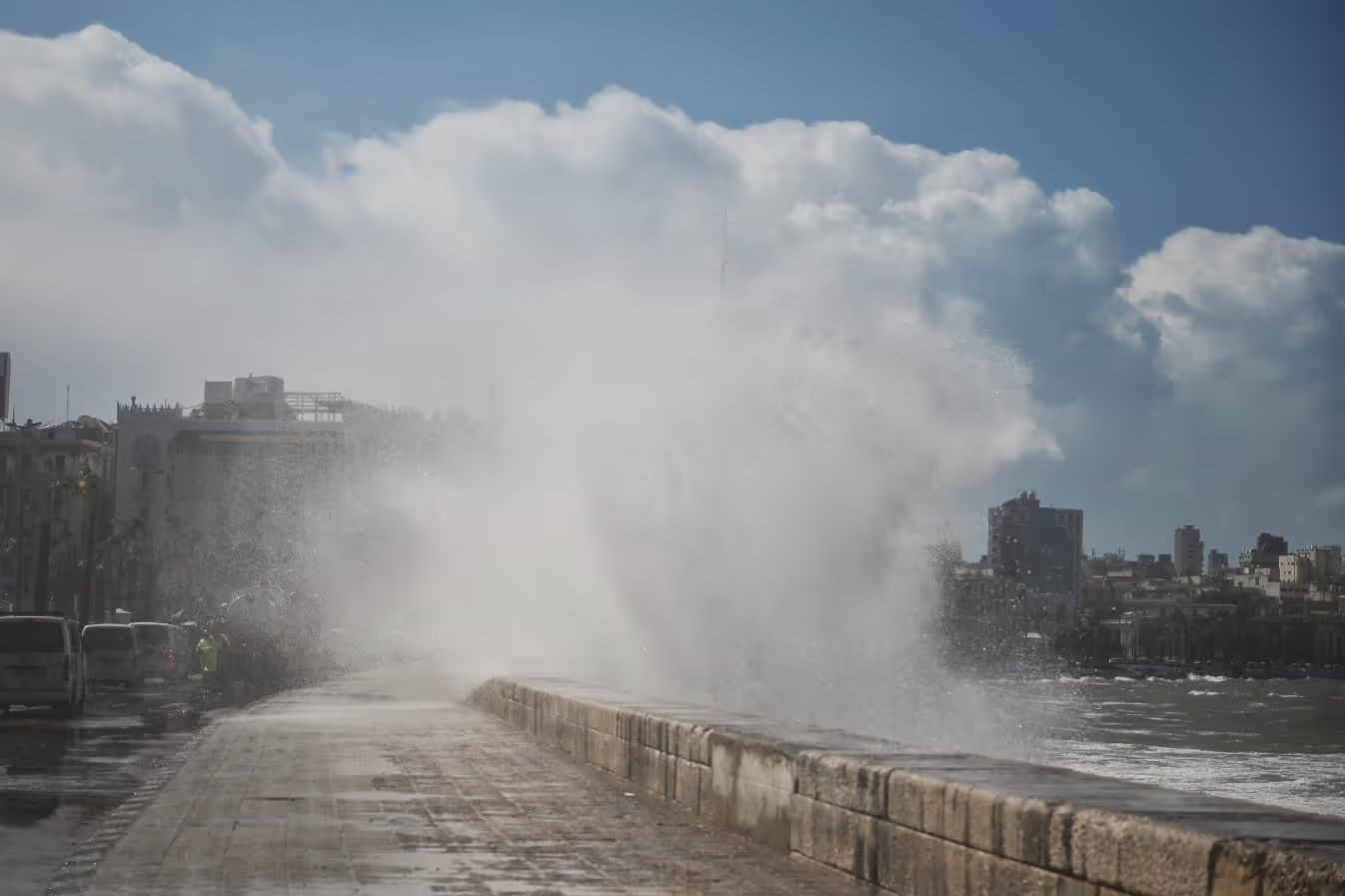
A recent study examining the causes of the increasing number of building collapses in Alexandria, which have reached 280 over the past two decades, discovered a correlation between beach retreat, land subsidence, and building collapses. The results indicated that the collapses are linked to severe coastal erosion caused by sediment disturbances resulting from decades of ineffective landscape management and urban expansion along the city's waterfront.
This severe erosion, coupled with sea level rise, leads to increased seawater intrusion, raising the groundwater level in coastal aquifers. This leads to deteriorating ground stability and accelerated erosion of building foundations, eventually leading to their collapse. The study identified a highly vulnerable coastal area in Alexandria, with more than 7,000 buildings at risk, making it the most vulnerable area in the Mediterranean Basin.
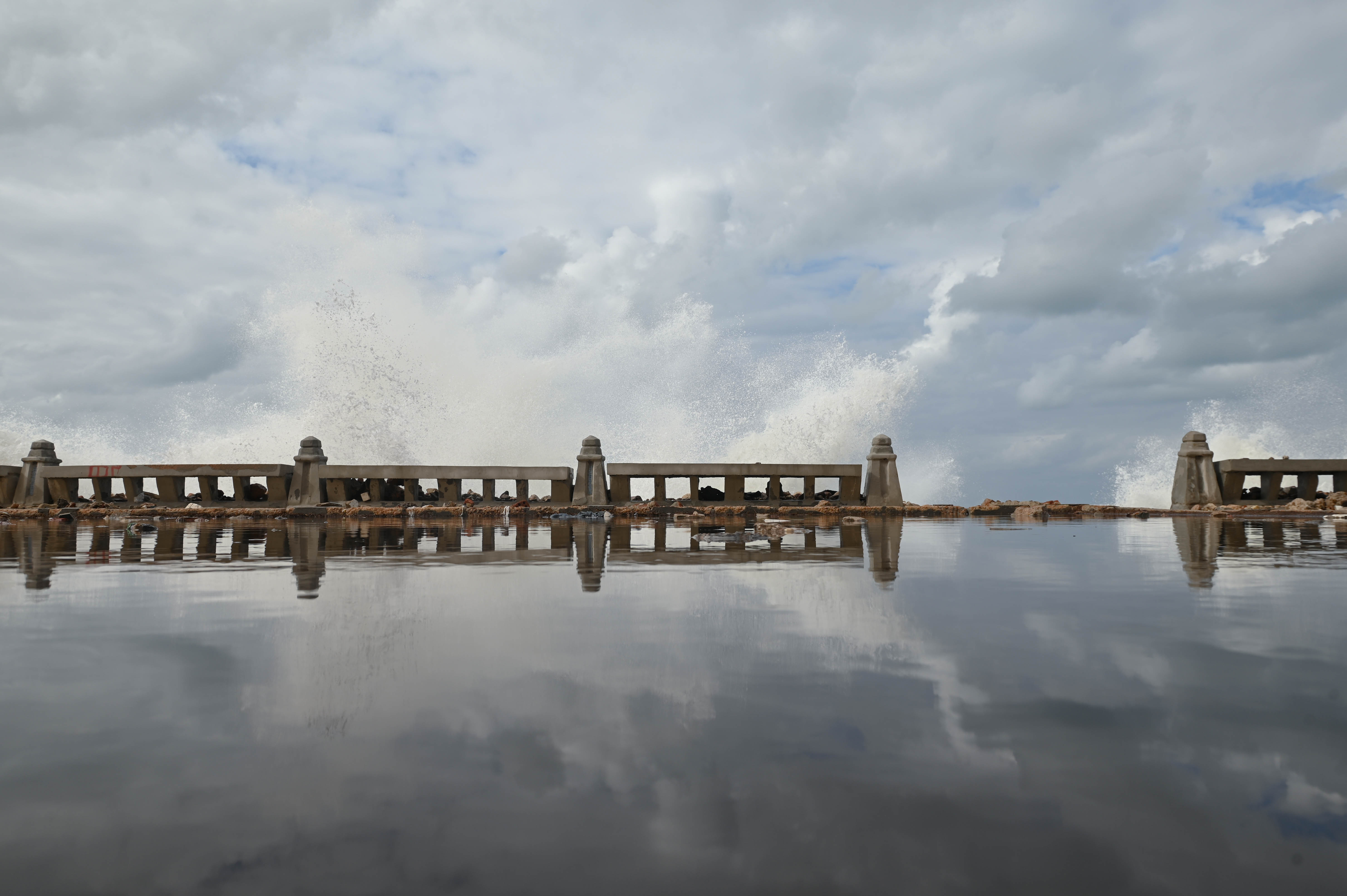
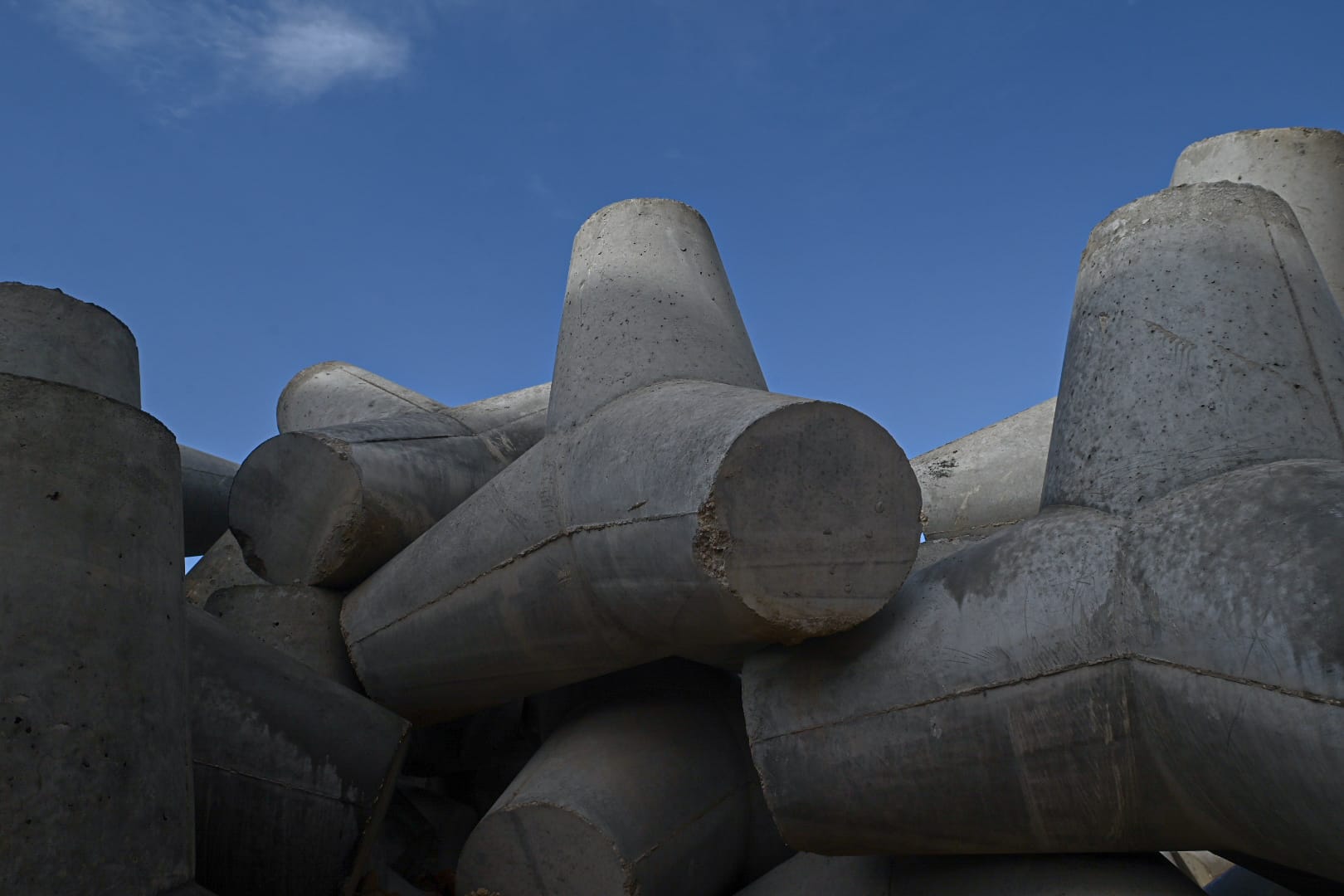

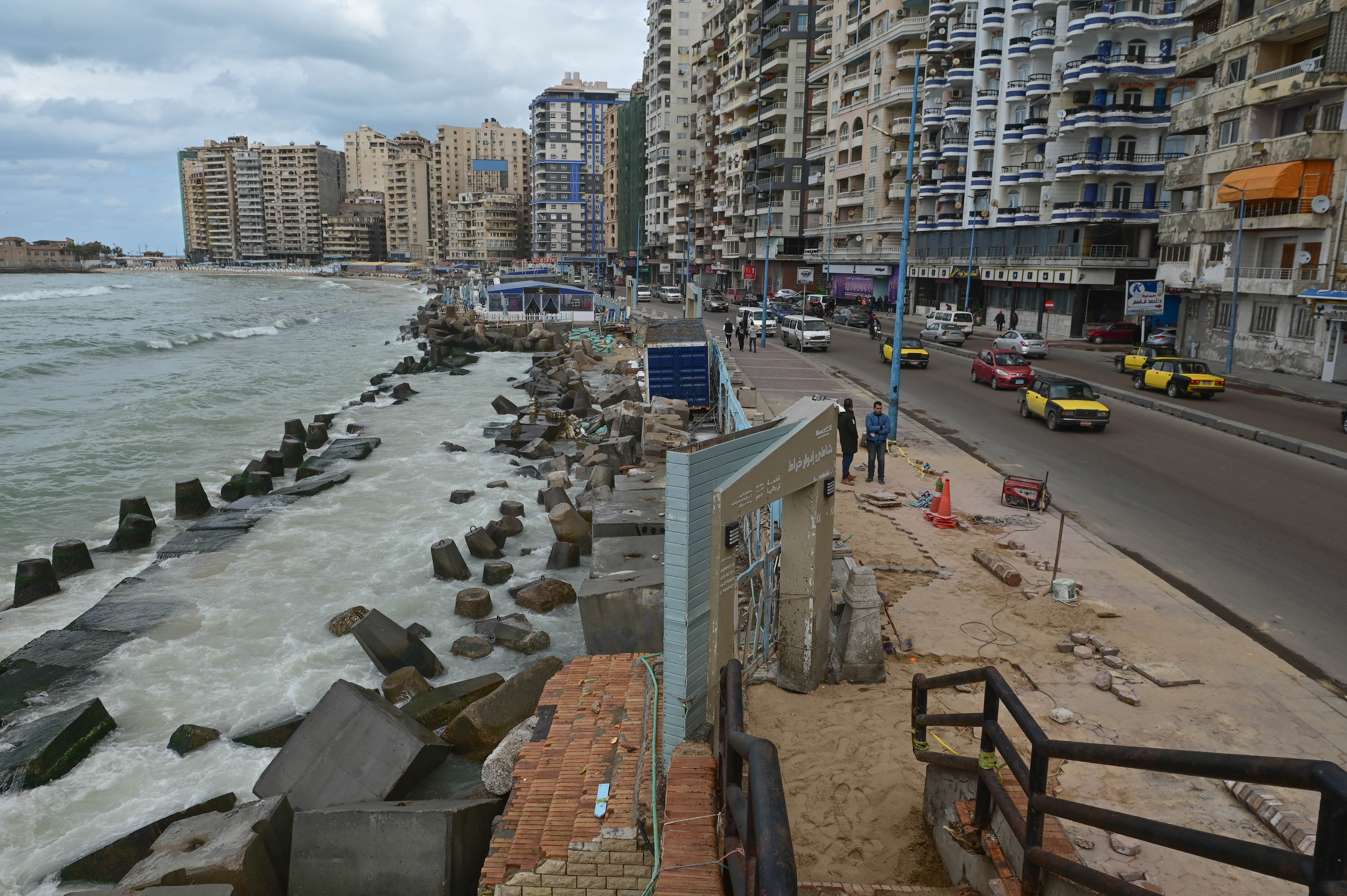

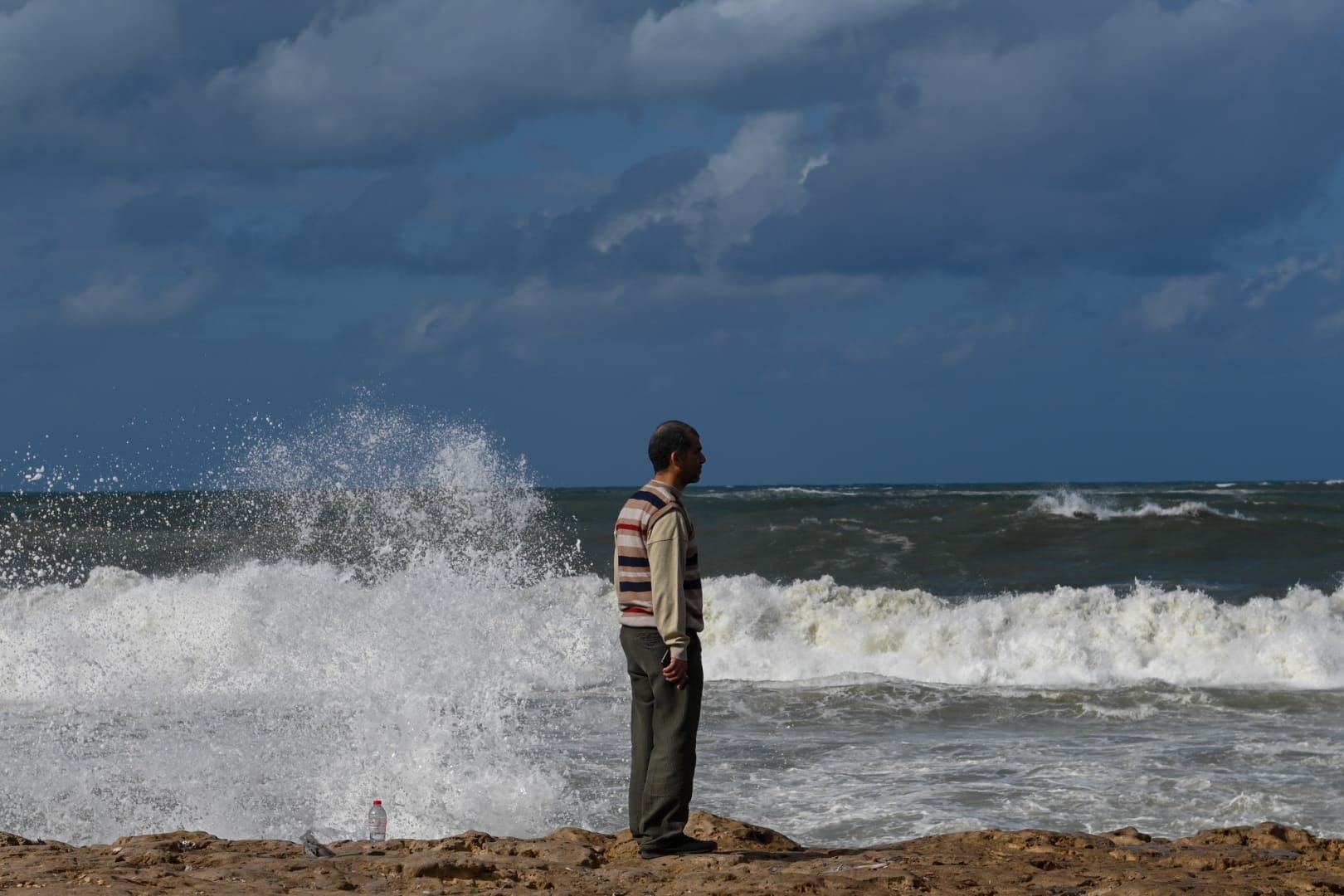
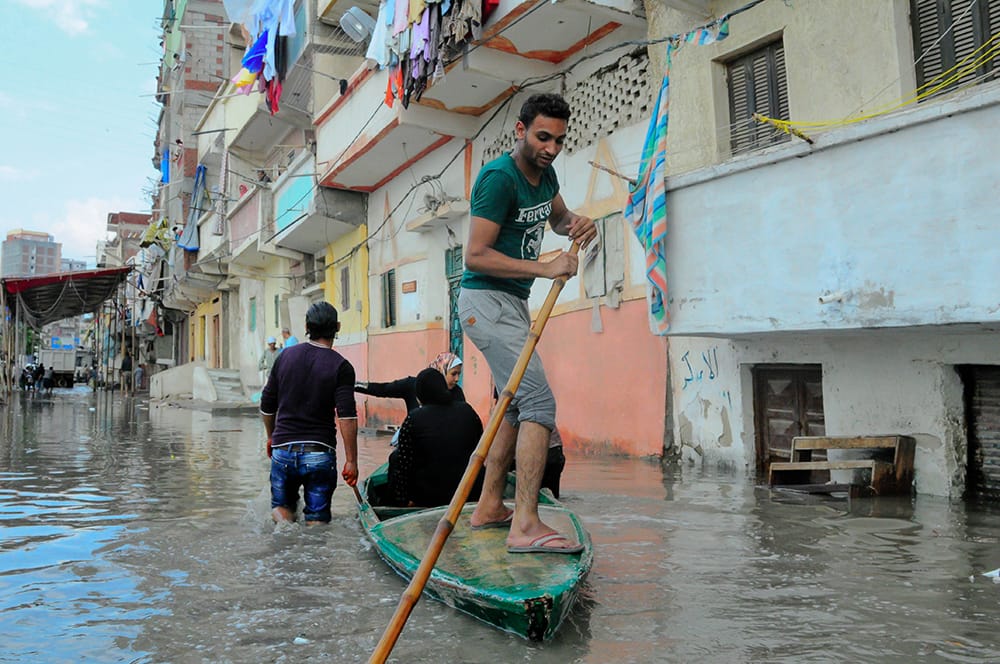
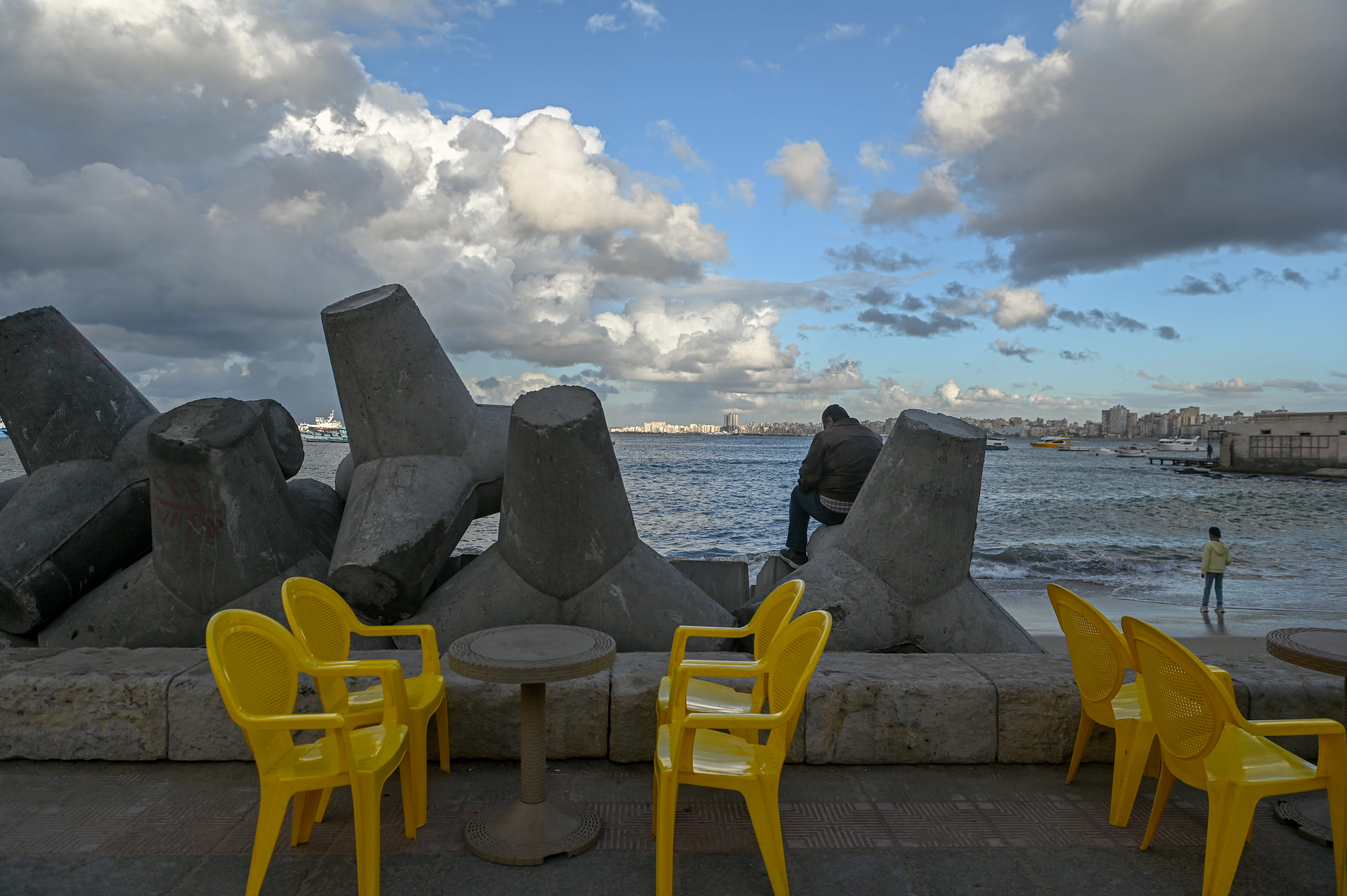
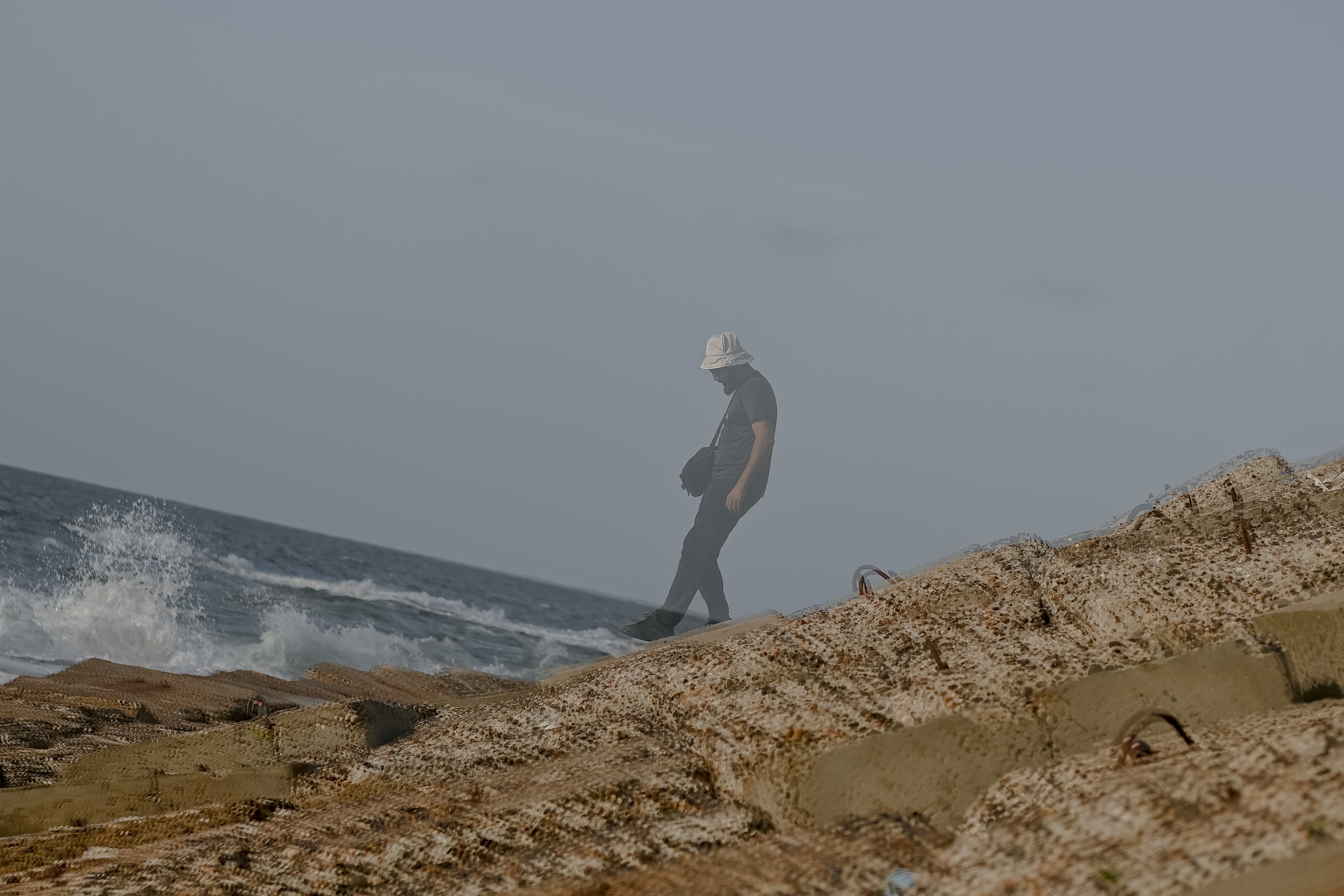
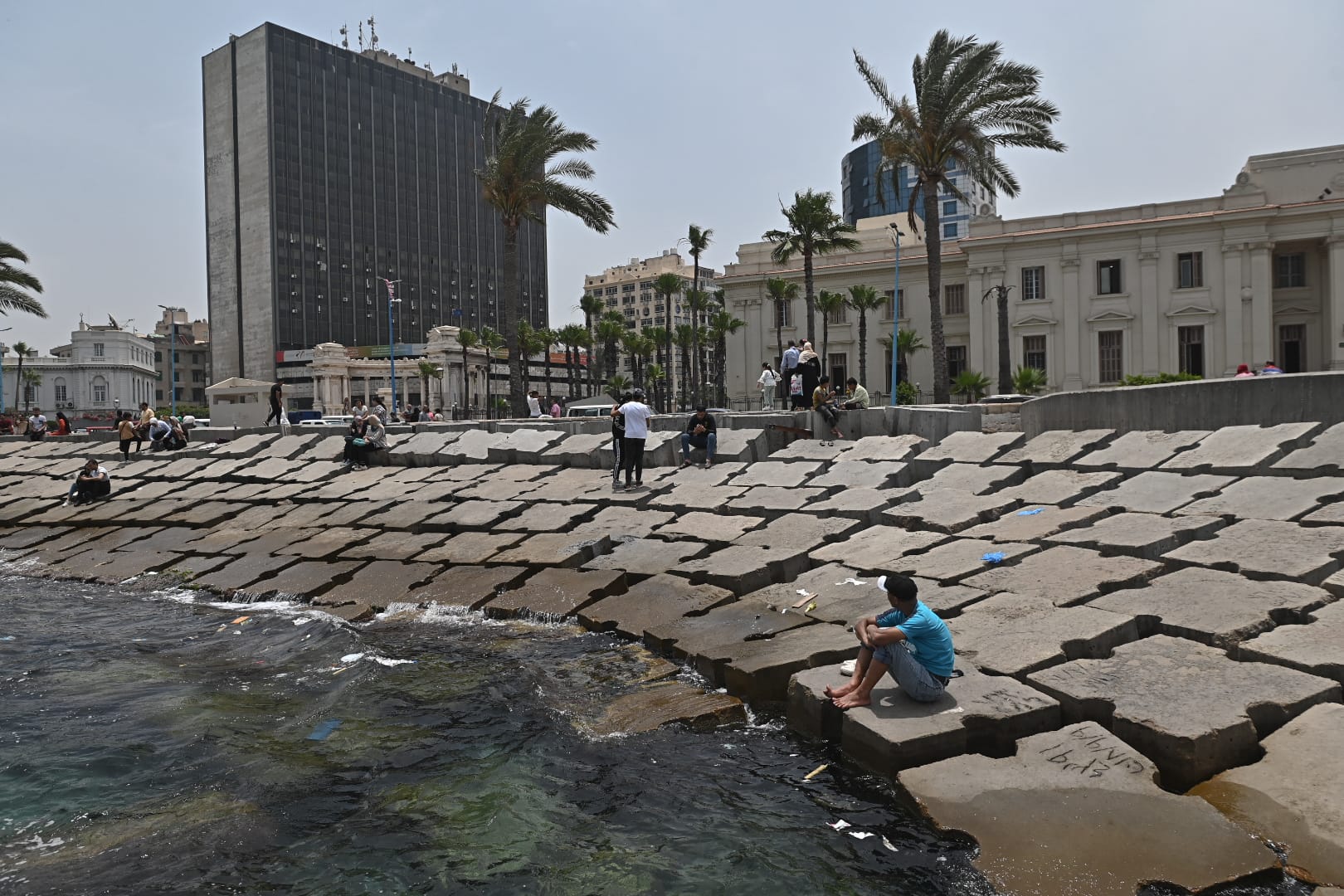
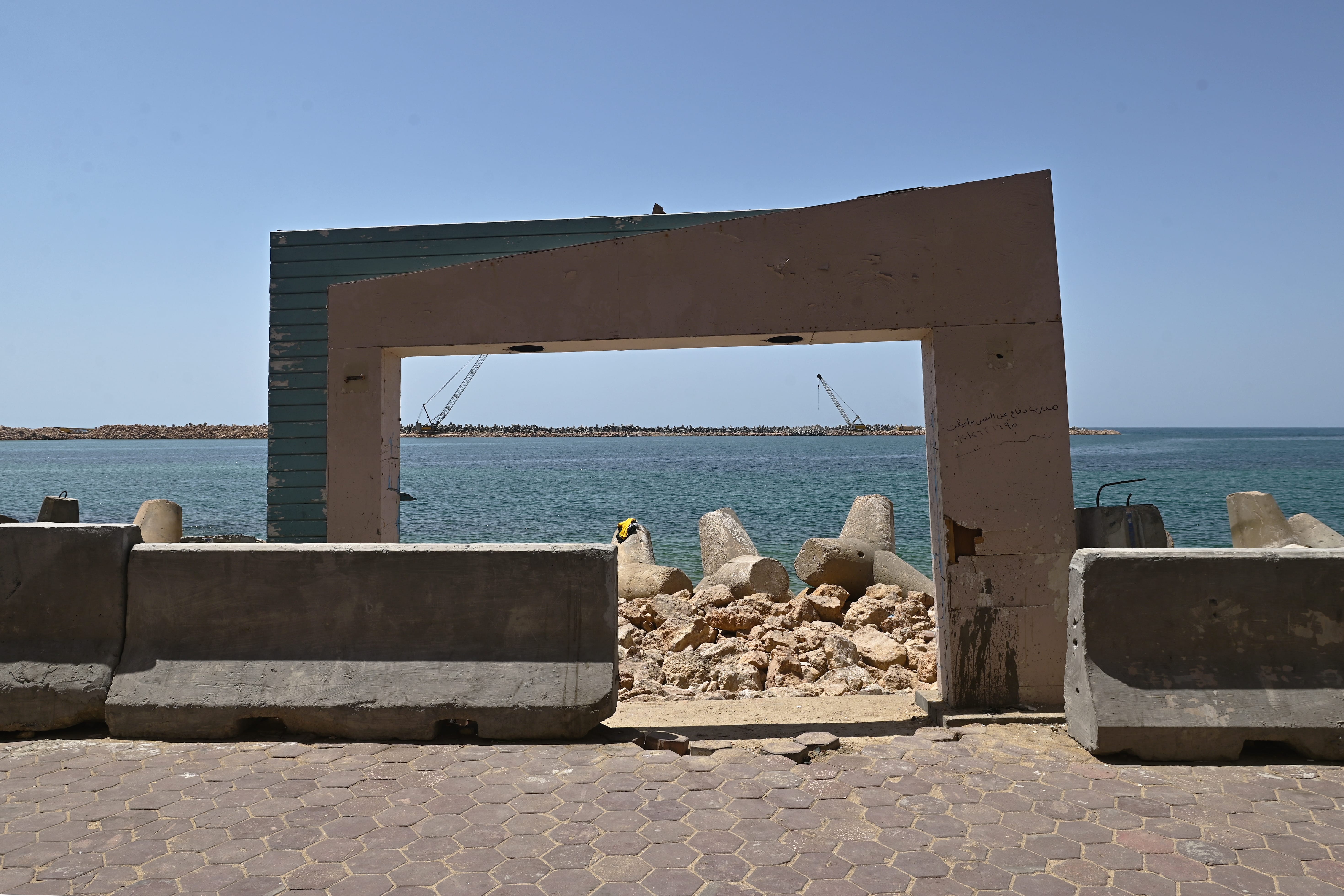
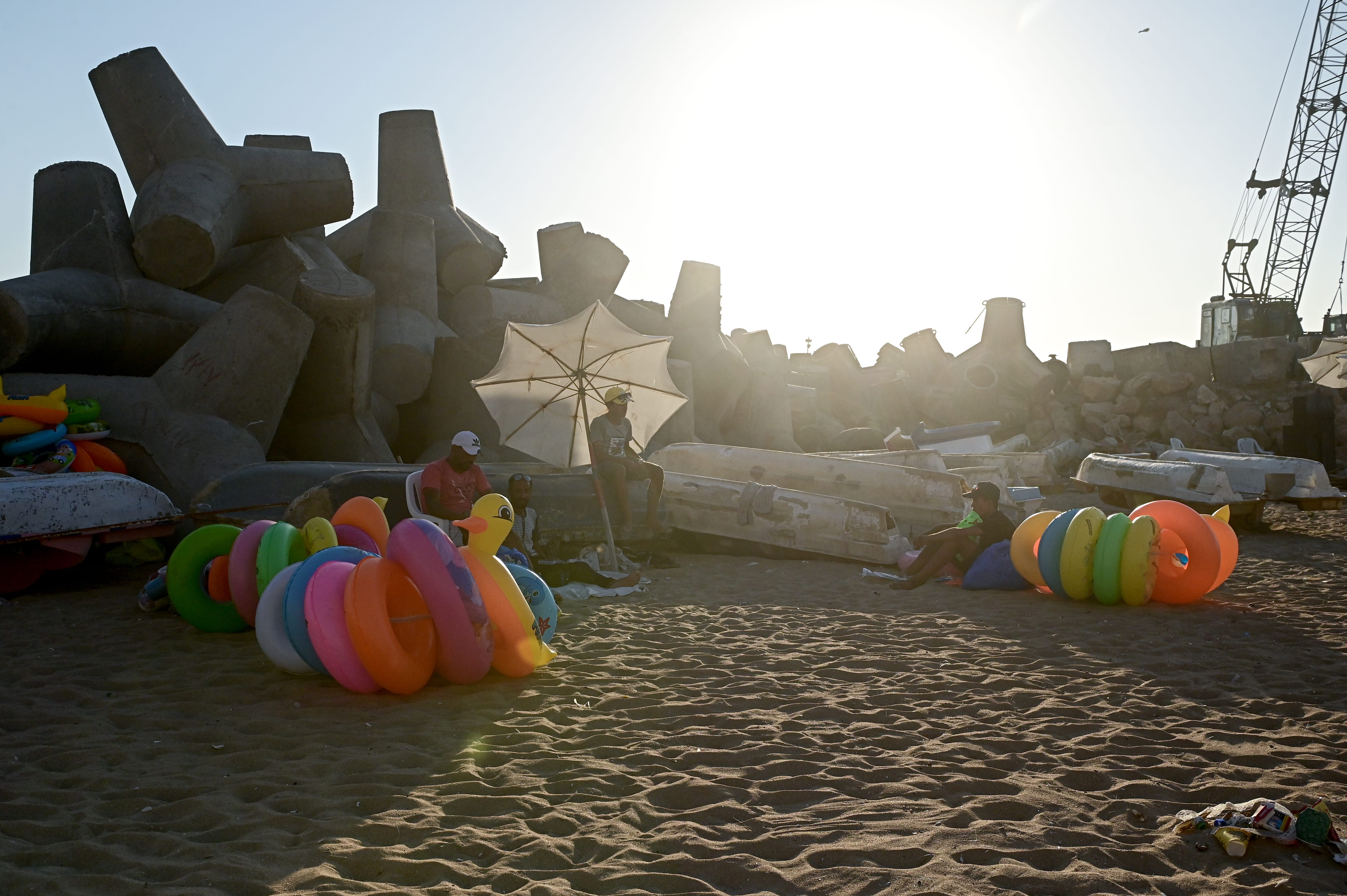
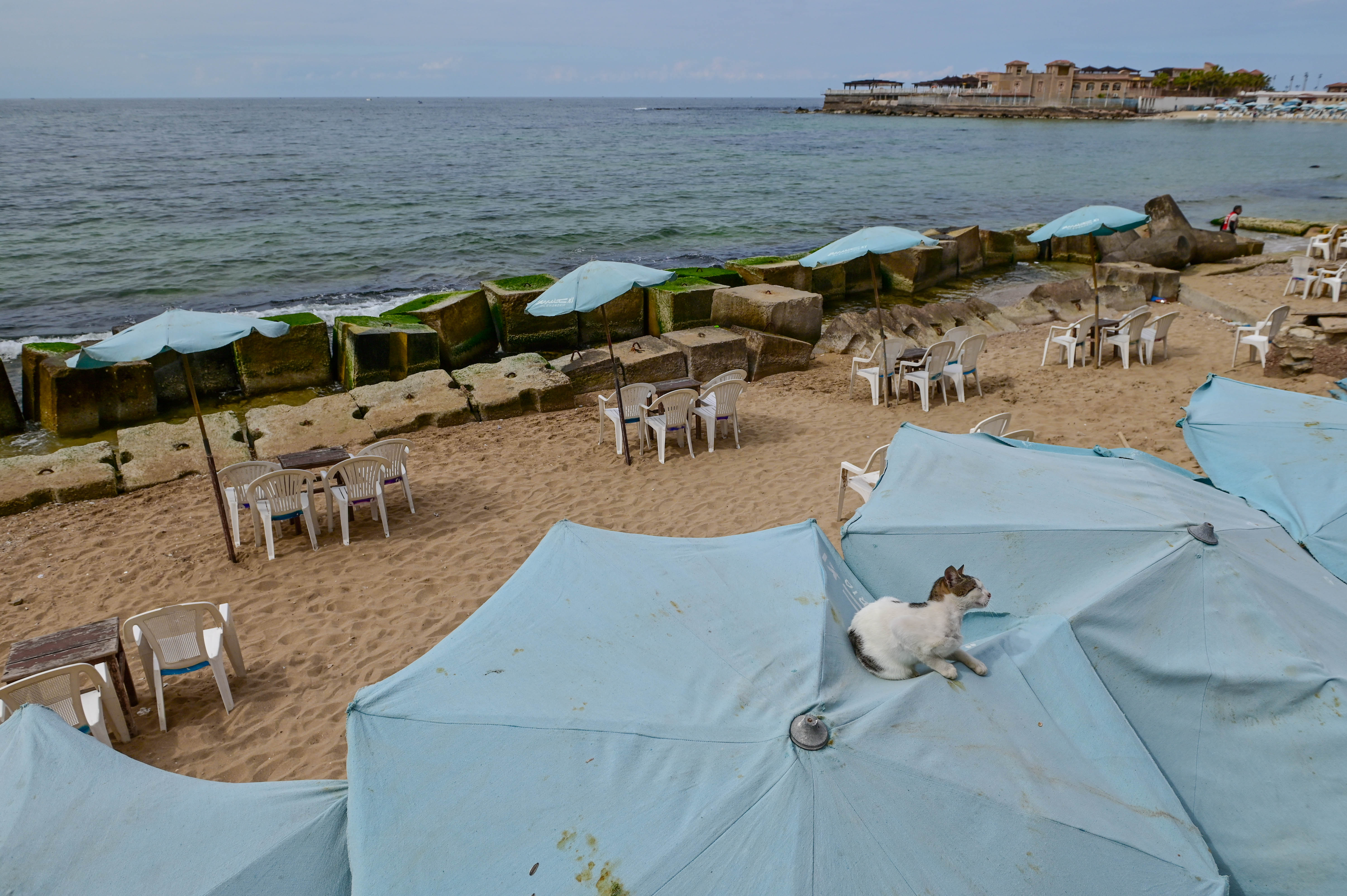
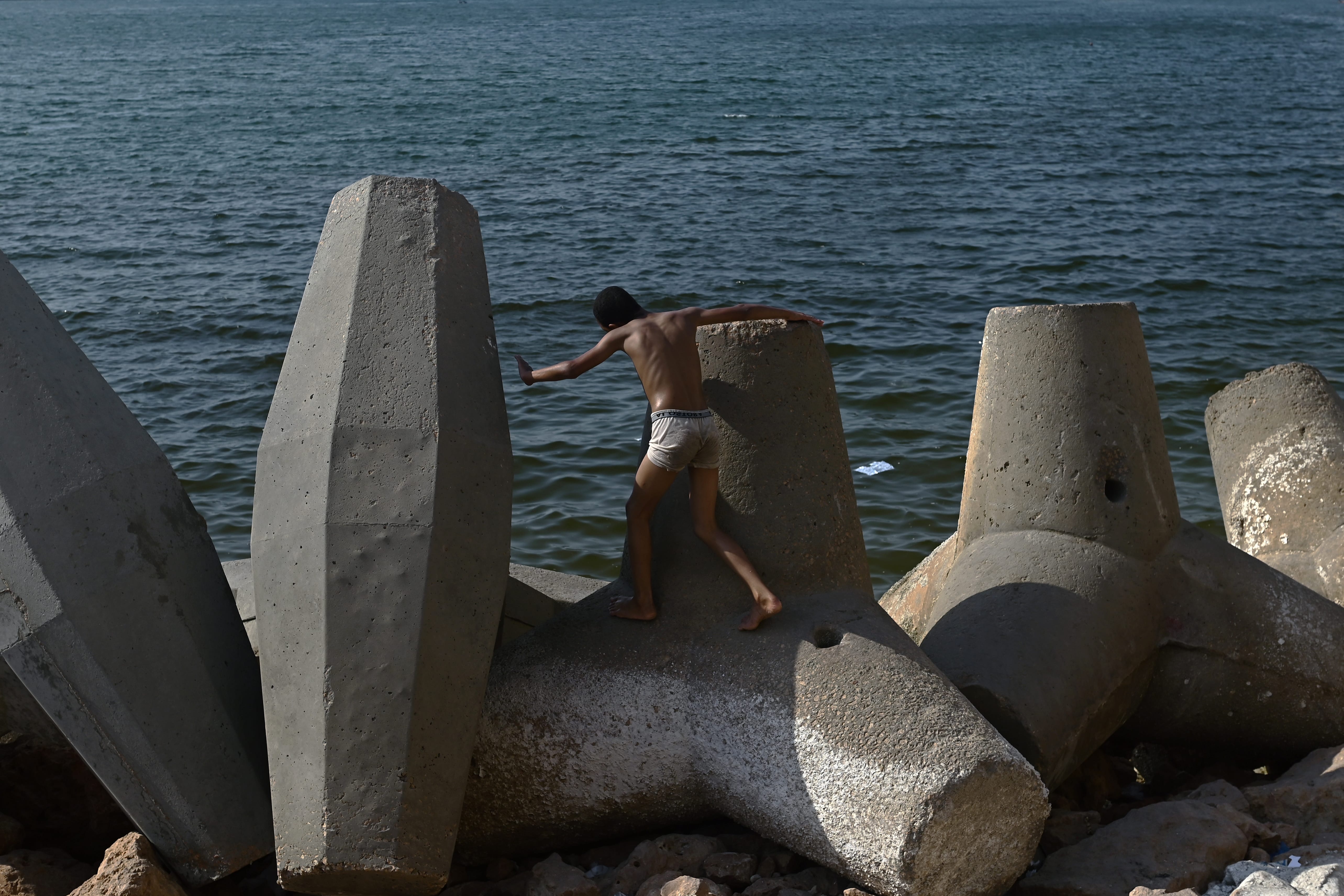
“I remember Cleopatra’s beach had cabins, and we used to sit on the sand, and there was a small island near the shore that young men used to race to swim to. Now that’s gone,” my friend Rafi paused for a moment and then added, “It’s just concrete blocks.” We were sitting on one of these solid grey blocks, looking at the sea, when he pointed to it and said, “There used to be a beach here.”
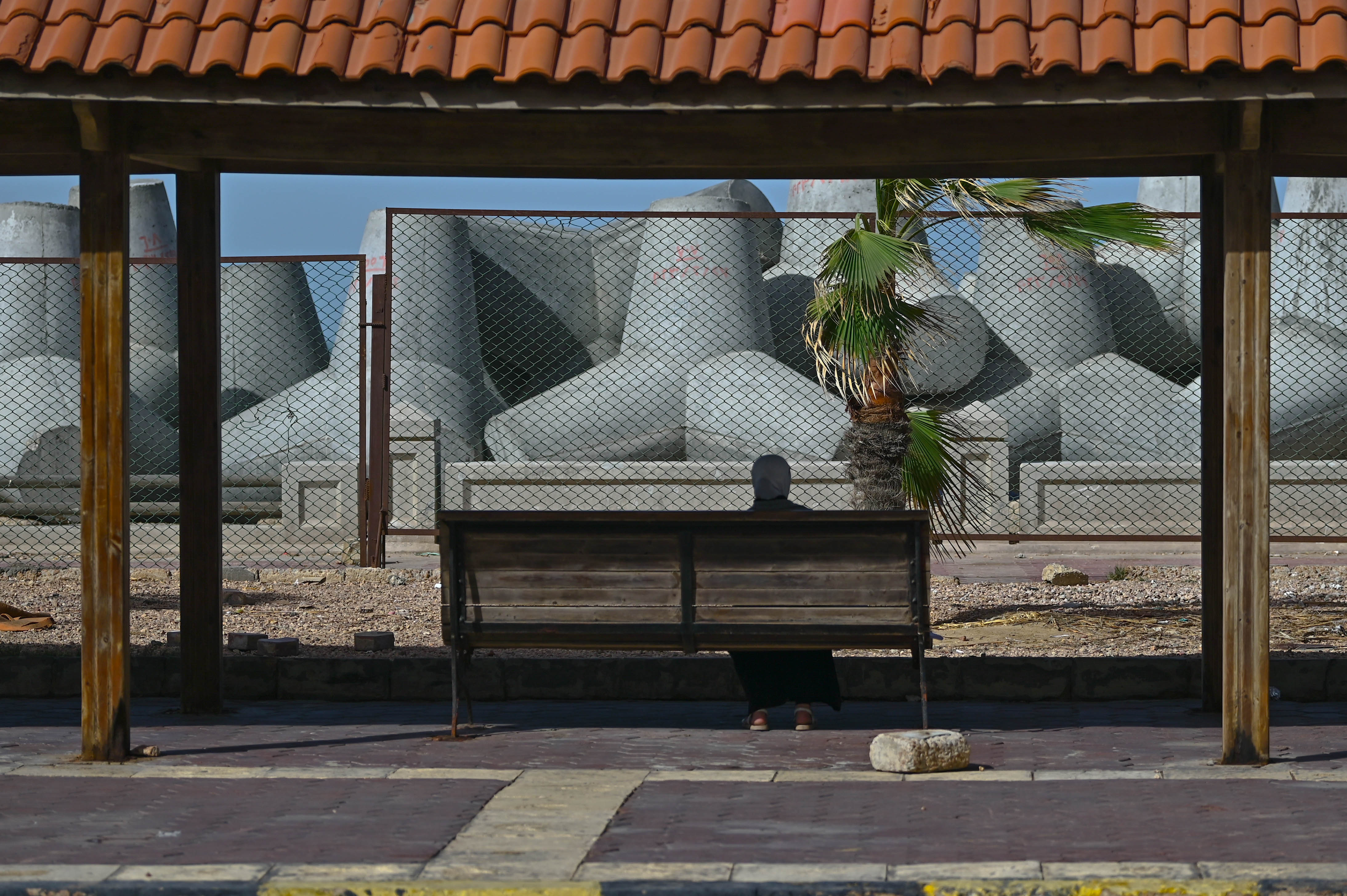
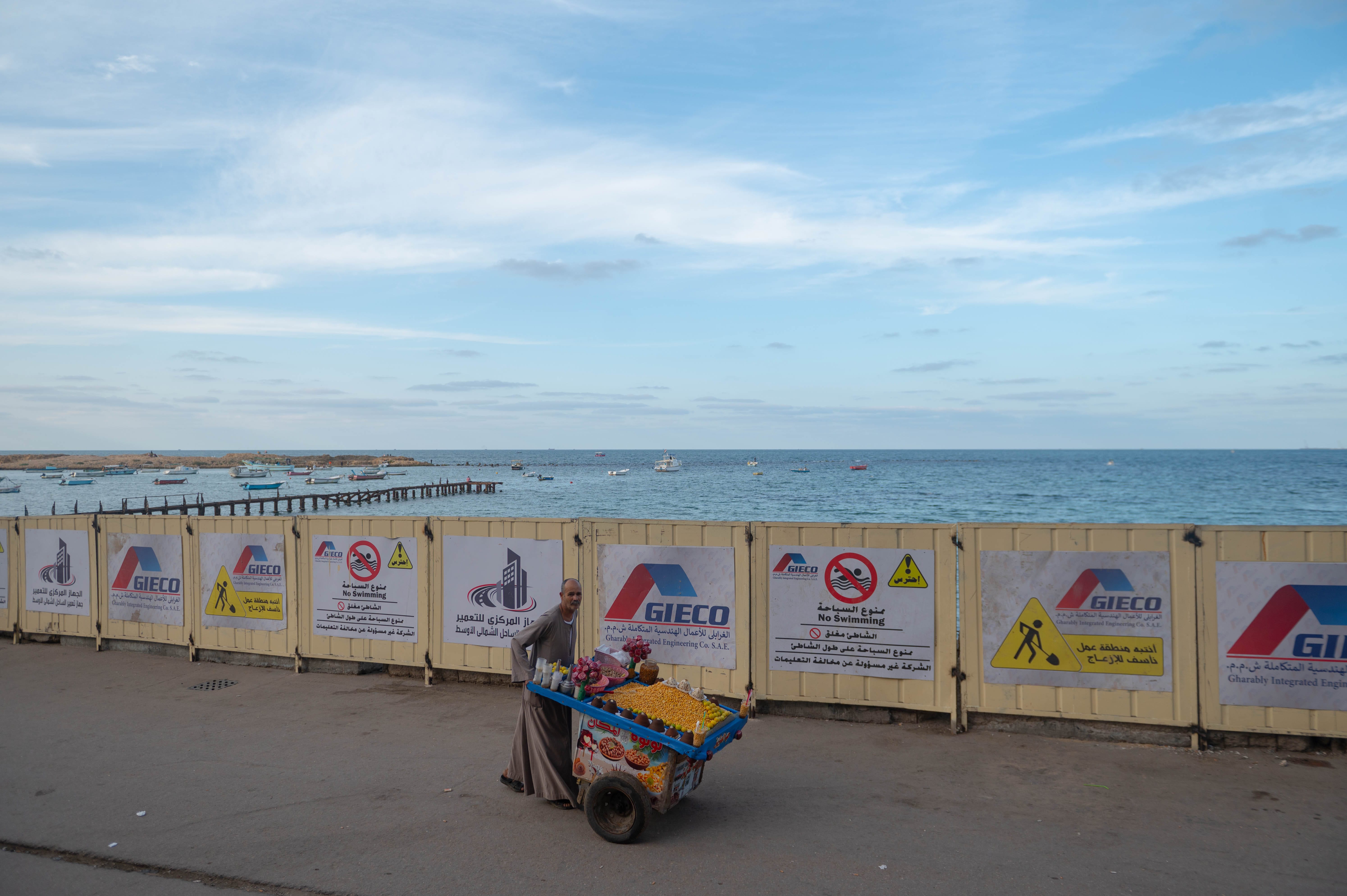
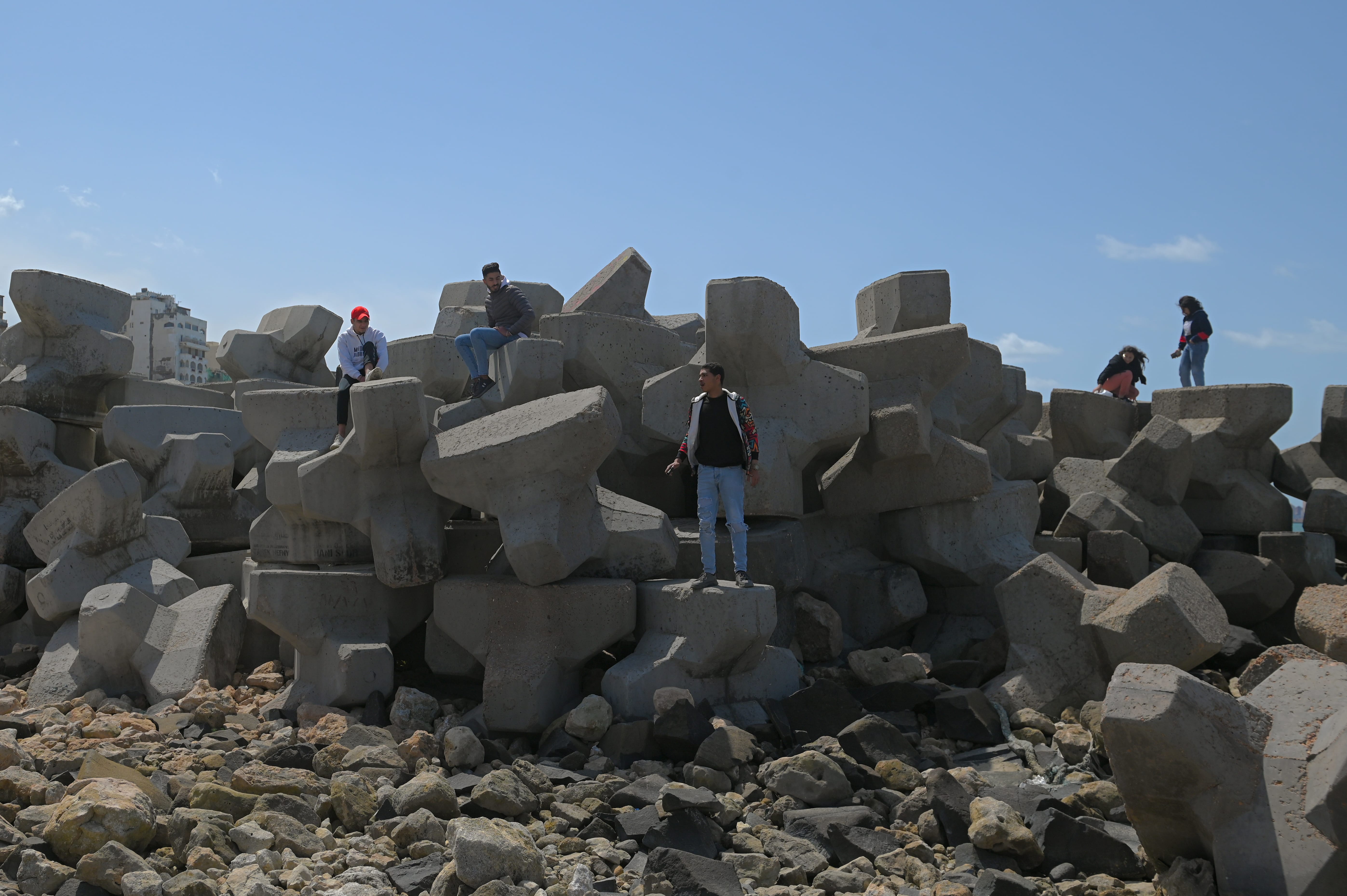
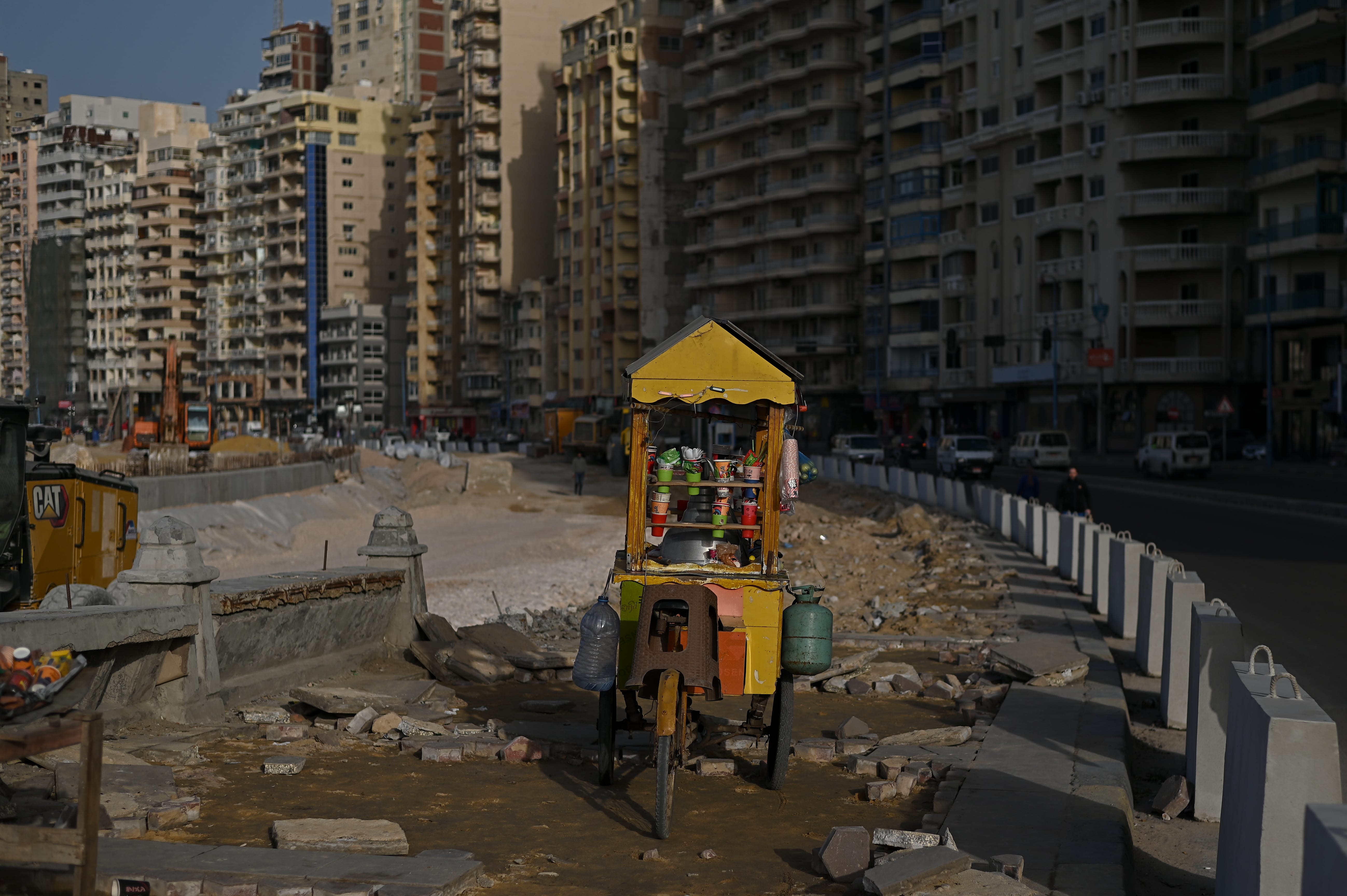
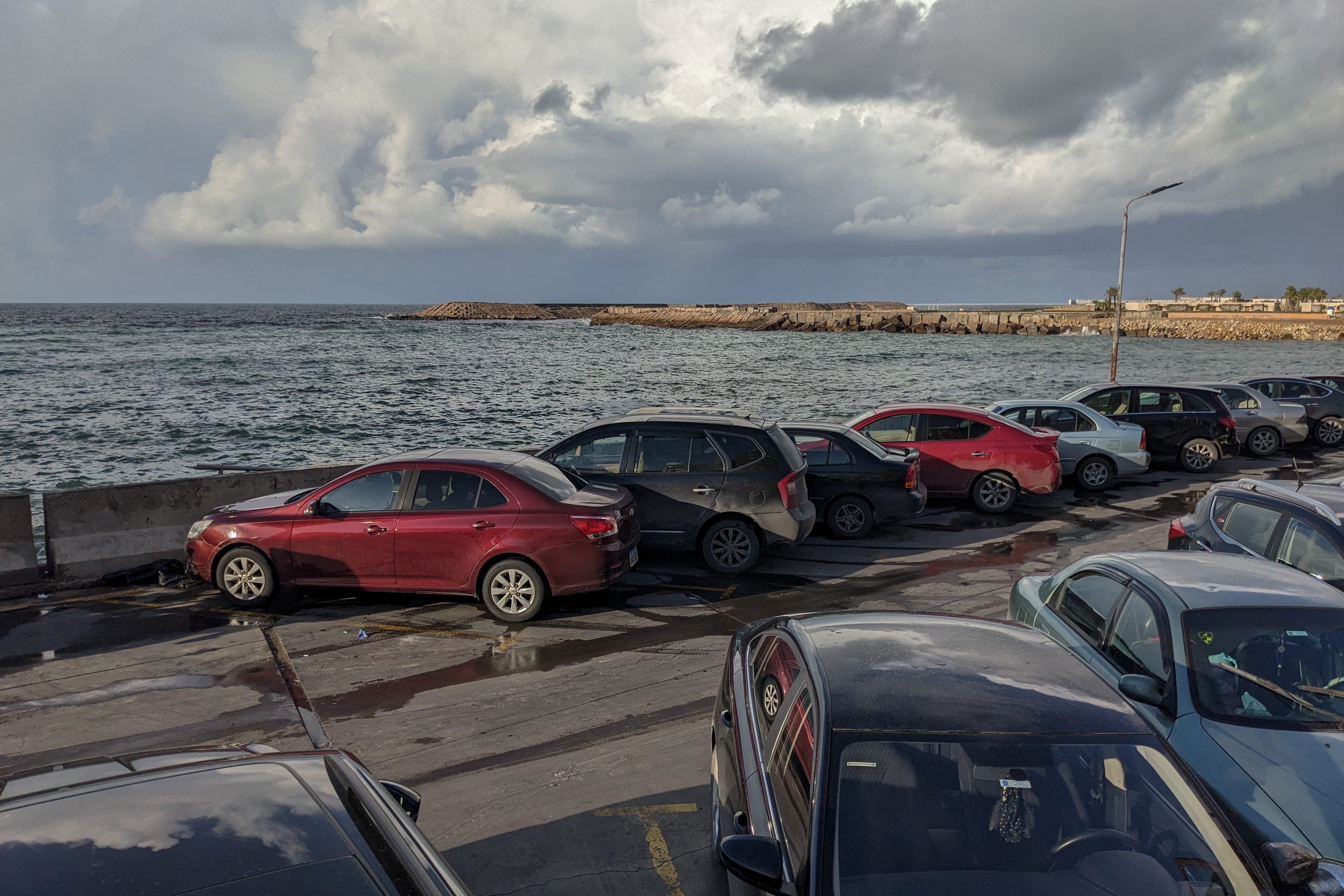
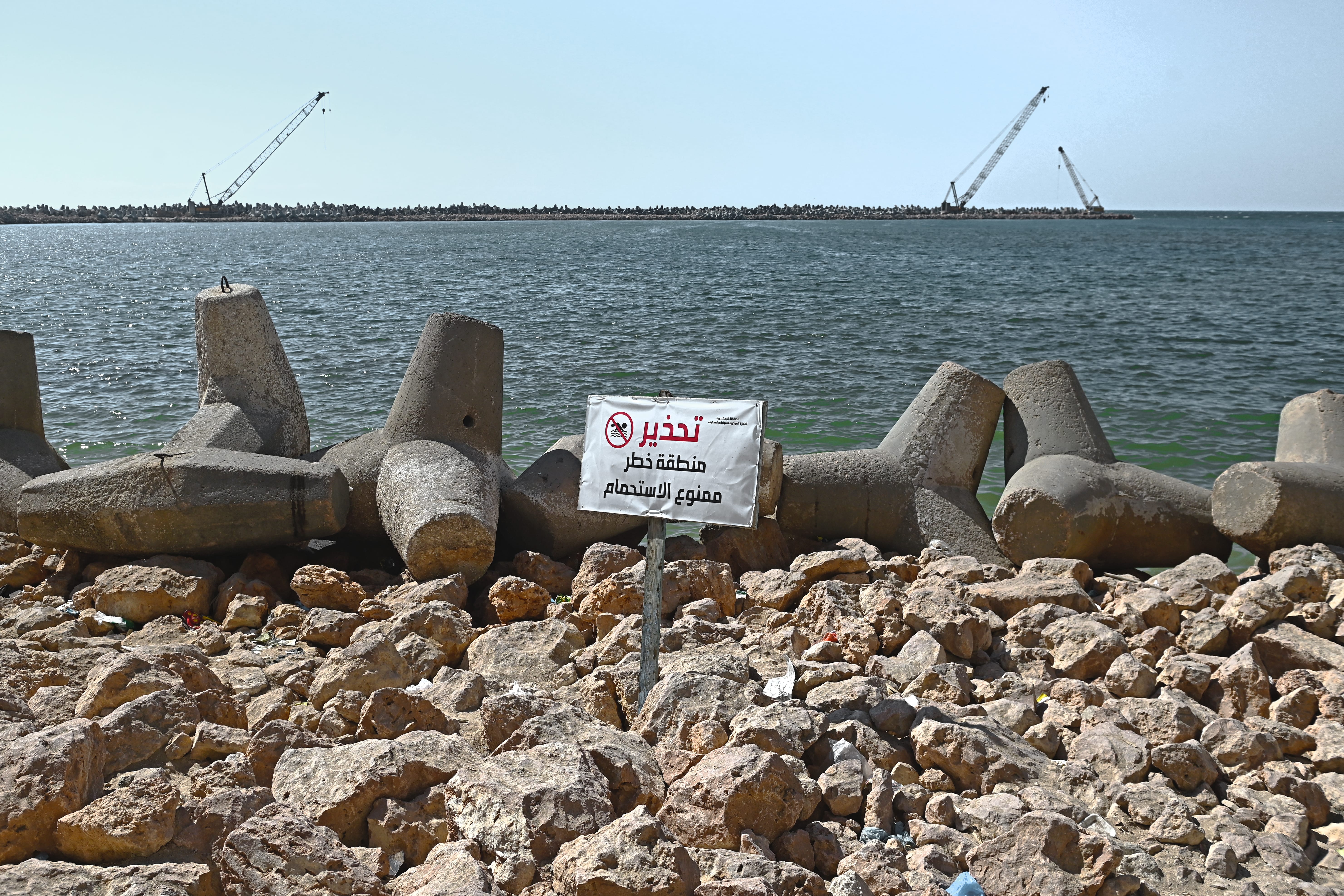
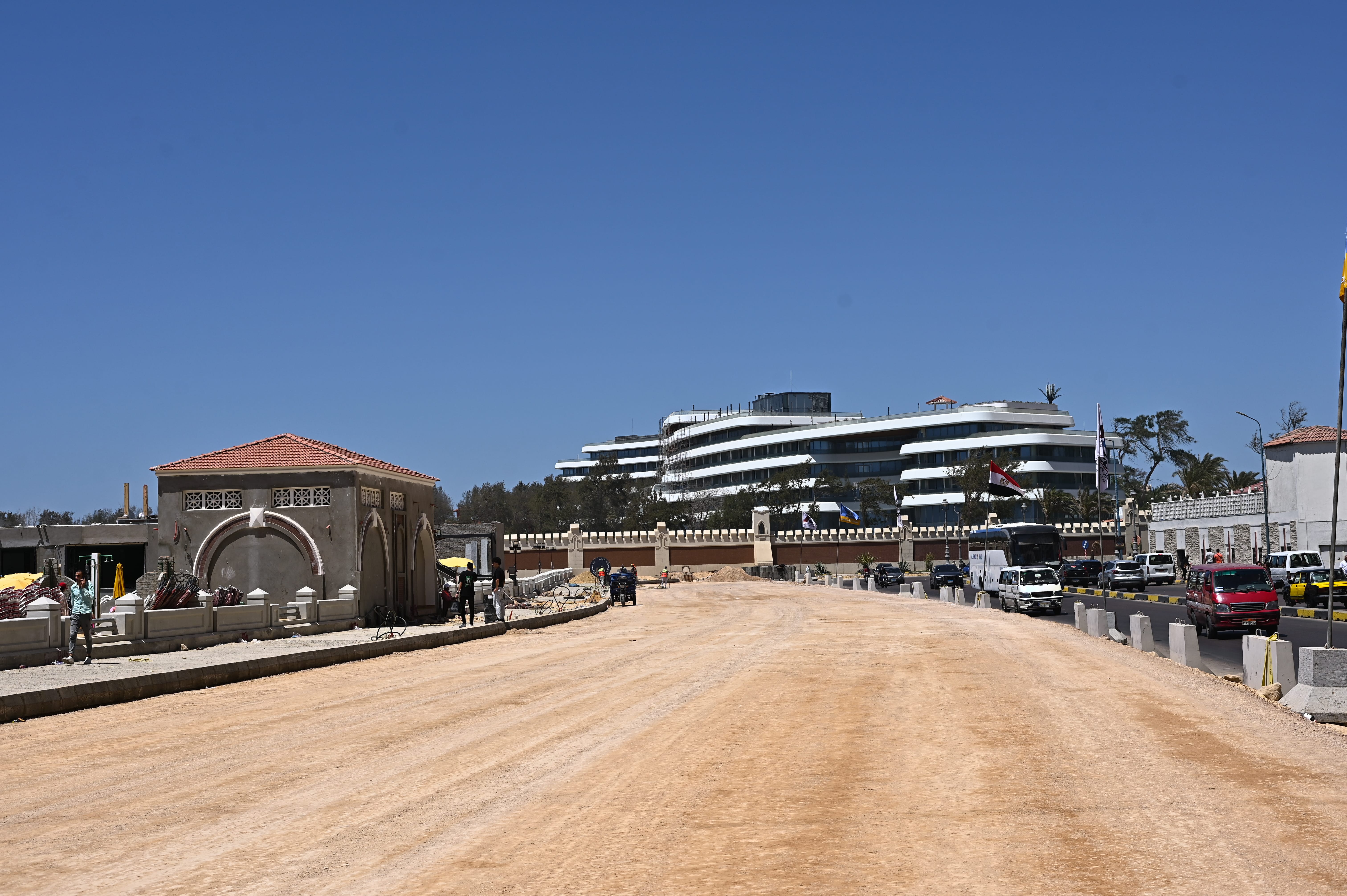
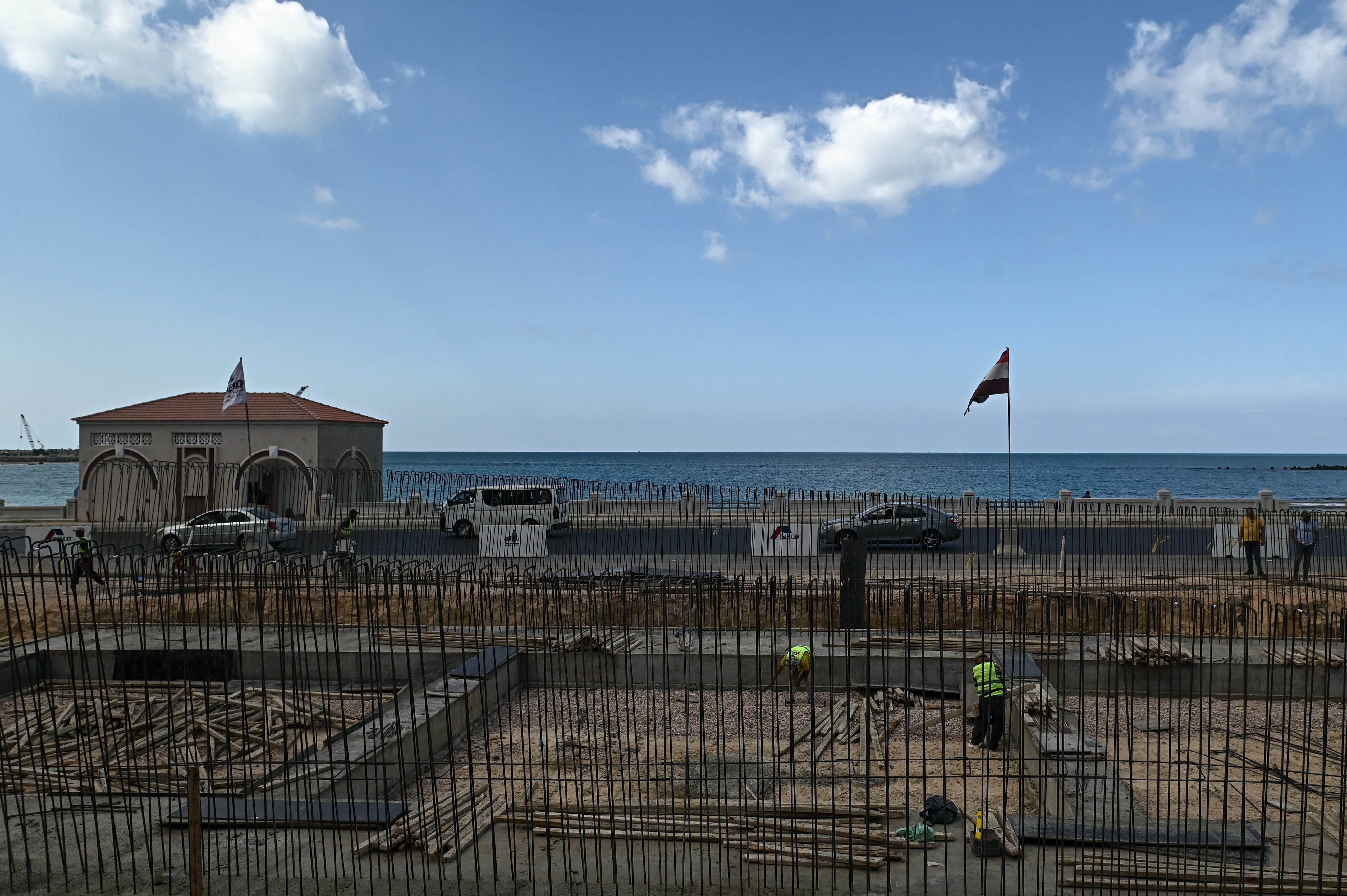
In the city center, thousands of solid, cubic gray concrete blocks are lined up. “I see them as barricades separating us from the sea,” said Rafi. These blocks, accompanied by “danger signs” instead of people, have been sitting on the beach since the 1990s, when the Corniche road expansion project began to protect the city’s front line from storm surges. Rafi describes the problem as one that is “not with the beaches, but with the humanization of the city. The city has come to serve vehicles, not people. As part of Shatby beach has become a parking garage.”
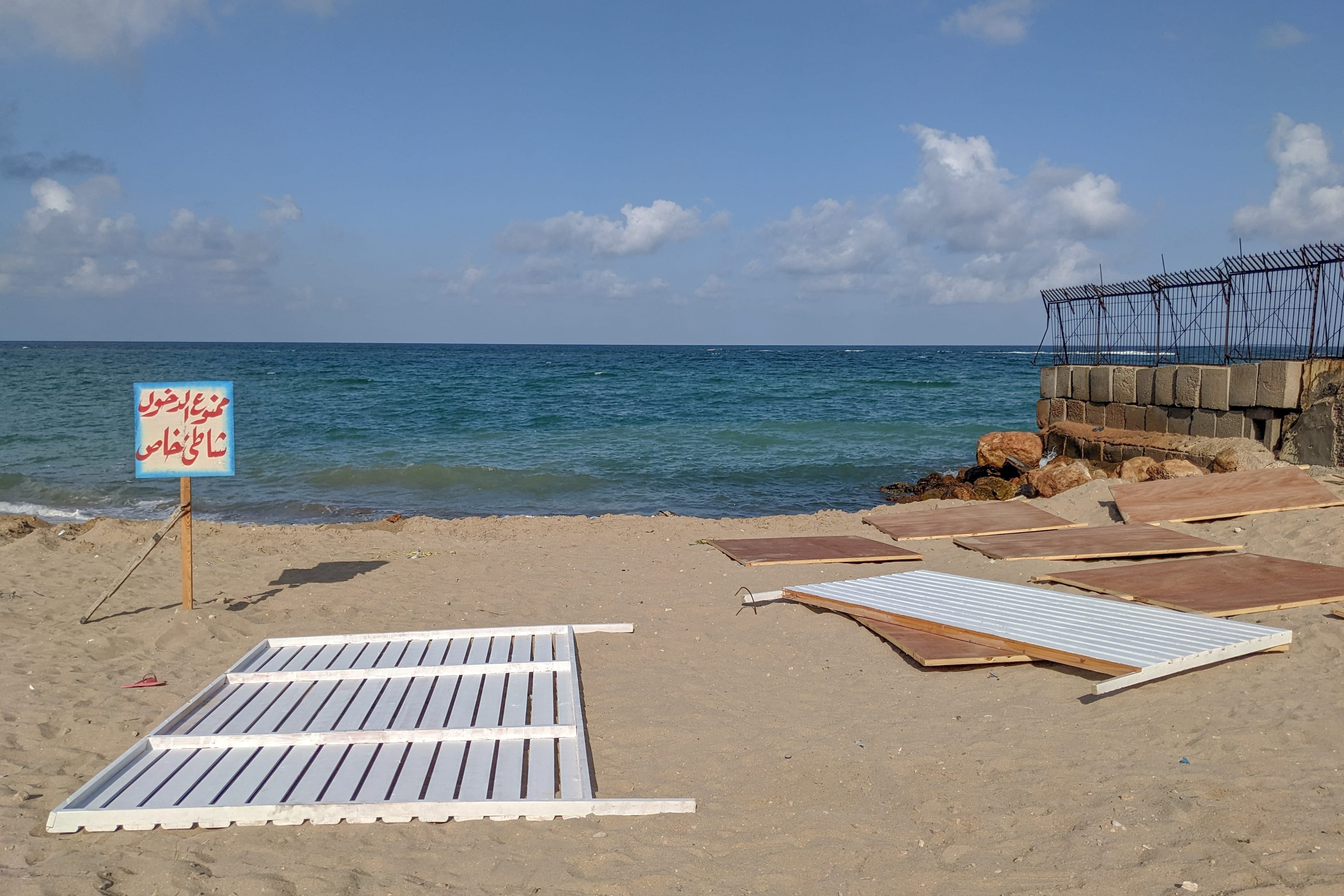
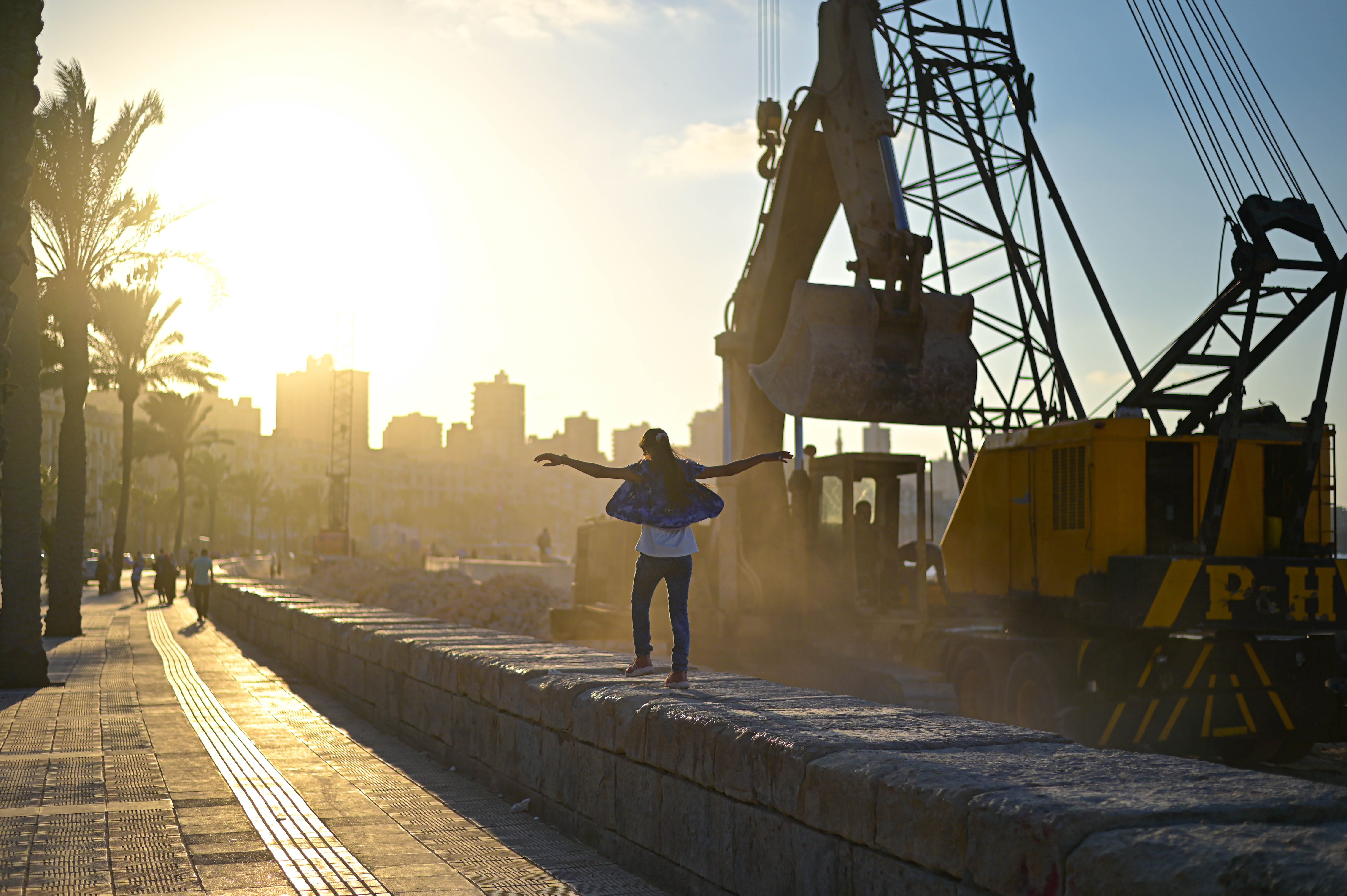
Rafi continues, speaking of his relationship with the concrete blocks, how they have obstructed the sea view in several areas. "It's happening again now in the east of the city," he says. "The roads are expanding at the expense of the beaches, and I expect a day will come soon when we find no beaches left in Alexandria." By tallying the remaining beaches this year compared to the early nineties, I found that we have lost 10 out of 15 beaches in Alexandria.
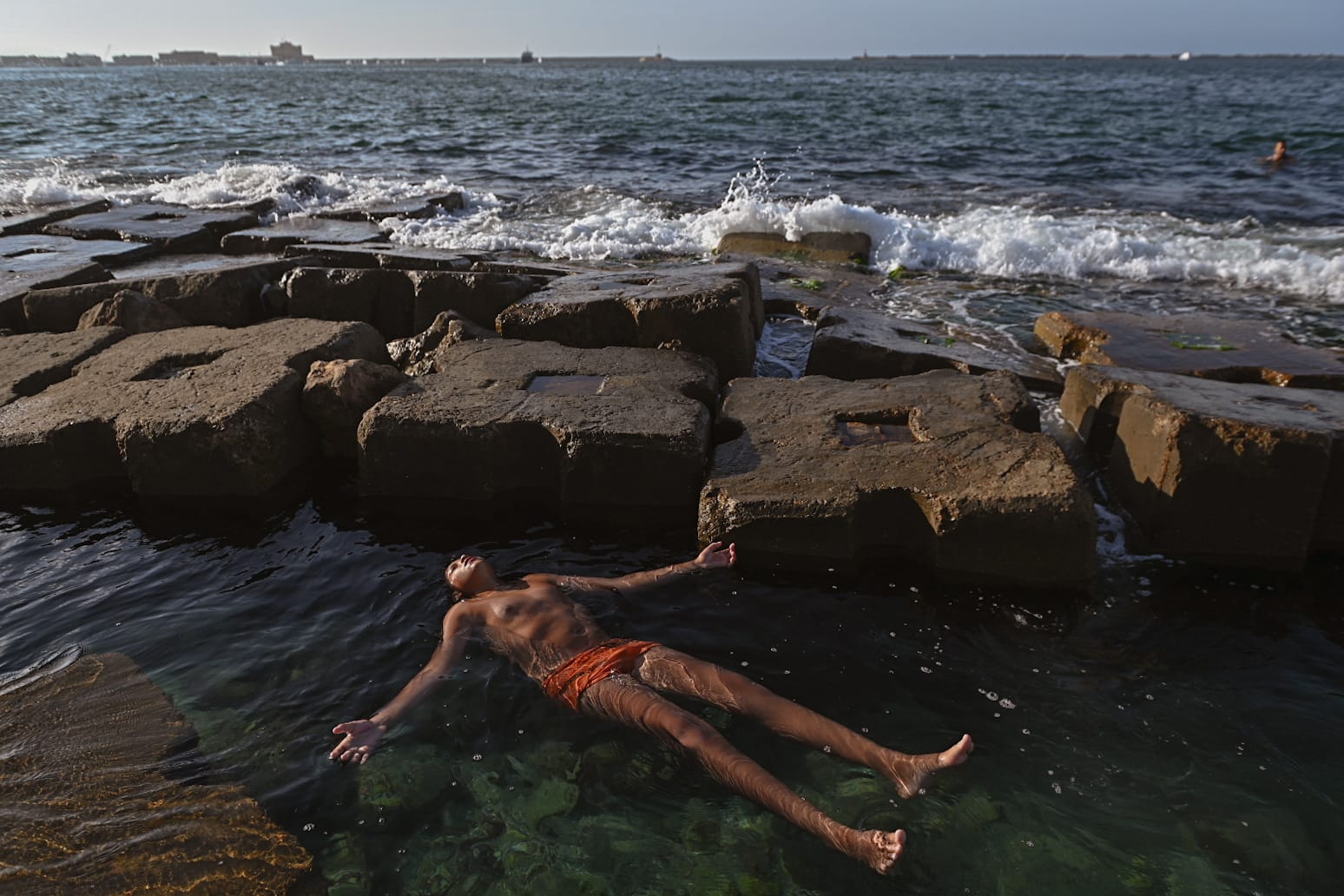

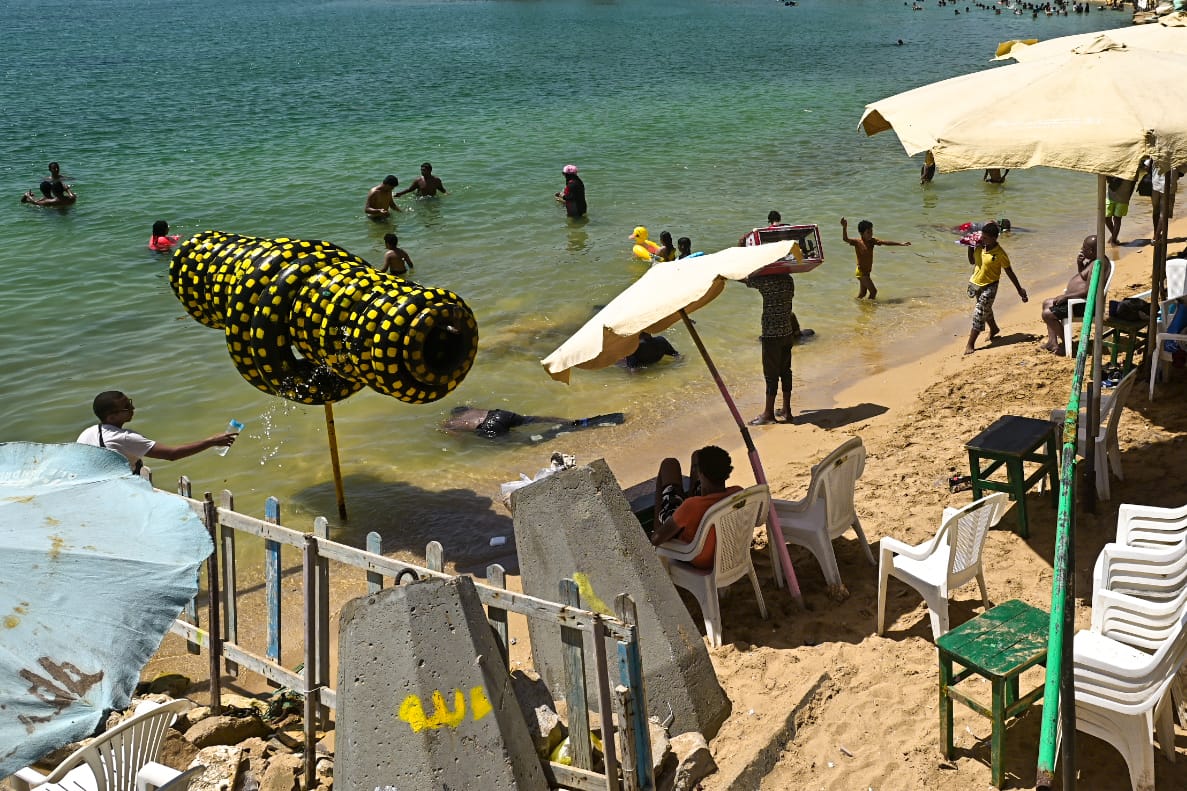
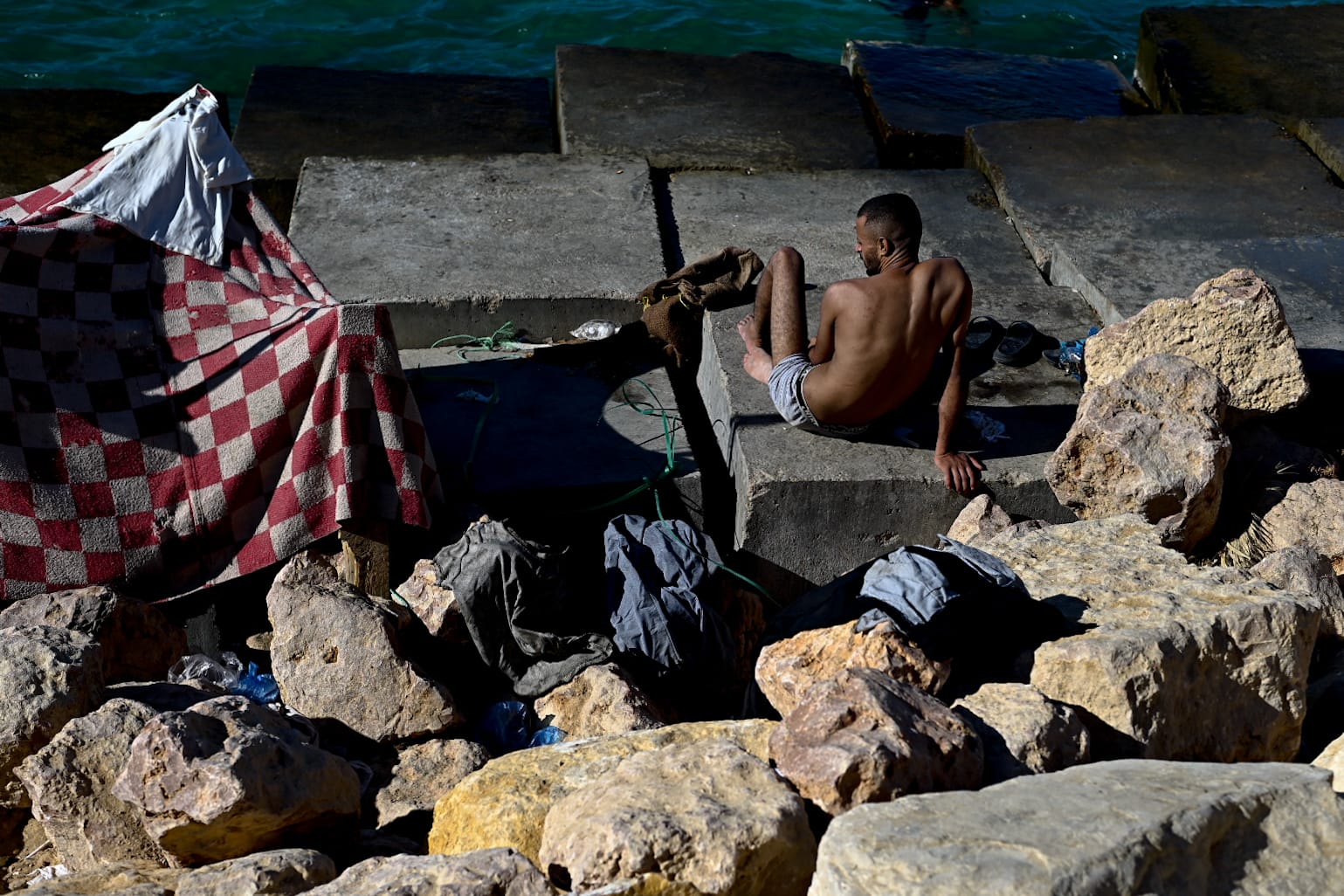
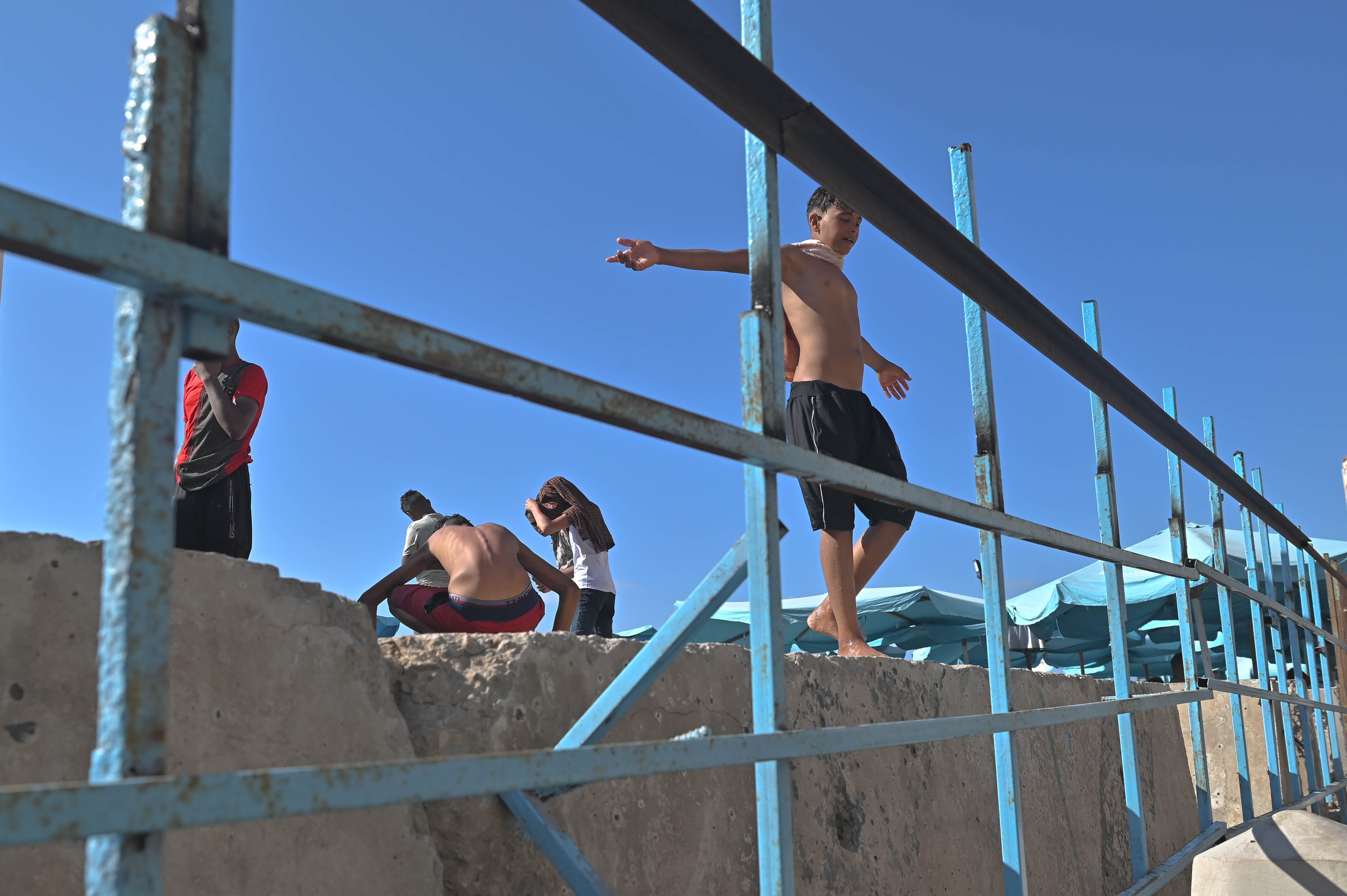
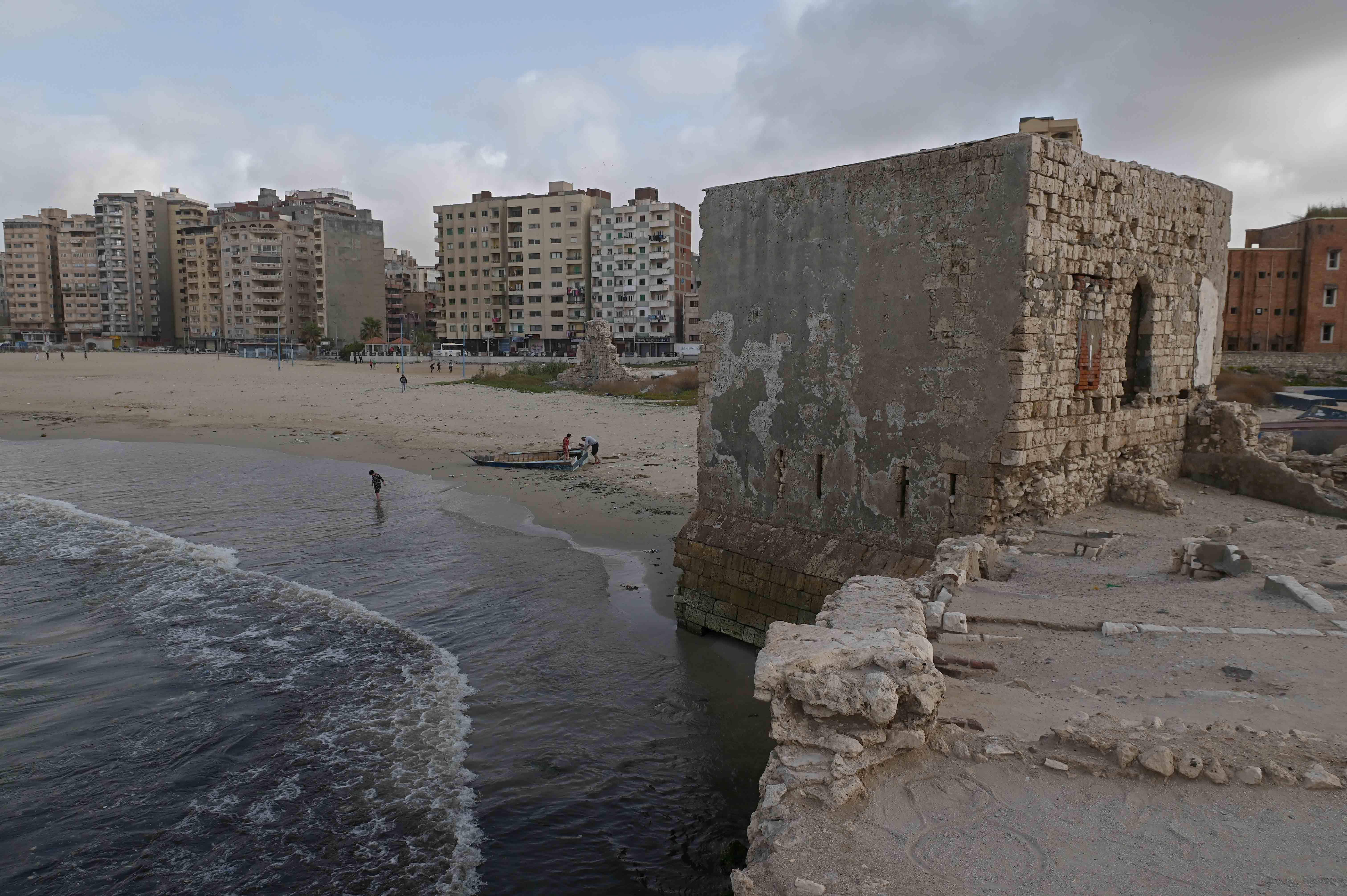
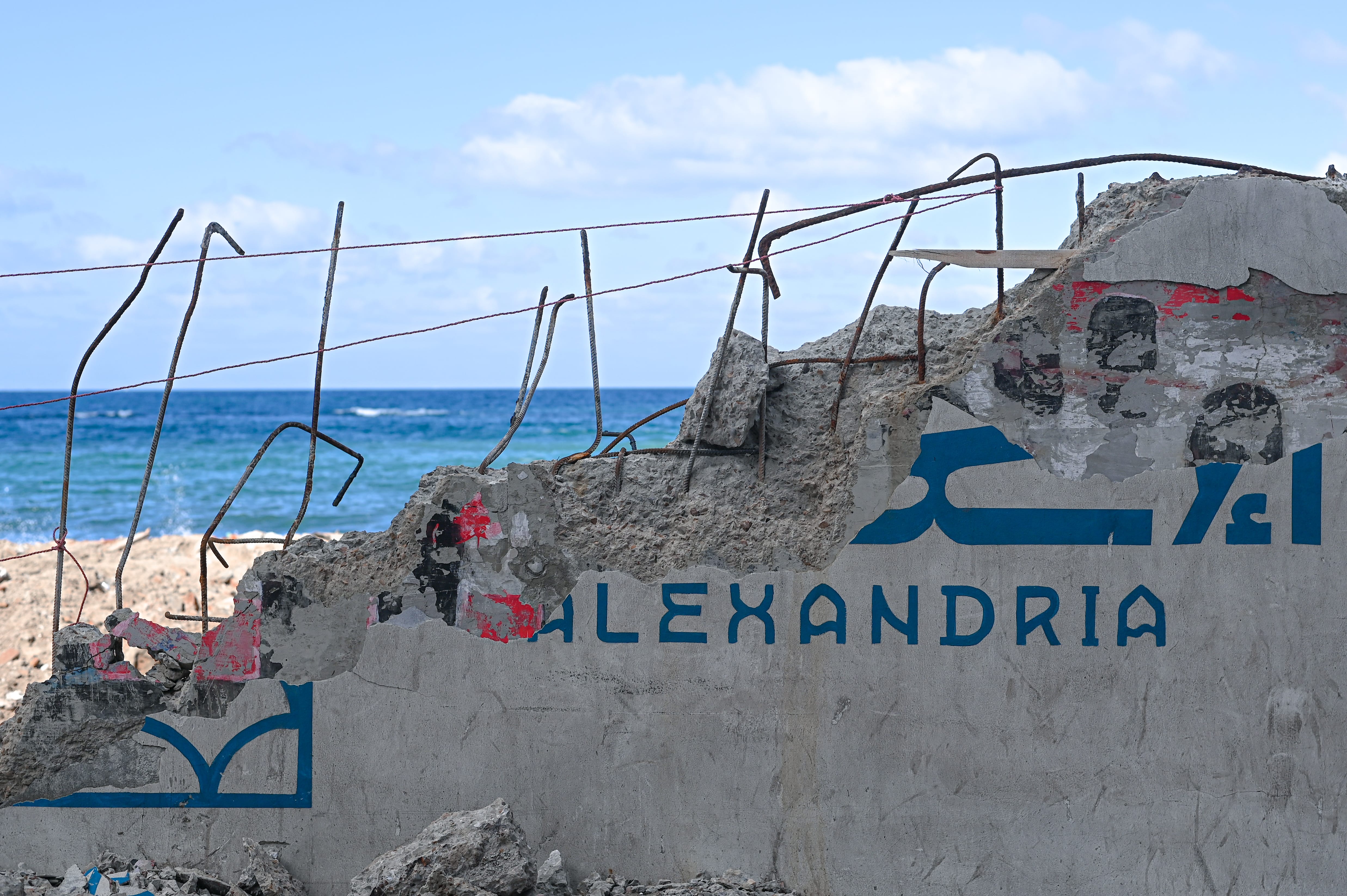
On Tuesday, August 20, 2024, the Dry Dock and the Dekheila Fortress, the oldest recorded Mamluk monument in Alexandria, located on Dekheila Beach west of Alexandria, were demolished. This time, the fortress did not collapse due to the sea waves.
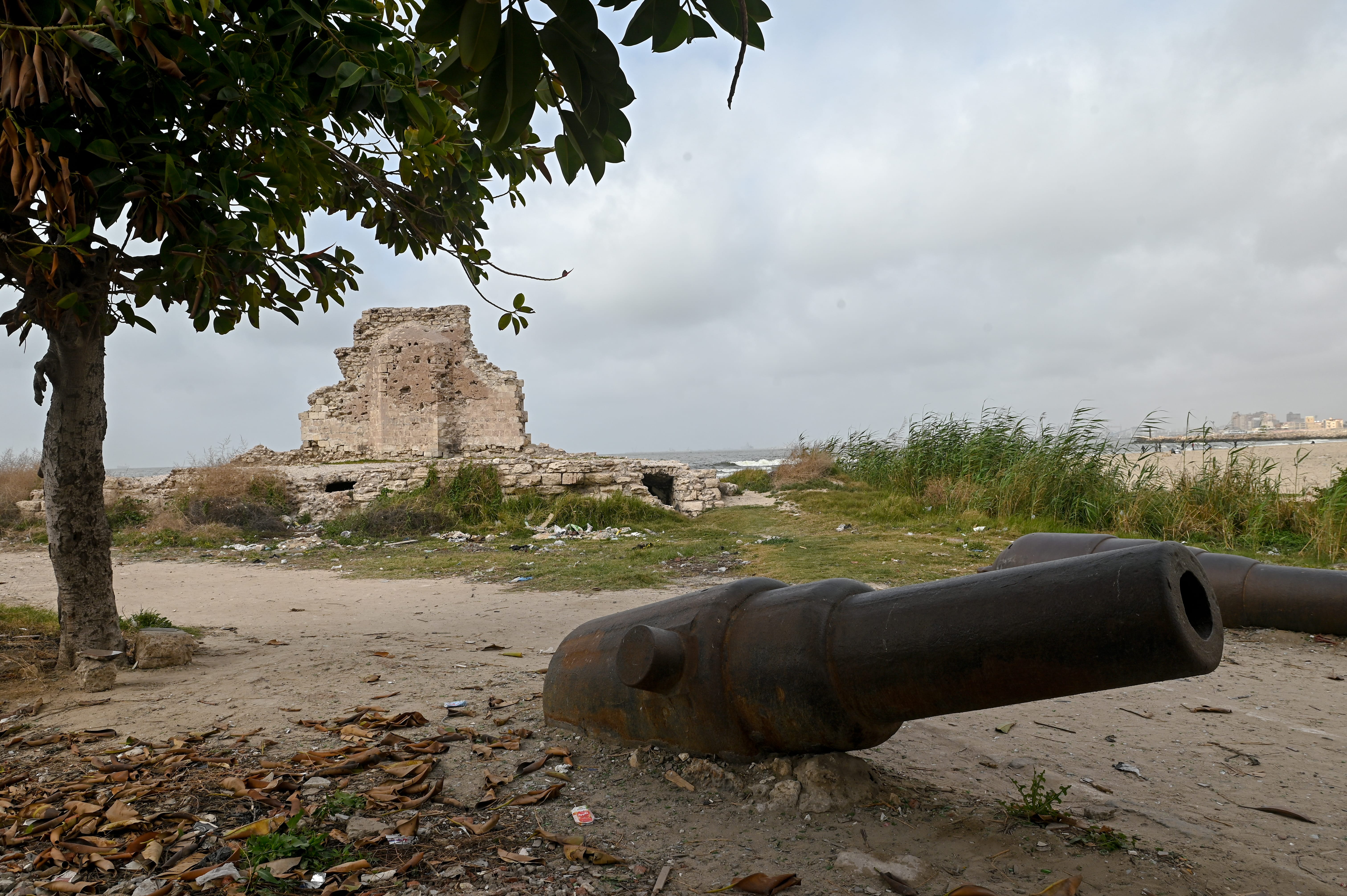
Dekheila Beach is considered the largest beach in Alexandria. It contains the remains of the Dekheila Fort and a dry dock dating back 300 years. Two ancient Armstrong cannons lie next to it under the shade of a tree overlooking the beach.
The wide beach, carrying the traces of a history that has watched time pass for centuries, has become part of the people’s own story. It holds memories of blood, wars, bombings, destruction, and death. It also carries the softer history told in intimate gatherings and between friends: a meeting on the shore, a photo beside the old cannon, a fleeting kiss between the waves. It remembers the football field that stood there for decades, the cheers of joy by the sea, and the cries of farewell for those lost to the water. This is a history that tells who we are, and any change to it changes our stories.
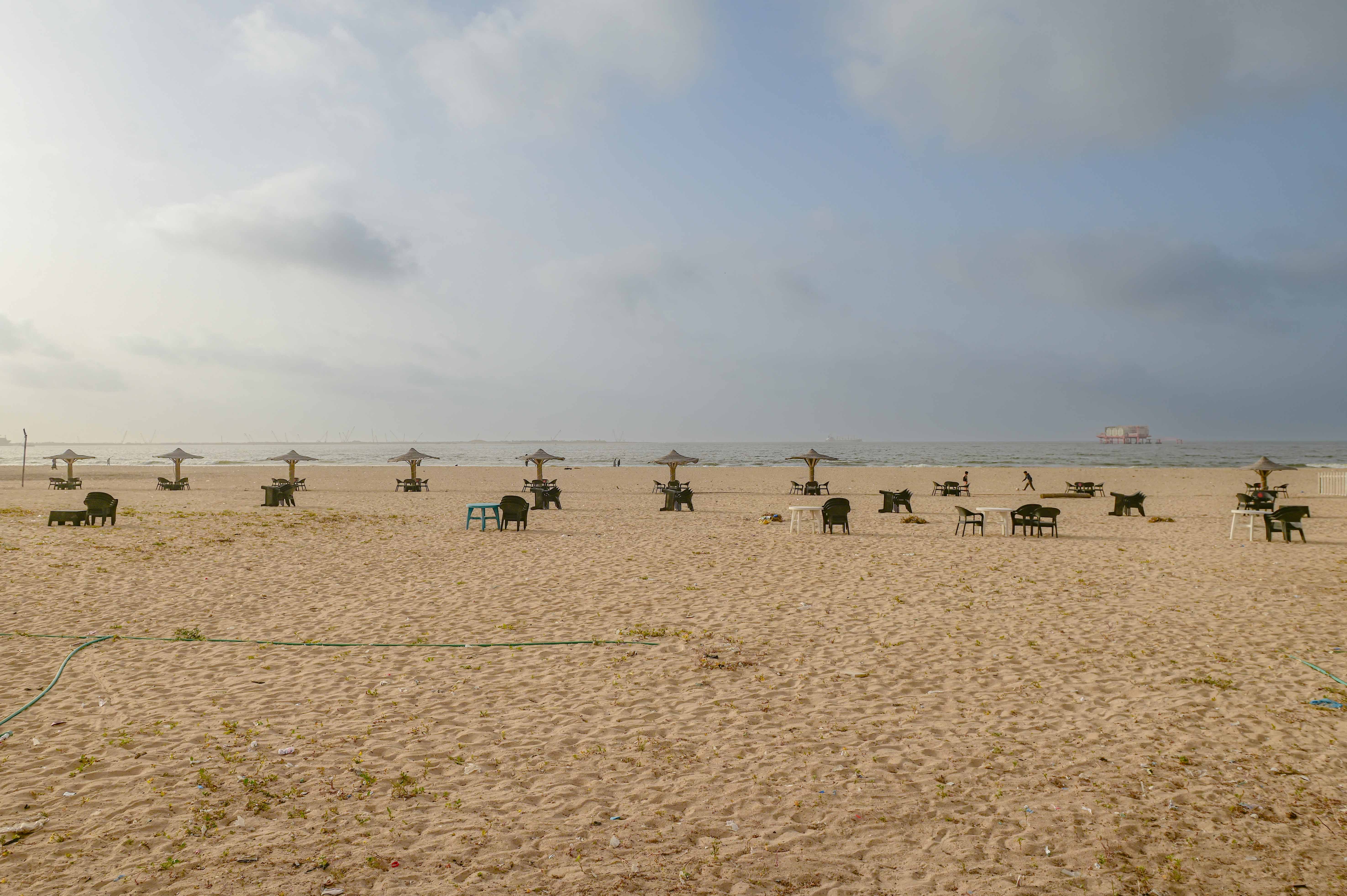
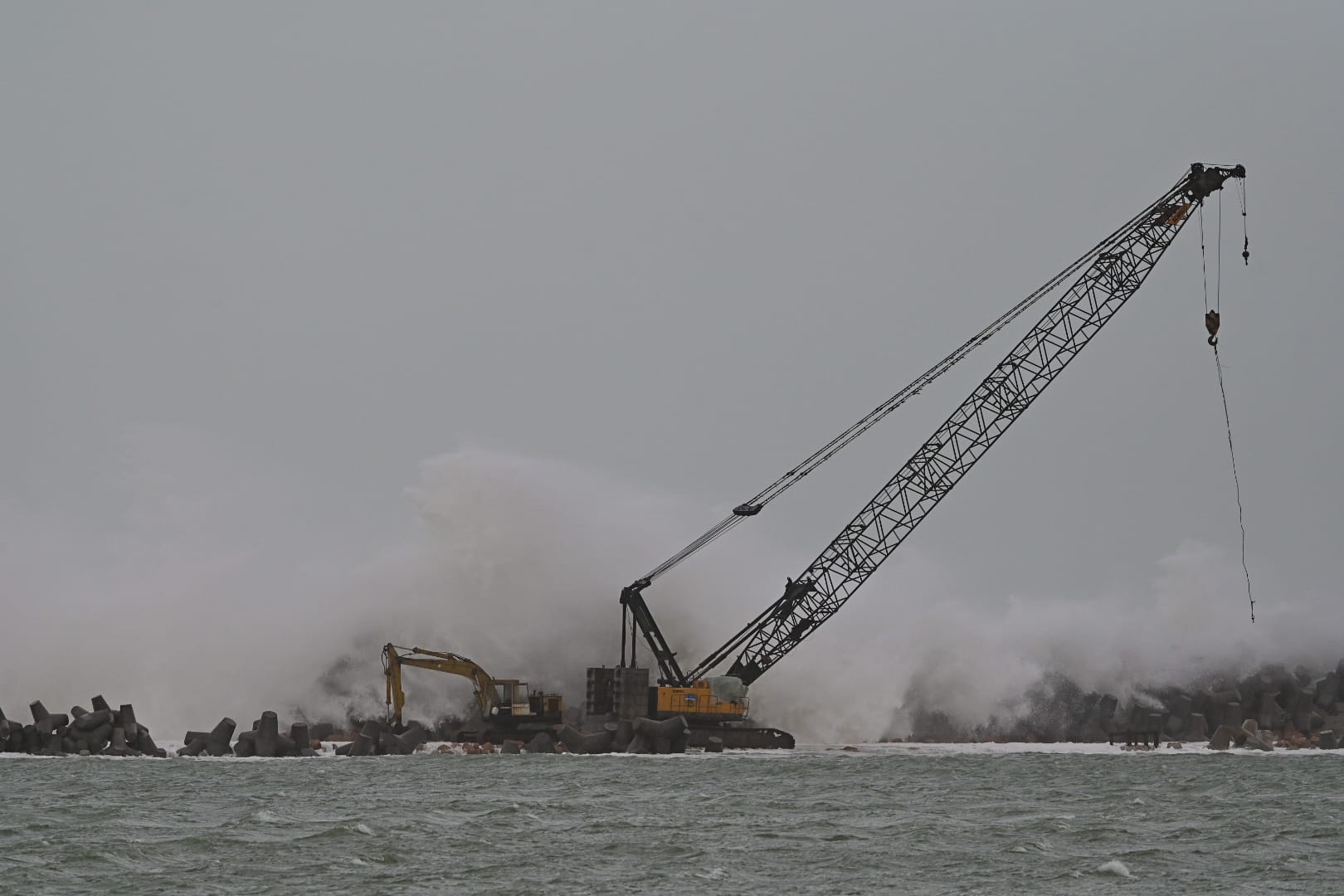
In early 2024, a decision was issued to construct the Middle Port (El Meks Port), a 7-kilometer geographical link between the ports of Alexandria and Dekheila, encompassing the area of Dekheila Beach. In that moment, I felt I had to go and bid farewell to this shore and its monuments. I wasn't alone. I met many residents of Dekheila who were there to take commemorative photos, which I took for them myself.
One of the people I met on the hill of the fort's ruins was Fares, a young man from Dekheila. I asked his permission to record as he shared his memories and what the place means to him, with the sounds of people and the wind around us. Fares told me about the sadness and impact this decision had on the residents, explaining that some families will have to leave their homes and move to the Bashayer El Khair social housing area, which is several kilometers away.


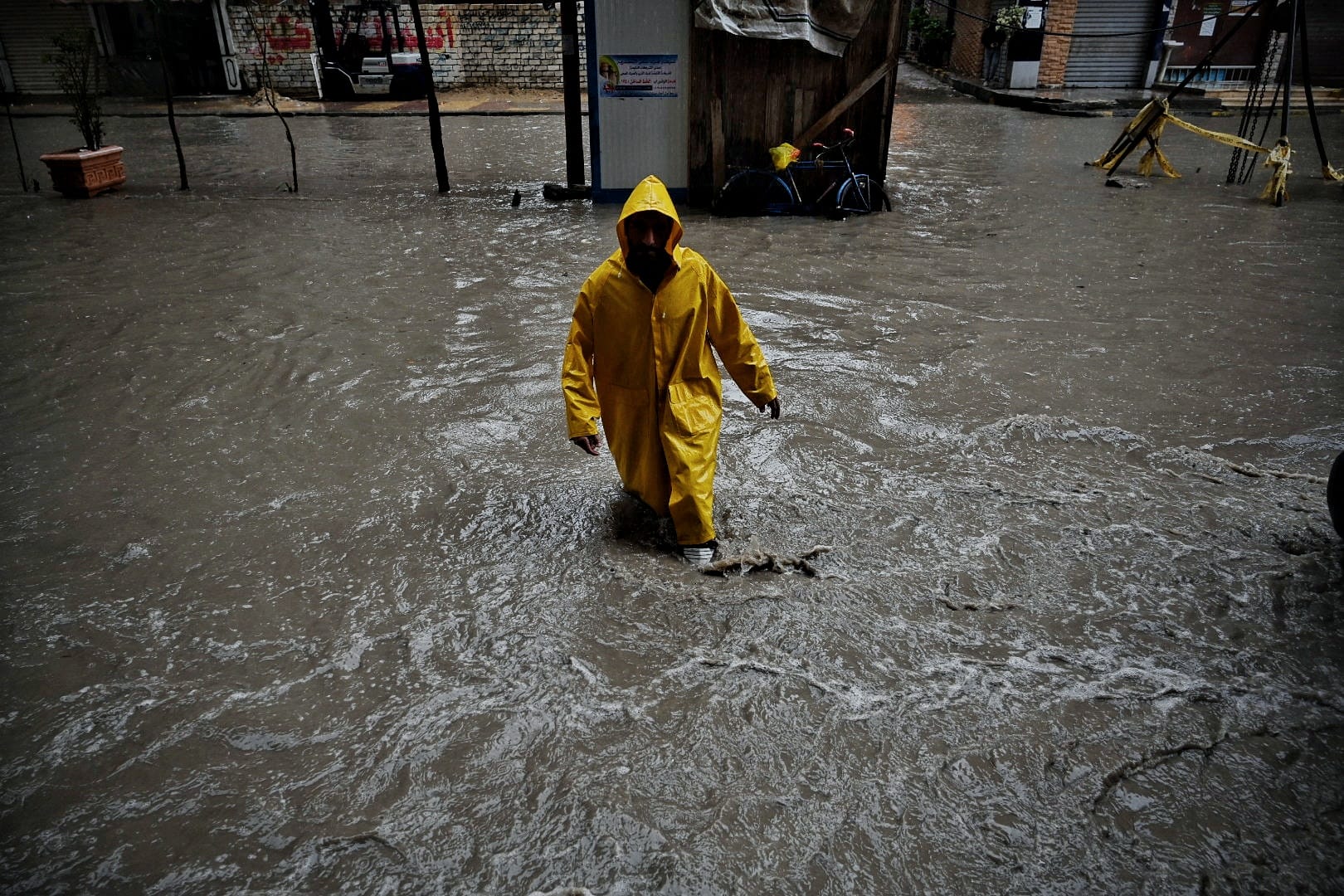
More than 70 kilometers to the south, in the city's desert hinterland, on a hill rising about 15 meters high, Mona Magdy's father chose a place that seemed like a safe haven from a potential catastrophe. Dr. Magdy saw this location, which sits in an almost apocalyptic scene, as the perfect place to build a private home that would offer safety for his family.
The earthy-colored house, reflecting the surrounding environment, appears devoid of warmth. A small pool for the grandchildren is nestled in the middle of the garden, alongside essential plants like tomatoes and onions. Dr. Magdy designed this house ten years ago with an elaborate drainage system to mitigate any potential flooding risk and furnished it with the bare essentials. Despite his almost weekly visits, Mona describes it as lifeless and expresses her dislike for it, but she wonders if it will ever serve as a true shelter in the event of a disaster.

Despite this rare, conscious, and proactive step taken by Mona's father to confront a danger he himself may never face, but one that very well could be a reality for his children, Mona feels lonely in this house. She tells me that survival will not be individual. Even if she, her daughter, her siblings, and their children survive, who will be with them in that place?




%201.png)