Adam and Eve’s Modern Diaries
Dear Eve,
I read your letter amidst the silence that engulfs the shores of Port Said. I felt that the distance between us was not merely streets or cities. It is, as you said, the chaos of Cairo against the quiet of my city, a quiet that carries within it an anticipation I cannot tell when it will fade.
Port Said is not like Cairo. My city is calm, as if always waiting. It is a city steeped in mystery, hiding more than it reveals. On the faces of its people are etched the traces of upheavals accumulated over time. The city has become worse than it once was.
While you collapse amid the clamor of Cairo, I am here, in a city like a faded shadow. Perhaps I appear as a stranger, exchanging nothing more than smiles with passersby, leaving no trace behind.
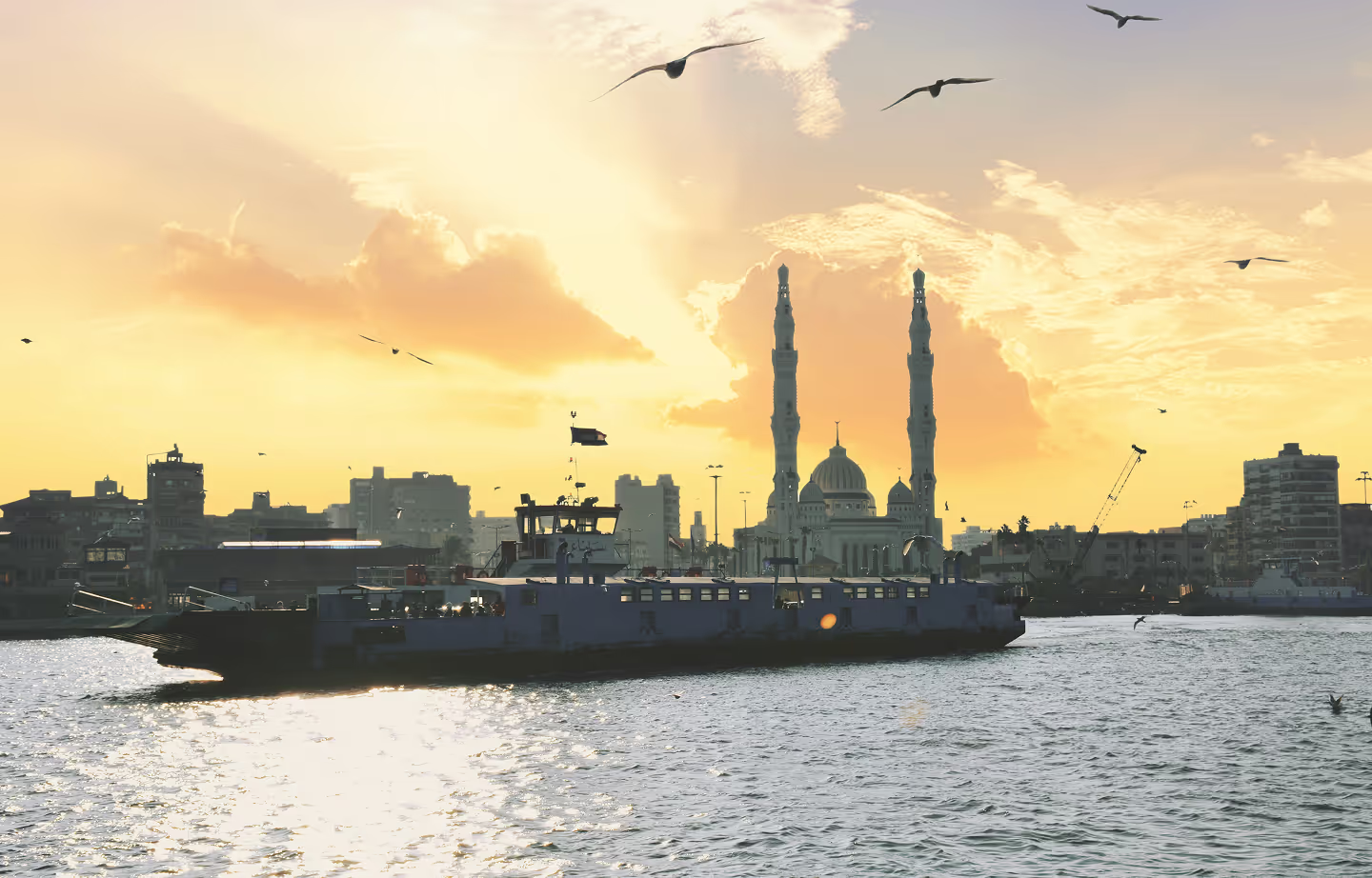
Some days, I walk along the Corniche, gazing at the sea that seems endless, and I ask myself when will we share this view? The port of Port Said is unlike any other, it is a gateway to all that is distant, a window onto all that we await. Yet perhaps it is not the sea that waits for the ships, but the ships that wait for permission to depart. At times, I feel I am one of those ships!
Cairo robs you of rest, this is true. But Port Said gives me only the illusion of it and drowns me in silence. Sometimes I feel like a captive in its streets, searching for something I cannot name. And sometimes I find myself thinking of you, wondering how you see me here, in a city that never quite fits me.
I feel as if I am on the verge of collapse, but not in the same way. Your collapse happened in a city bursting with life. Mine, in a city that refuses to give me meaning. Like those cities that suffocate both strangers and the dead, unable to tell them apart. The city devours me with its silence as Cairo devours you with its chaos. We are caught between two cities, between two lives, yet we share the same waiting.
With love,
Adam, awaiting the fall,
Port Said
%202.png)
I had always believed I possessed a strange ability to adapt, but it turned out to be something else entirely.
When I visited it for the first time, I felt as if I'd entered a giant maze, a city that swallows you up and reshapes you without asking if you want it or not. I used to have the luxury of silence, but here, even my thoughts were crowded out by the sounds of cars.
Not in the way stars fall, or comets streak across the sky, but in a simple email, sent as if casting a stone into a still pond: “Hello, I heard you’re a good listener.”
She seems like an integral part of this chaos, breathing it in as I breathe sea air. At first, I thought she talked a lot because she loved talking. But later, I realized that she was afraid of her voice getting lost in the noise, of becoming just another face in the crowd!
Her hand gripped the cinema ticket as if it were a key to something deeper. Her choice of film was unexpected, but I didn’t ask. We entered the hall, and I sat watching her. The darkness of the cinema revealed her features with a clarity I had never seen in daylight. The tension she tried to hide, her fingers clutching my arm as though I were the rescuer.
She wasn’t really watching the film. She was trying not to expose herself before me. And I, in turn, tried not to seem as though I saw everything.
There was something ironic in it all, we were sitting through a horror movie, but the things that scared us the most weren't on the screen!
I knew the places that hid in the shadows of the great city. One day, I suggested we go to a place that would not exist for long.
“Why this place in particular?” she asked me.
“Because soon it will be gone, and I hate when places are erased without anyone remembering them.” I said.
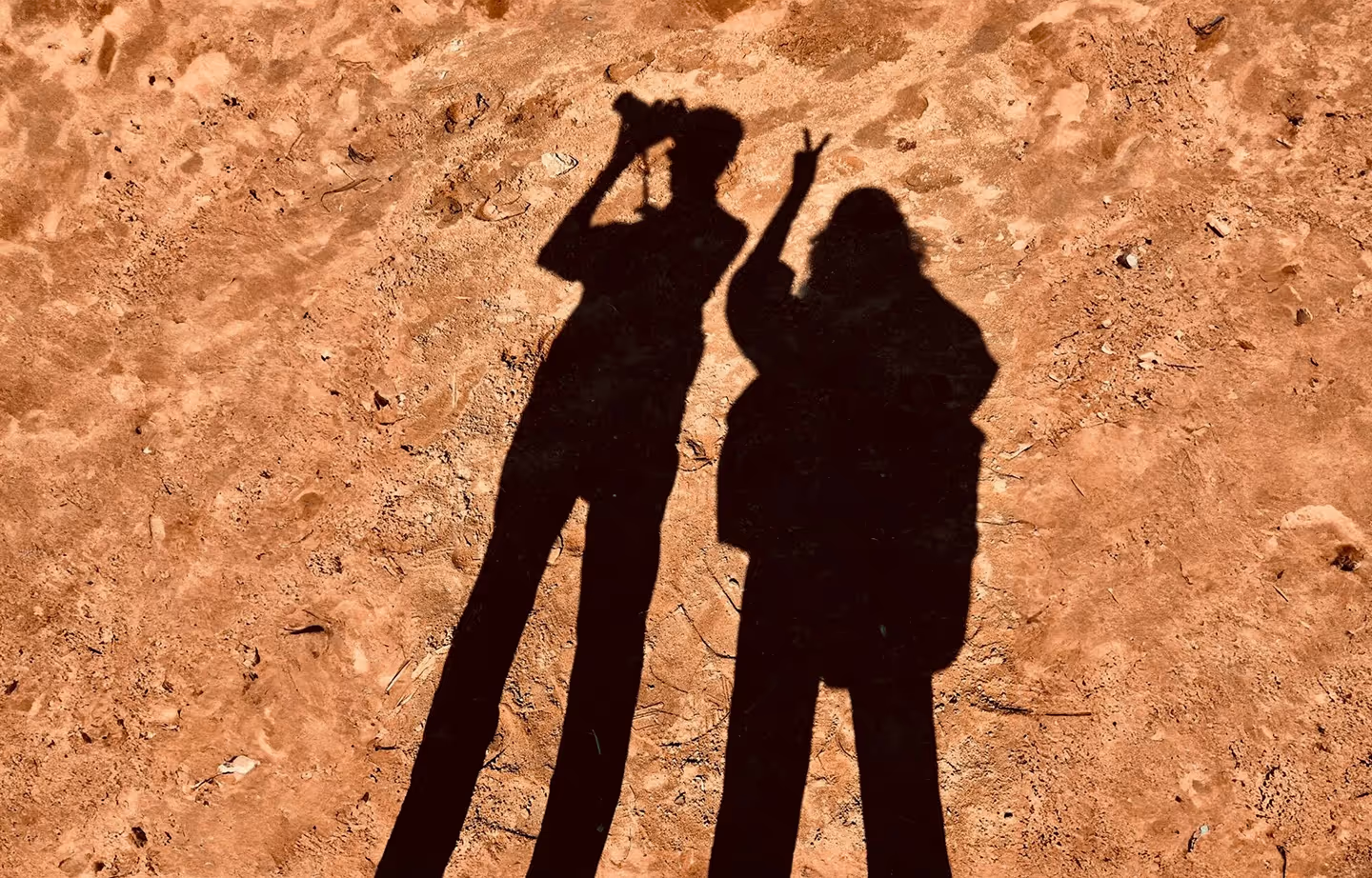
When we arrived, I felt as if we'd suddenly stepped into a part of Cairo that did not belong to the city I knew. The tall trees, the old pathways, the wooden benches that seemed to carry the burdens of lovers from decades past. The place wasn’t crowded, as if people had deliberately forgotten it, or perhaps no one else knew of its existence. We walked among the trees as if trying to imprint the details of the place in our memory. I took a few photographs, even though I knew the picture wouldn't capture the smell of the place or the feel of the cold seats.
When we arrived, I felt as though we had suddenly stepped into a part of Cairo that did not belong to the city I knew. The tall trees, the old pathways, the wooden benches that seemed to carry the burdens of lovers from decades past. The place wasn’t crowded, as if people had deliberately forgotten it—or perhaps no one but her even knew it existed. We walked among the trees as though trying to imprint the details of the place in our memory. I took a few photographs, though I knew they could never capture the scent of the air, nor the cool touch of the benches.
In a moment of silence, I looked at her and asked, “Do you love archives?”
She smiled and said, “Yes, and you love to escape the past.”
Perhaps that’s why we ended up together!
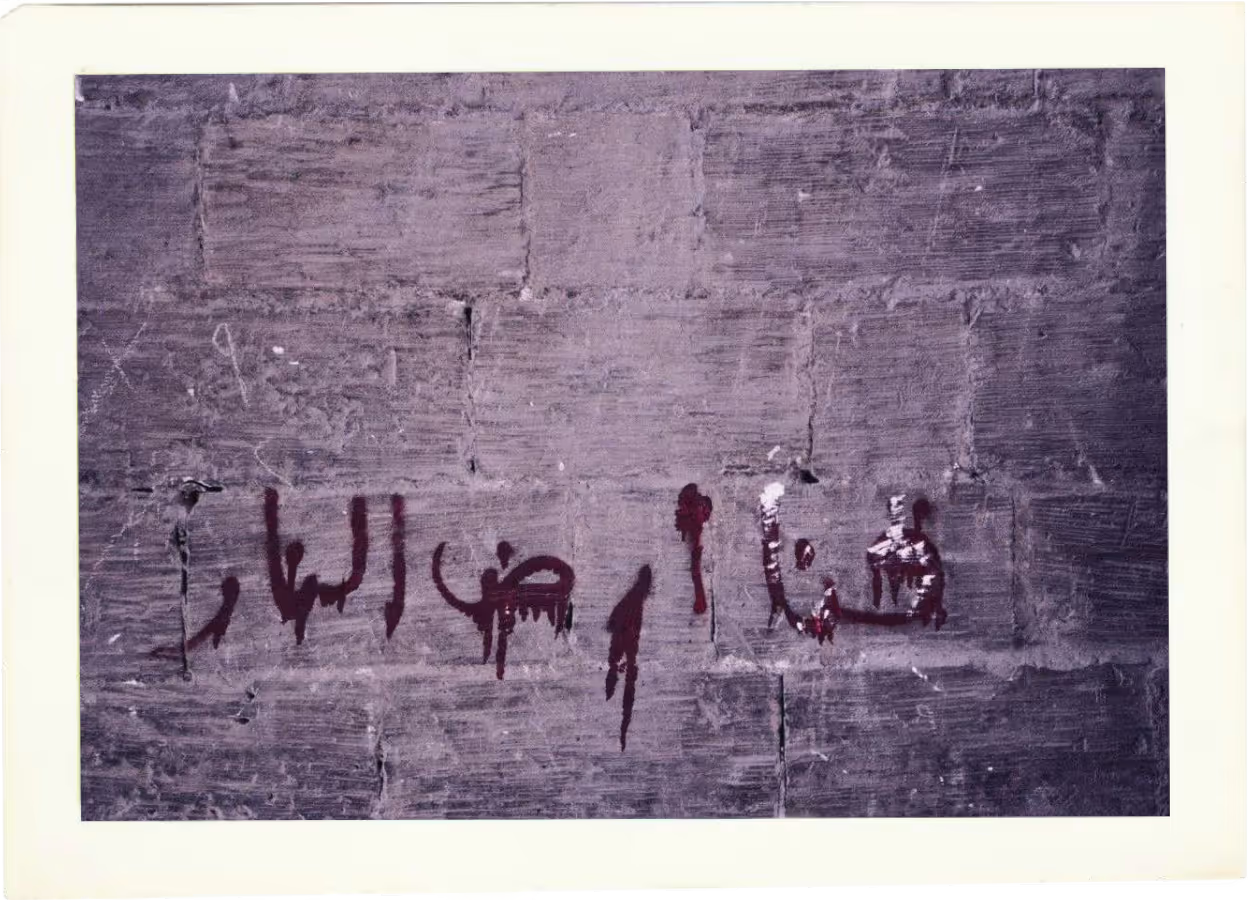
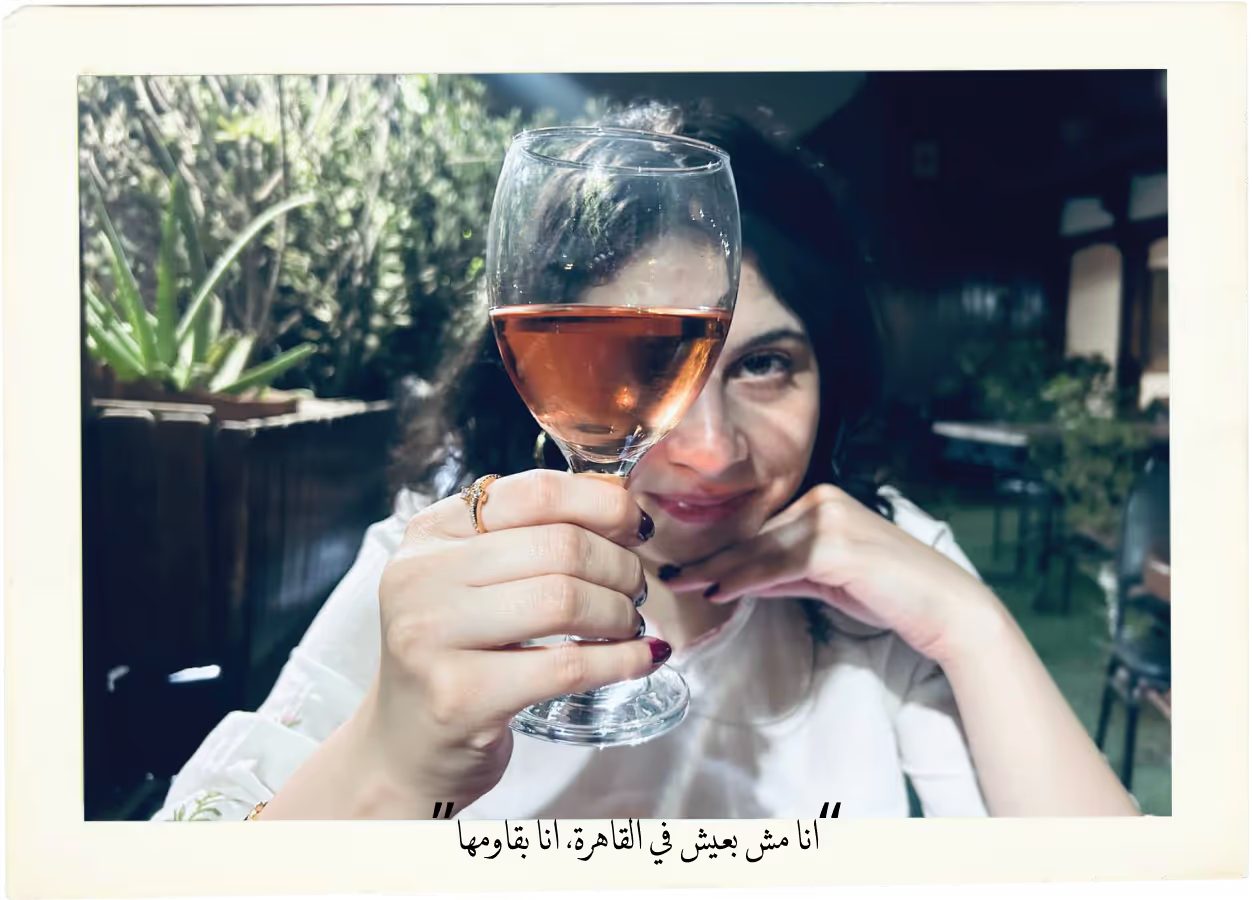
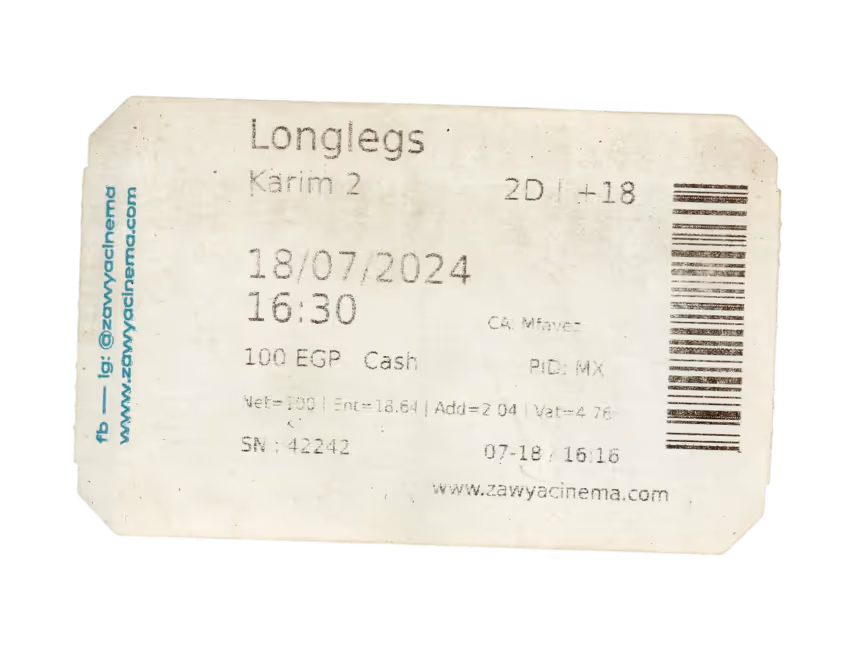
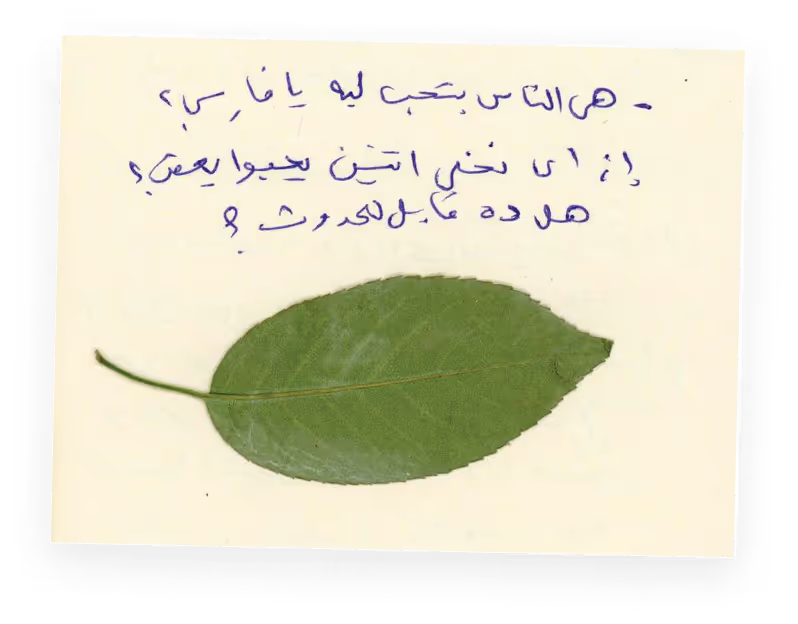
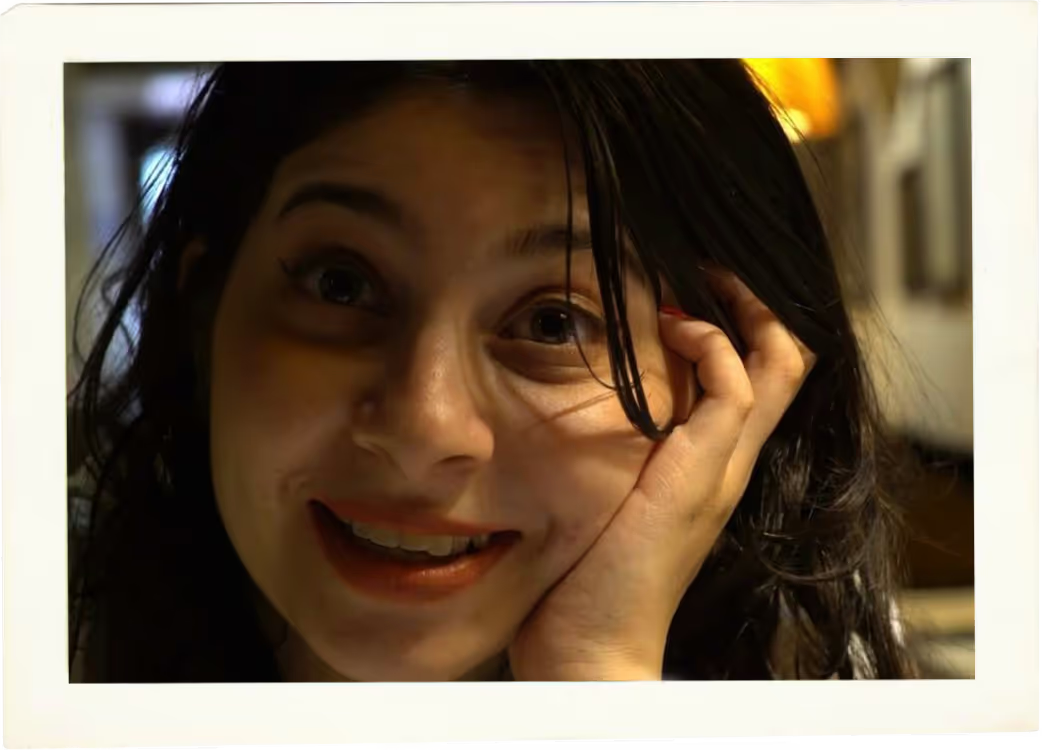
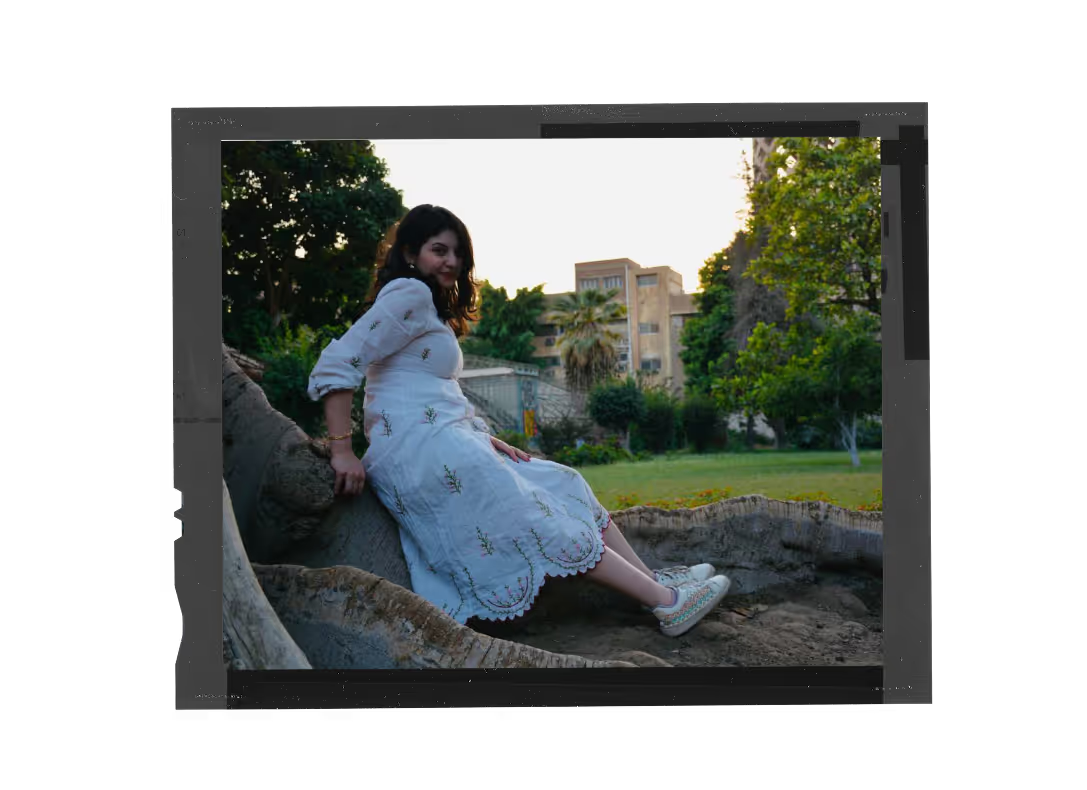
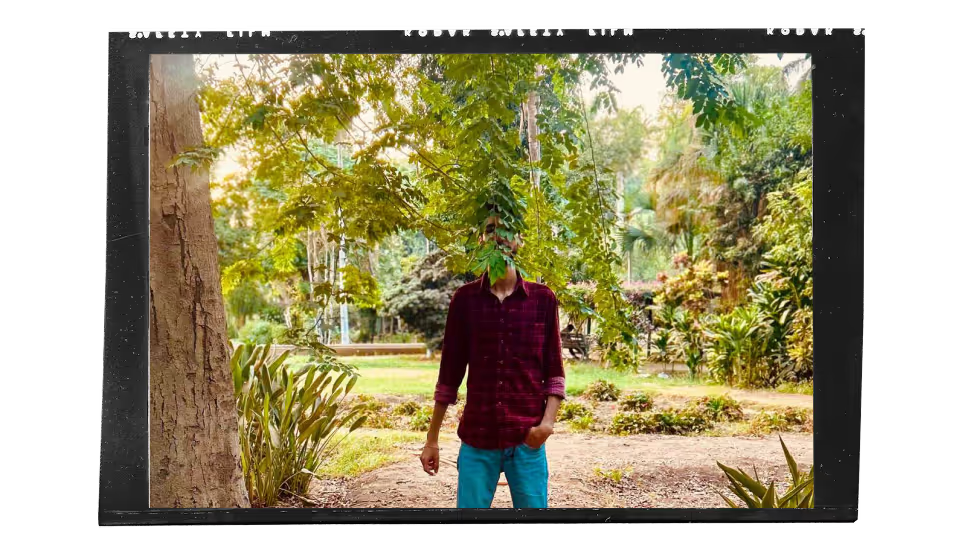
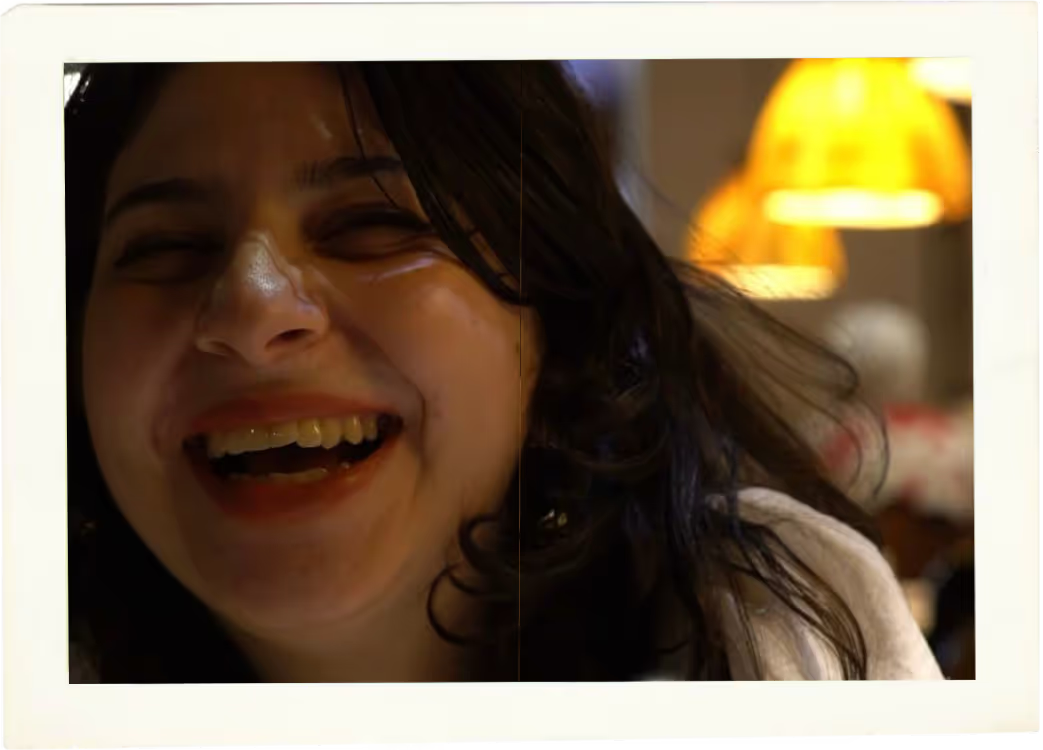

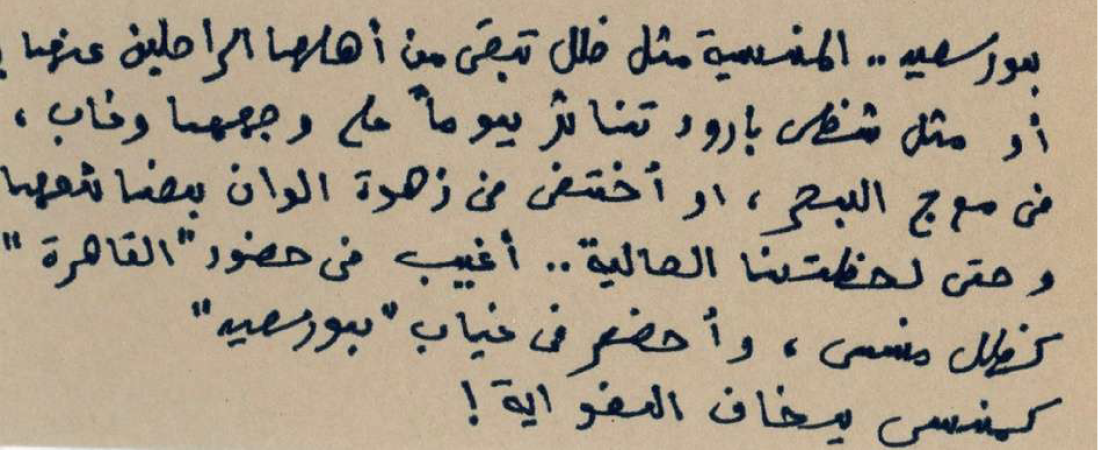
Port Said, the forgotten city like a crack left behind by those who abandoned it, or like a shard of gunpowder that once scattered across its face, then vanished into the sea’s waves, or dissolved in the splendor of its people’s white garments.
And even now, I fade in the presence of Cairo, as a forgotten shadow, and I appear in the absence of Port Said, as forgotten who fearful of departure.

Now I return to the city, without the possibility of another “perhaps.”
It is not New York, and will never be London. These cities bear no resemblance to the beauty of Port Said.
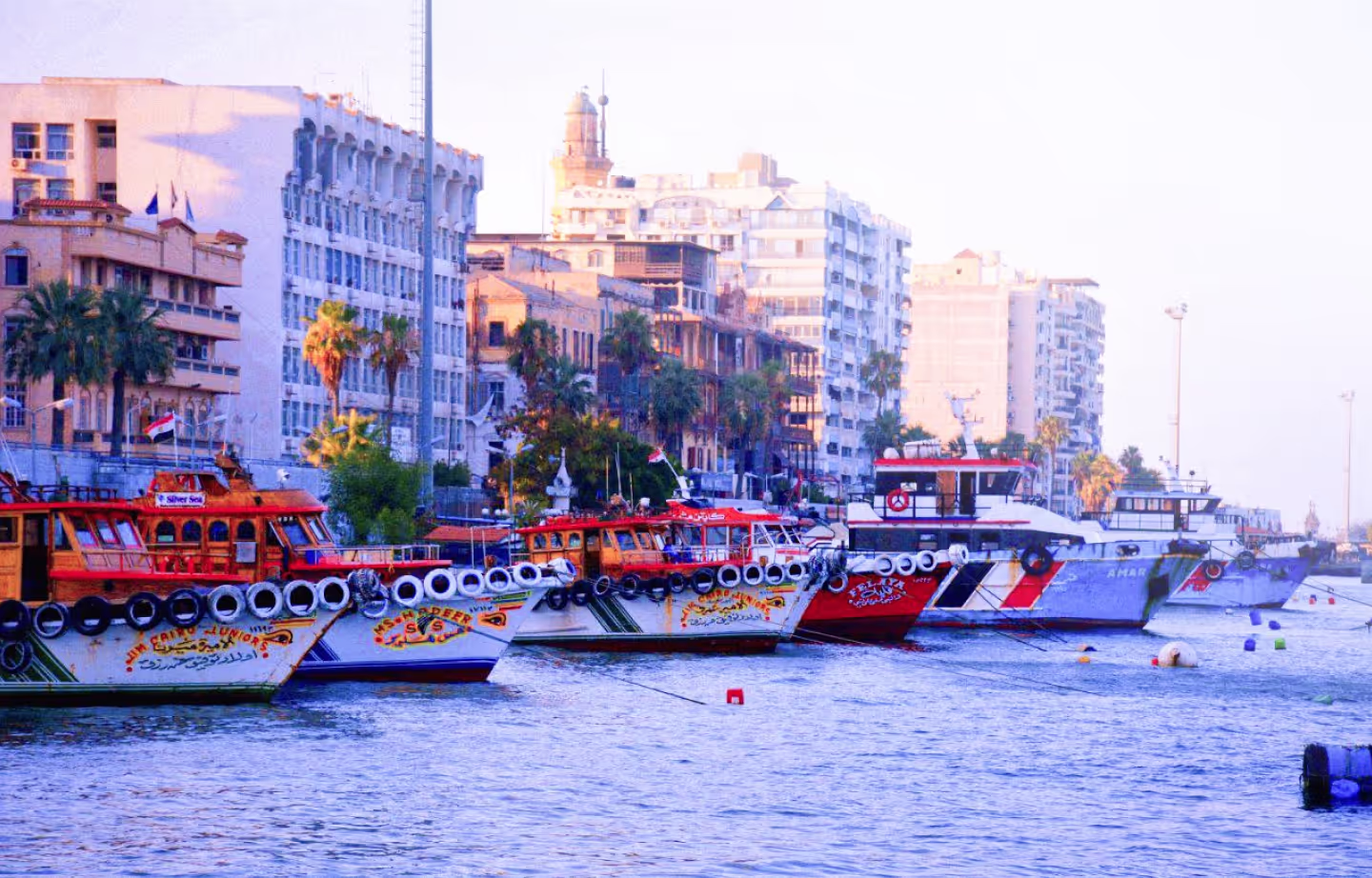
The boats greeted me with Mayada El Hennawy’s drifting voice: “I am the love that once was! The one you forgot too soon, before its time.”
I didn’t catch the smell of liver fried in stale garlic like in Cairo’s eateries!
I handed the foolish driver thirty pounds—double the fare. He replied with double the kindness, and I smiled.
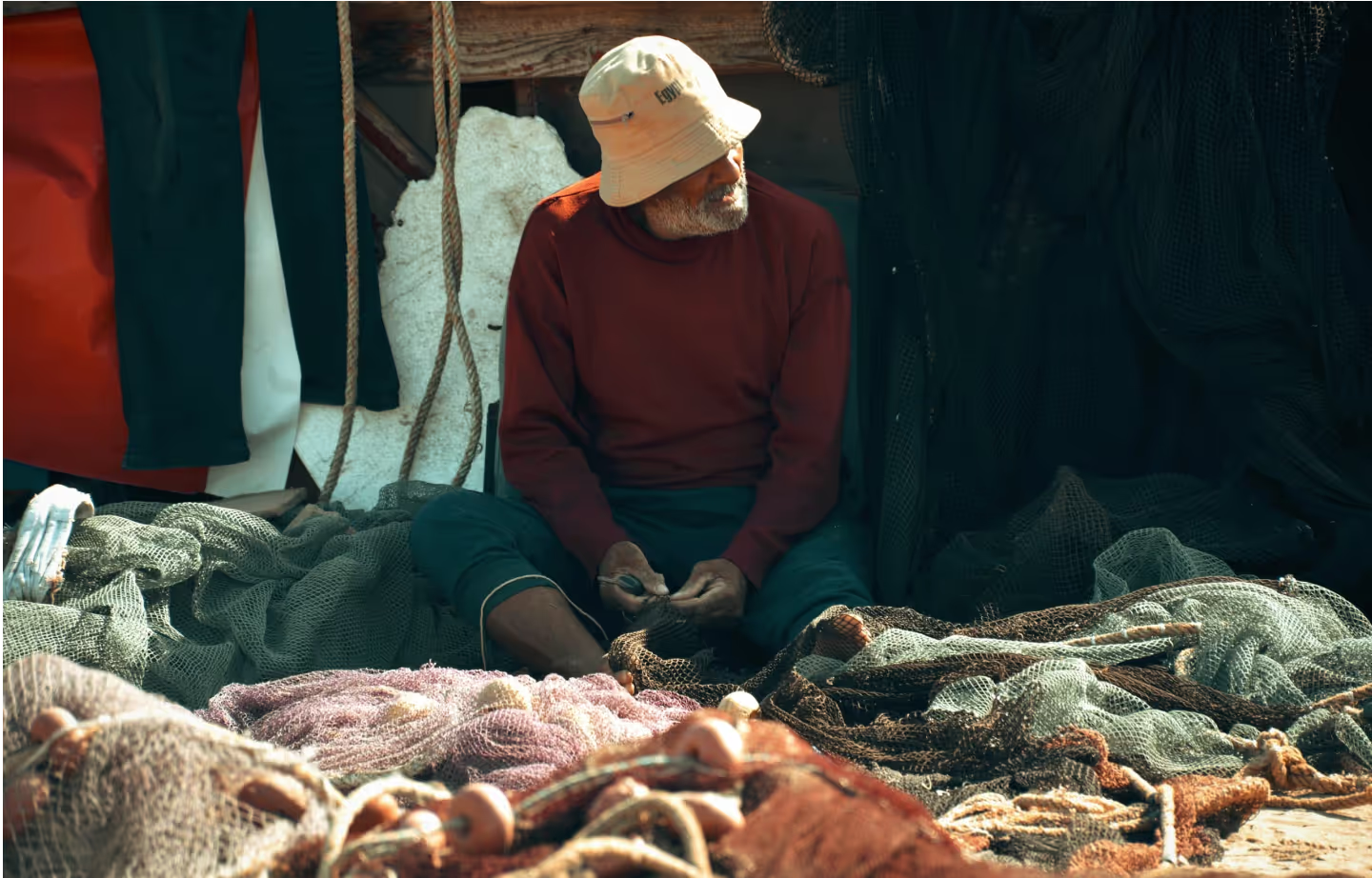
Perhaps because I am enamored with the world of the forgotten, or perhaps because we spend our whole lives trying to carve a memory of our own upon a land without memory. I tried to dissolve my absence through their presence, and my presence through the camera.
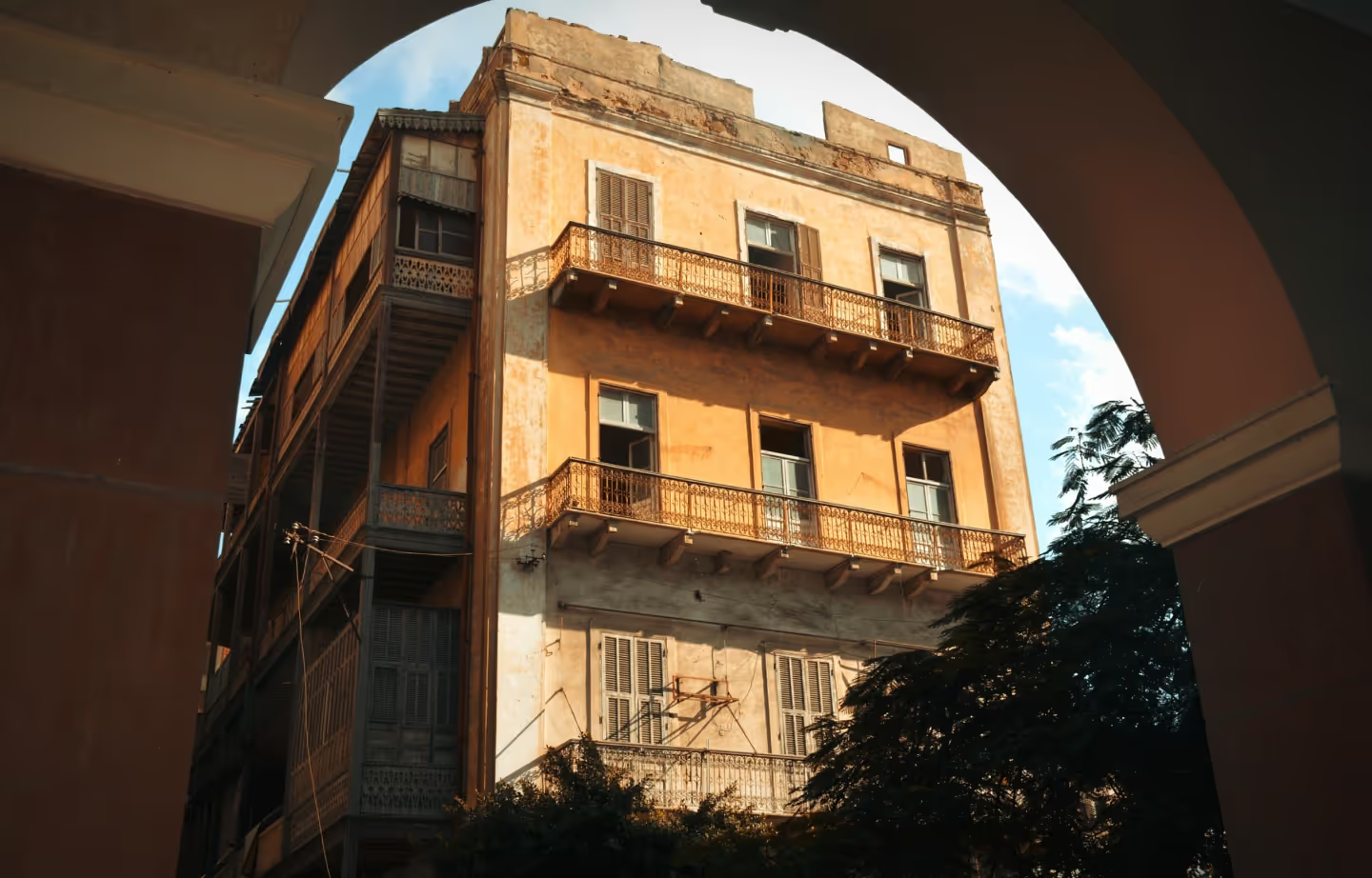
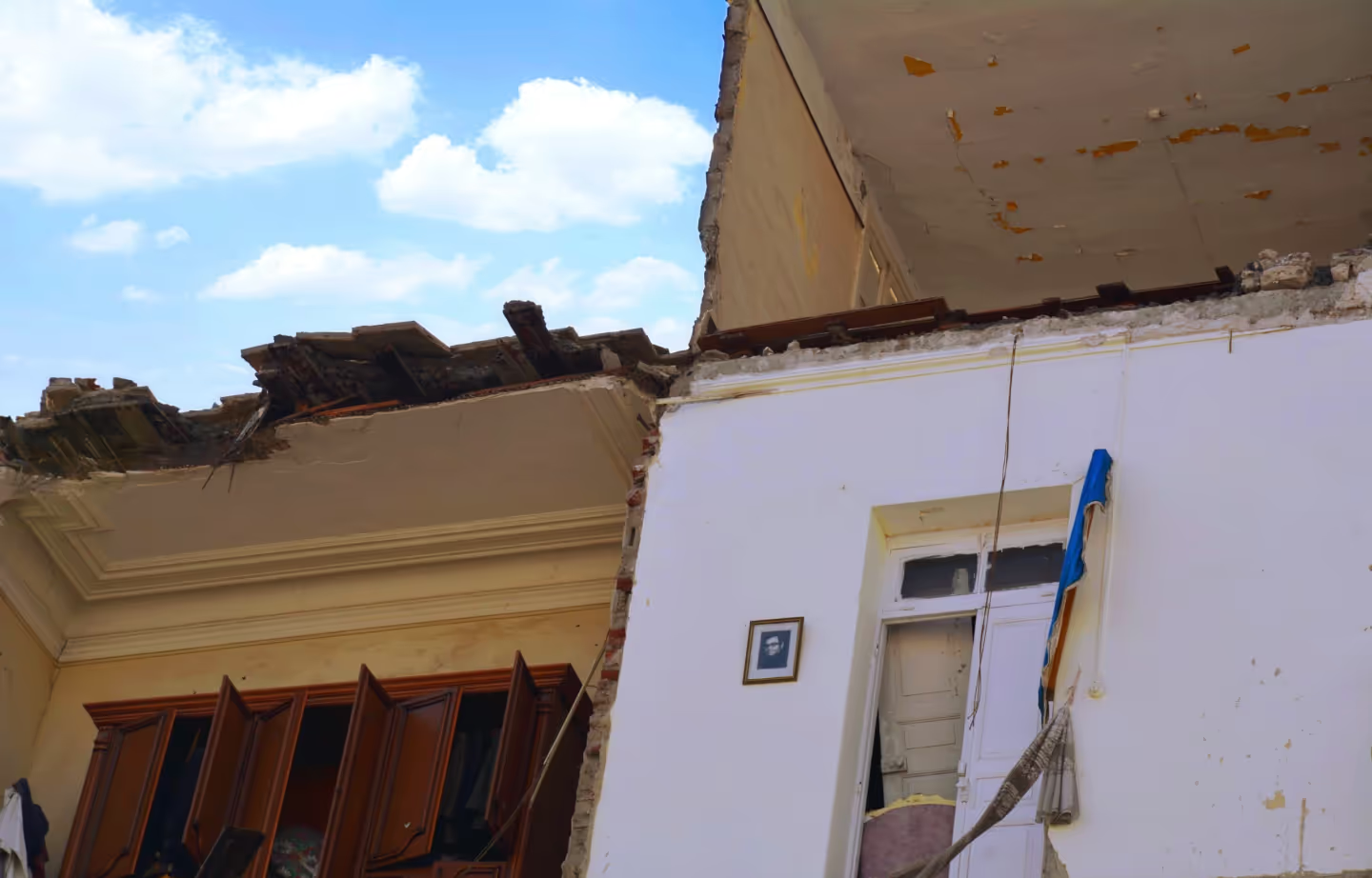
With every return to Port Said, another trace is erased! The city loses its shape... and I fear forgetting it, because the city is always changing!
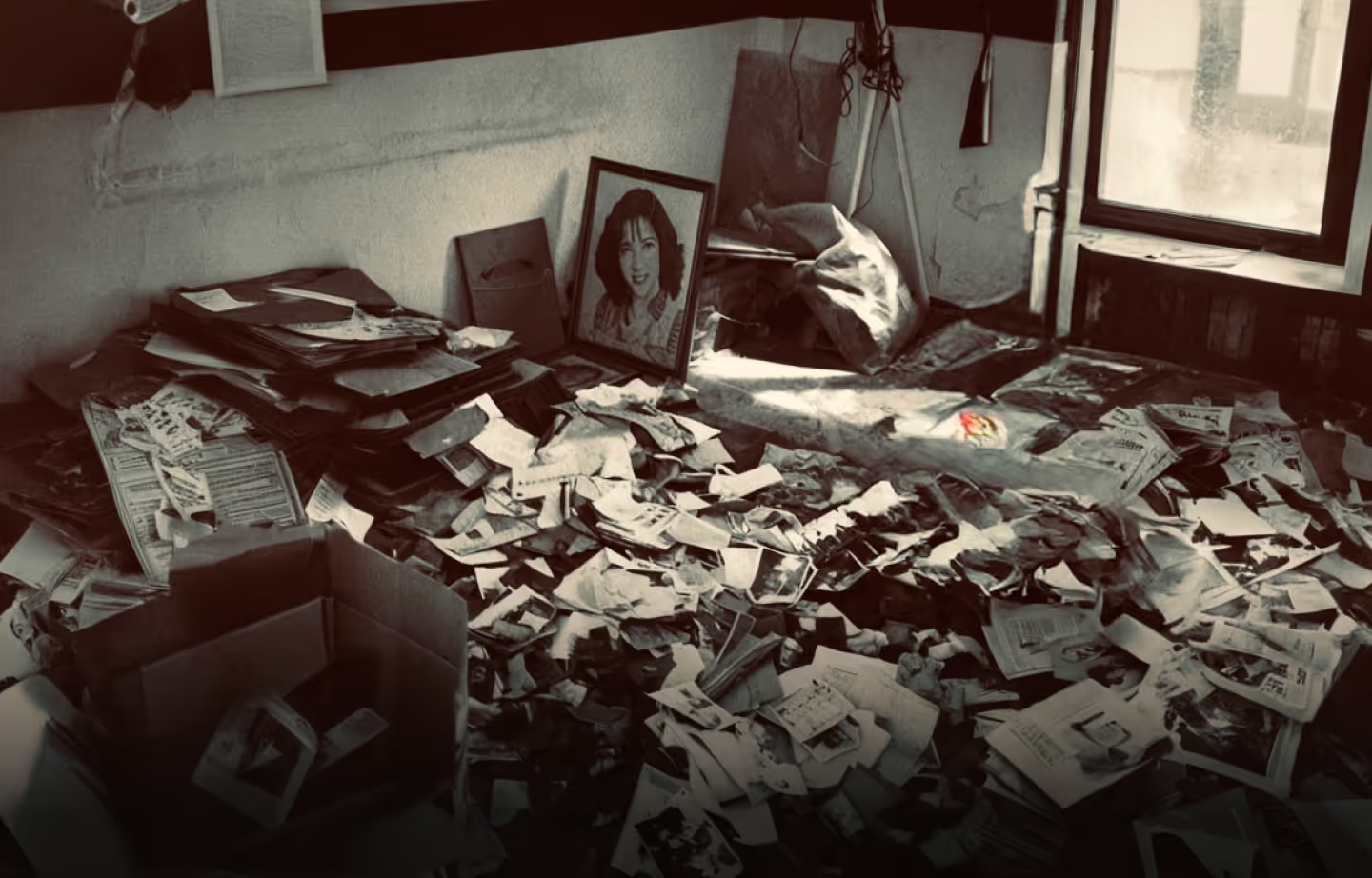
He left his past here; perhaps an archive of longing and letters that tried to shorten the distance, but it only made the pain heavier.

You know me more than anyone.
And I am the man who stood at the center of your imagination, as if it were your only path.
You are keen to open the doors of imagination, while I try to tame it with logic; which is what you hate the most.
You speak to me about the necessity of love, while I speak of war.
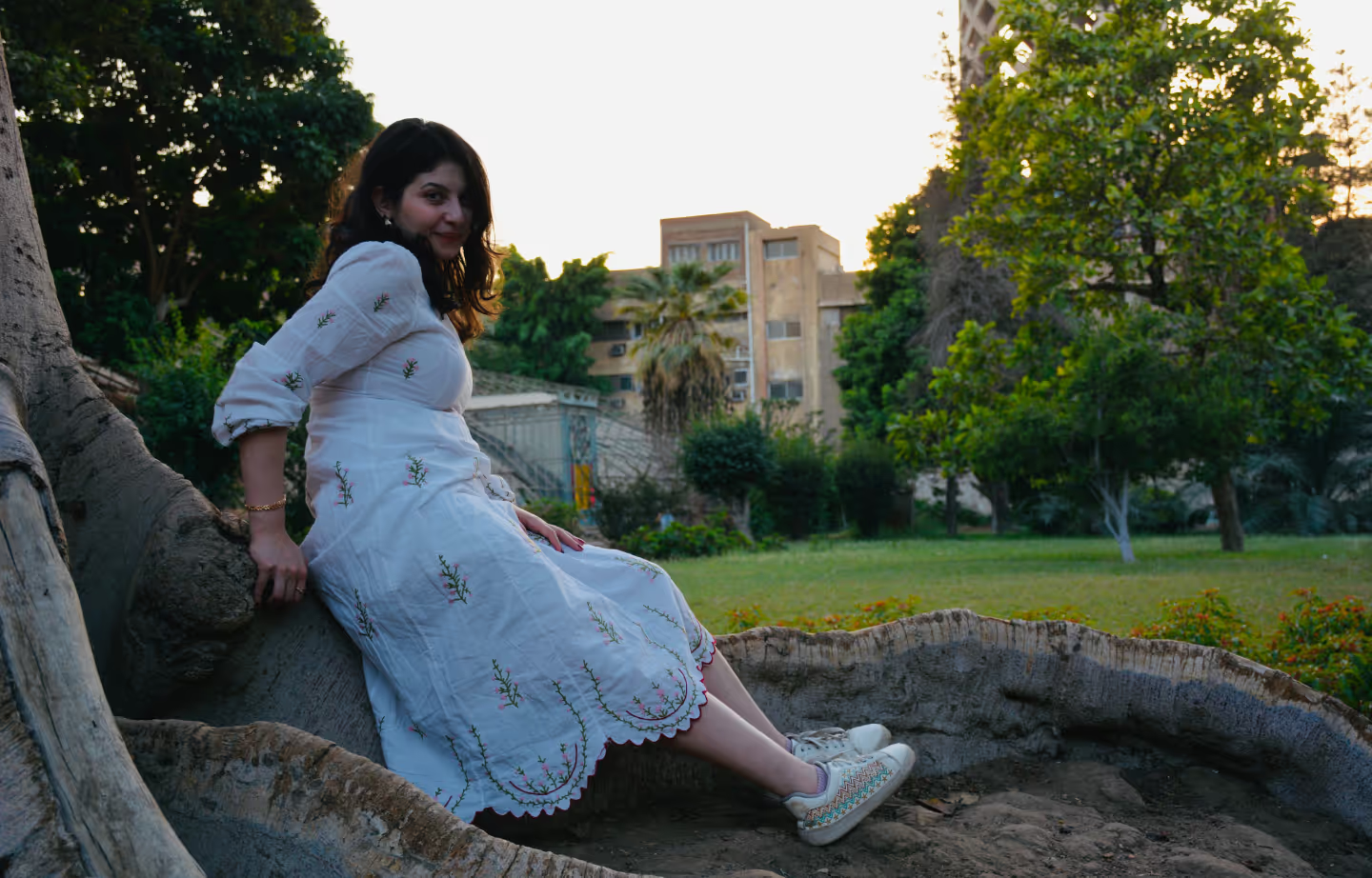
Her anger like a storm, but at the same time she is tender like a tree branch!
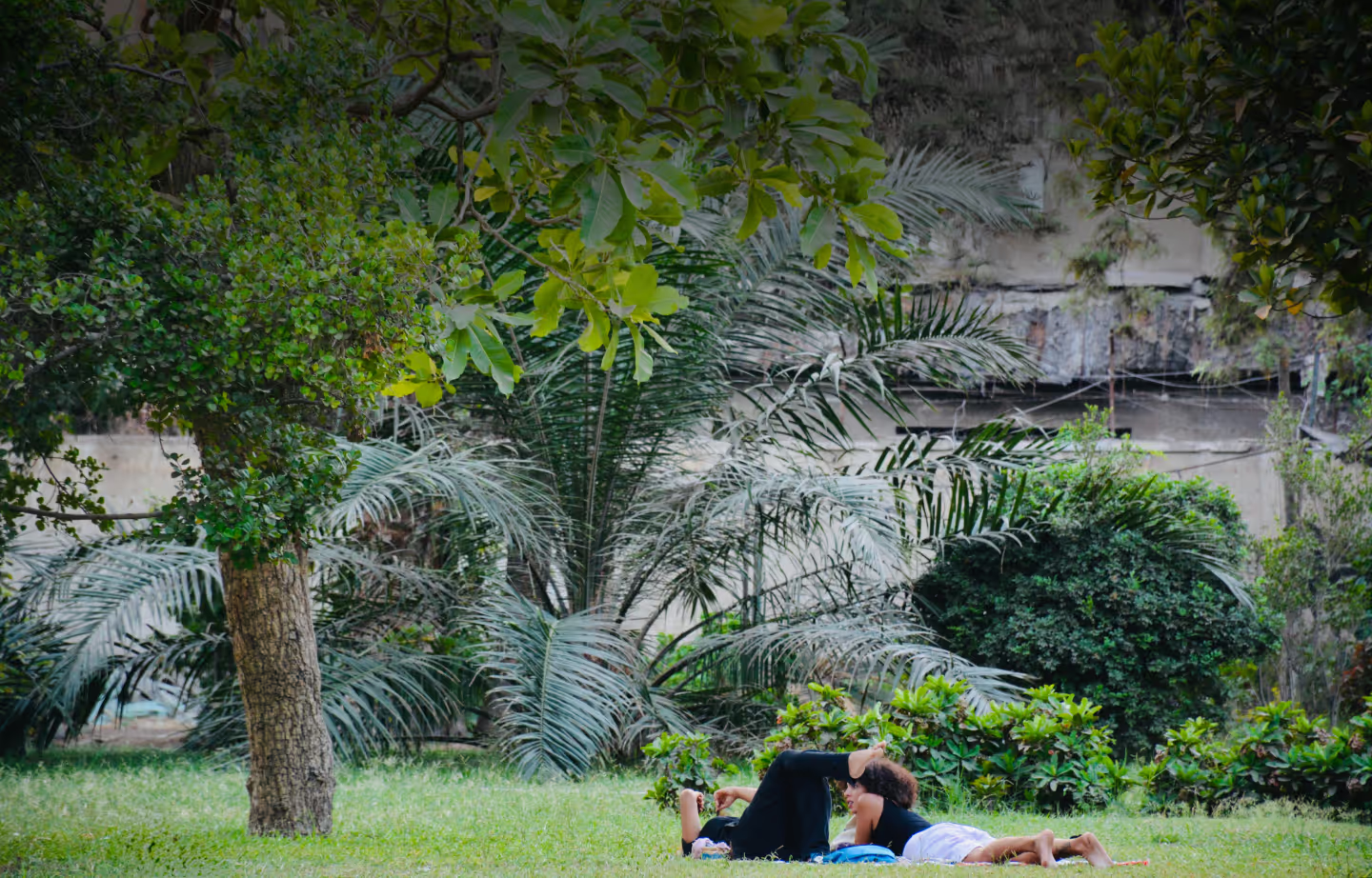
“Beautiful things don’t try to catch your attention. You have to look for them.”
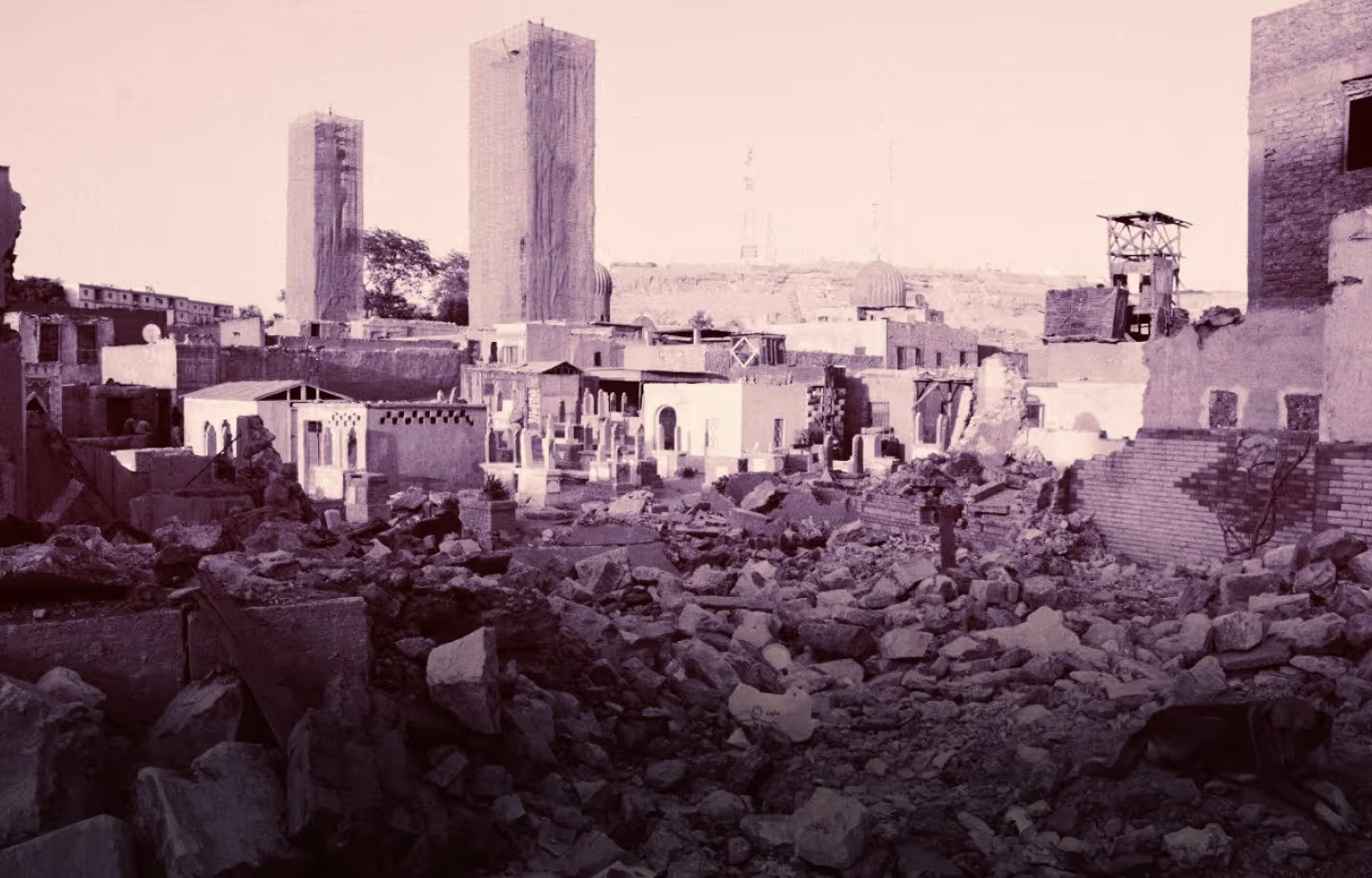
My city was never clear enough to hold my ambition, and the Cairo sun was never merciful enough to let our dreams struggle for survival. I longed to the end of my journey and come to you, but between me and arrival, between me and attainment, between me and your arms, the world stands, waiting behind the gates of Port Said.
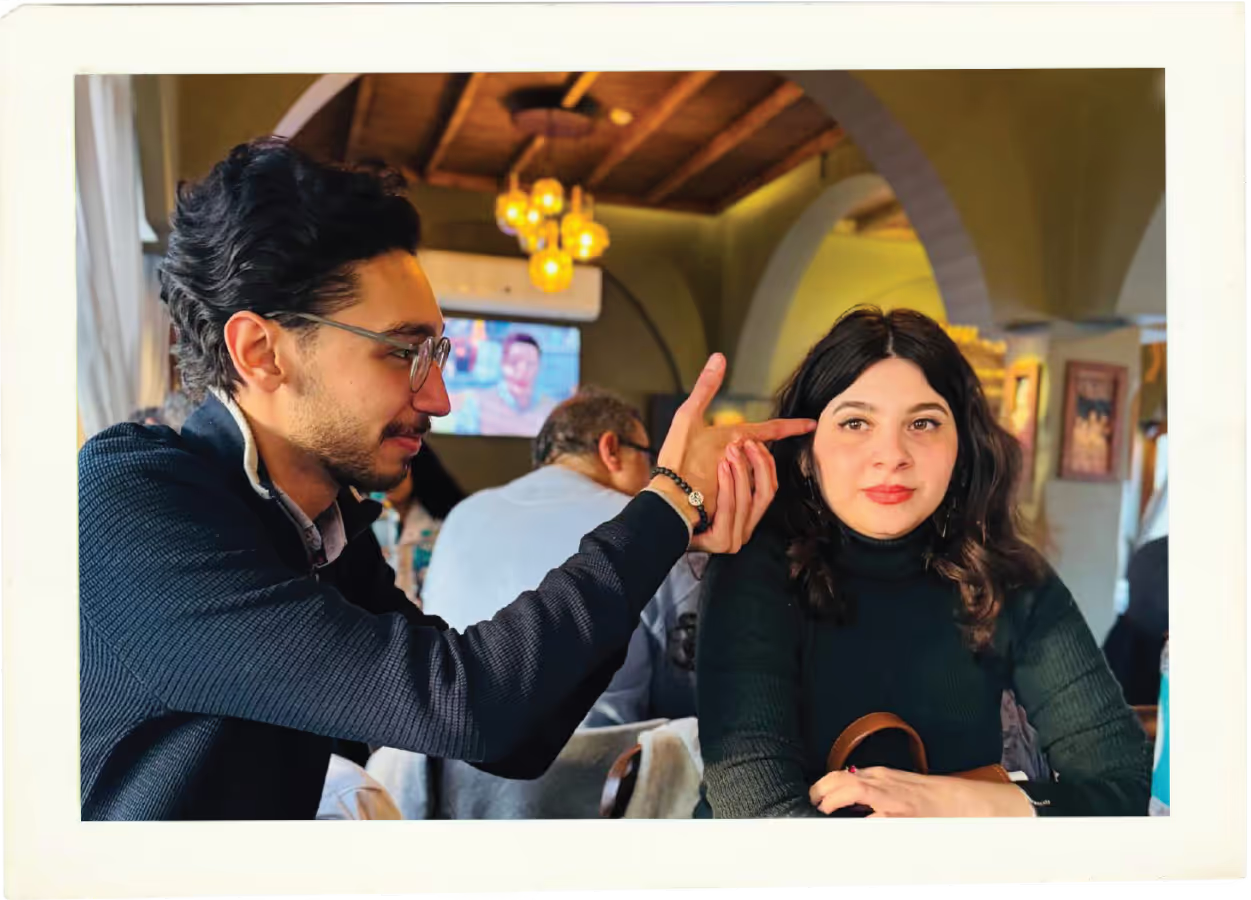
As the days went by, we began to feel that every meeting was just a brief pause from the long distance between us. Port Said was a city drowning in its silence, while Cairo was a city screaming all the time, and we were trying to find a point of balance amidst it all.
We started documenting our relationship: photos, voice recordings, long letters. We were trying to build a personal archive for ourselves, as if resisting forgetfulness before it even began. I would take pictures of empty cinema seats after we left, and Basma would record audio snippets from Cairo’s crowded streets, as if sending me a piece of her world. But the distance, as it always does, began to creep in between us!
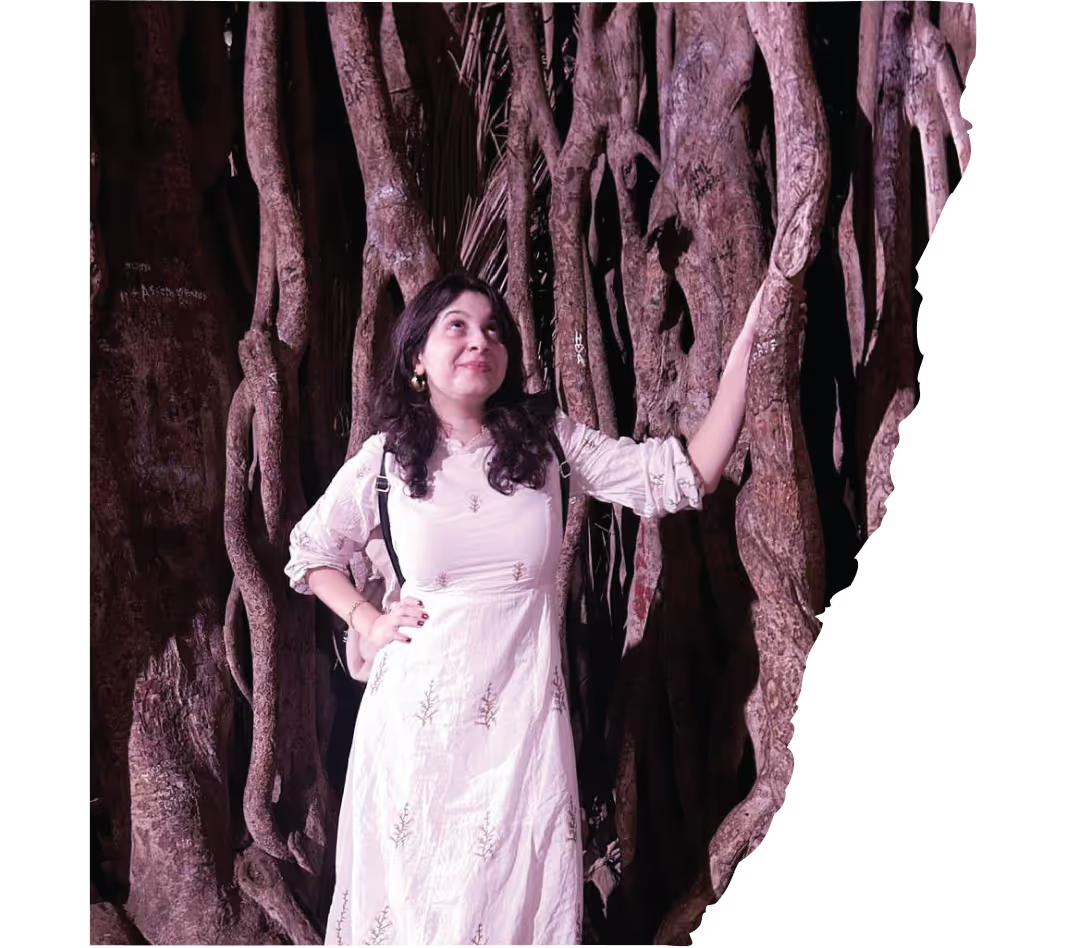
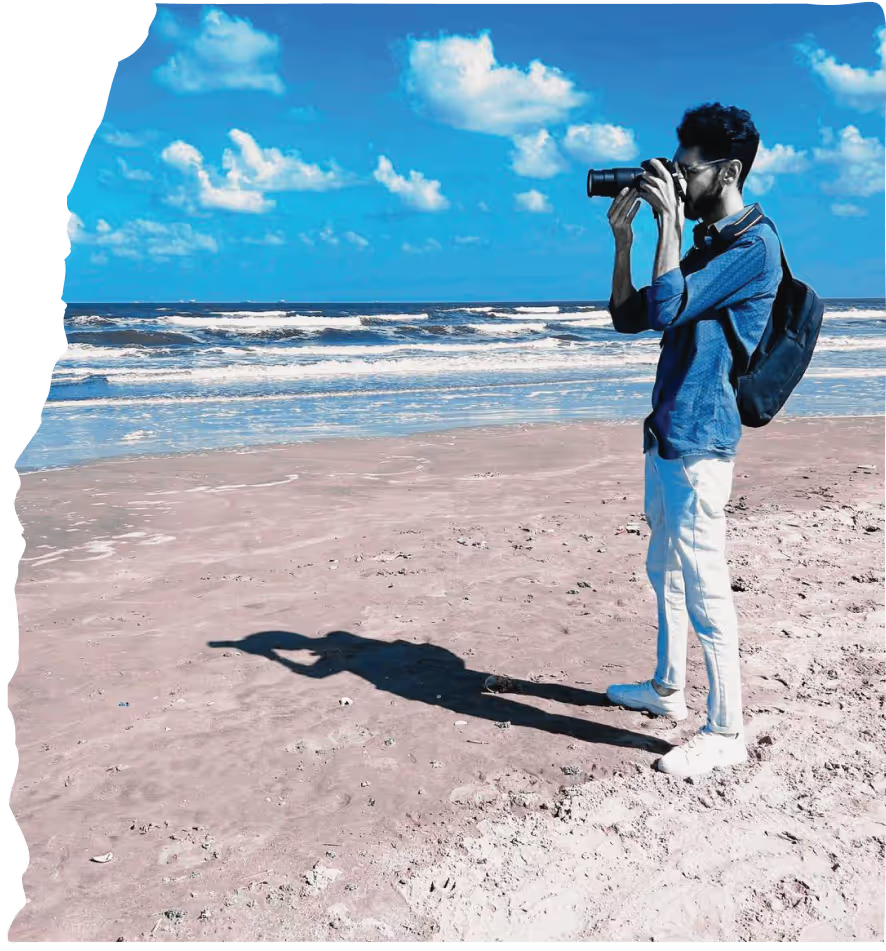
The result was a neutral land on which we both stand; harsh and unyielding, swept away by no sea, nourished by no river!
Dear Adam,
I write to you from the heart of Cairo, a city unfit for nameless strangers or the dead. Here, where I fell before you could join me, the city feels like a prison built by the devil himself, designed to swallow desires and hopes in its endless corridors. Cairo waits for no one, and grants no room for rest.
I fell here, in the middle of a chaos that never sleeps. Its people breathe disorder, and every corner hides another face of the world. Some say this city inspires love, others insist it breeds madness. And me? At times I feel I’ve become part of this maze, wandering between the roar of its streets and the silence of hearts that never reveal a thing.
I kept asking myself: how can I stay here? How do I endure this madness? The truth is, I don’t know. The city doesn’t offer answers, it throws you into its current and leaves you to search for meaning in its chaos. Here, there is no space for reflection, no time to contemplate what we’re going through. Everything moves too fast, and I am caught between the voices that never quieten and the thought of waiting.
There are no fixed emotions. Here, love, fear, and hatred live together in a single heart. As I wander among these tangled feelings, I think of you, how you wait for me there, in a city of sea and calm, while I fall here in a storm that never ends.
Adam, I fell before you, yet I am still here, waiting. I wonder what will become of you when you arrive. Will you manage to bear Cairo, or will you end up like me, lost in its twisted streets that lead everywhere at once?
Until then, I will remain, learning how to live within this madness, and waiting for your fall beside me.
With love,
Eve who fell first,
Cairo
One day, I found myself talking to a man who was nothing like the love stories I read in my childhood. He wasn’t a prince, he wasn’t a warrior, and he wasn’t a boy searching for himself in books of philosophy. Faris was lost. A young man from a city overlooking the sea, resembling ships that arrive late, but arrive nonetheless. He thought I was like Cairo: crowded, suffocating, never pausing for breath. But he didn’t realize I had been trying to escape from it for years, still searching for the city that mirrored me.
We exchanged letters as if we were drawing a secret map of a life, we could never truly live. He told me the sea offered answers, while I told him Cairo never asked questions to begin with. He said he loved silence, and I told him I hadn’t heard my own voice in the city for years!
When he finally appeared, it felt as if he had just stepped out of a novel still being written. He stood before me, hesitant, wearing a half-smile that seemed like a silent apology for all the chaos yet to come. He wasn’t as I had imagined him, but he was exactly as he had written in his letters. The problem with first meetings is that they don’t follow the rules of letters. You can’t delete a sentence and rewrite it, you can’t think for ten minutes before replying, and you can’t hide your nervousness behind a screen. But we did what strangers do best: we talked endlessly, as if trying to prove to ourselves that this moment was real.
Our first meeting should have been in a classic place, a quiet café, or a long walk by the Nile. But with all my brilliance, I decided the best way to break the ice was by watching a horror movie. I don’t know why I thought that would be a good idea, but here I am now, sitting in the dark, pretending I’m not scared while every part of me is screaming inside. Fares, on the other hand, was enjoying himself, as if the movie were about the peaceful life of birds.
When the movie ended, we stepped out into the street. Cairo was crowded, as if the city itself hadn’t seen what we had just witnessed.
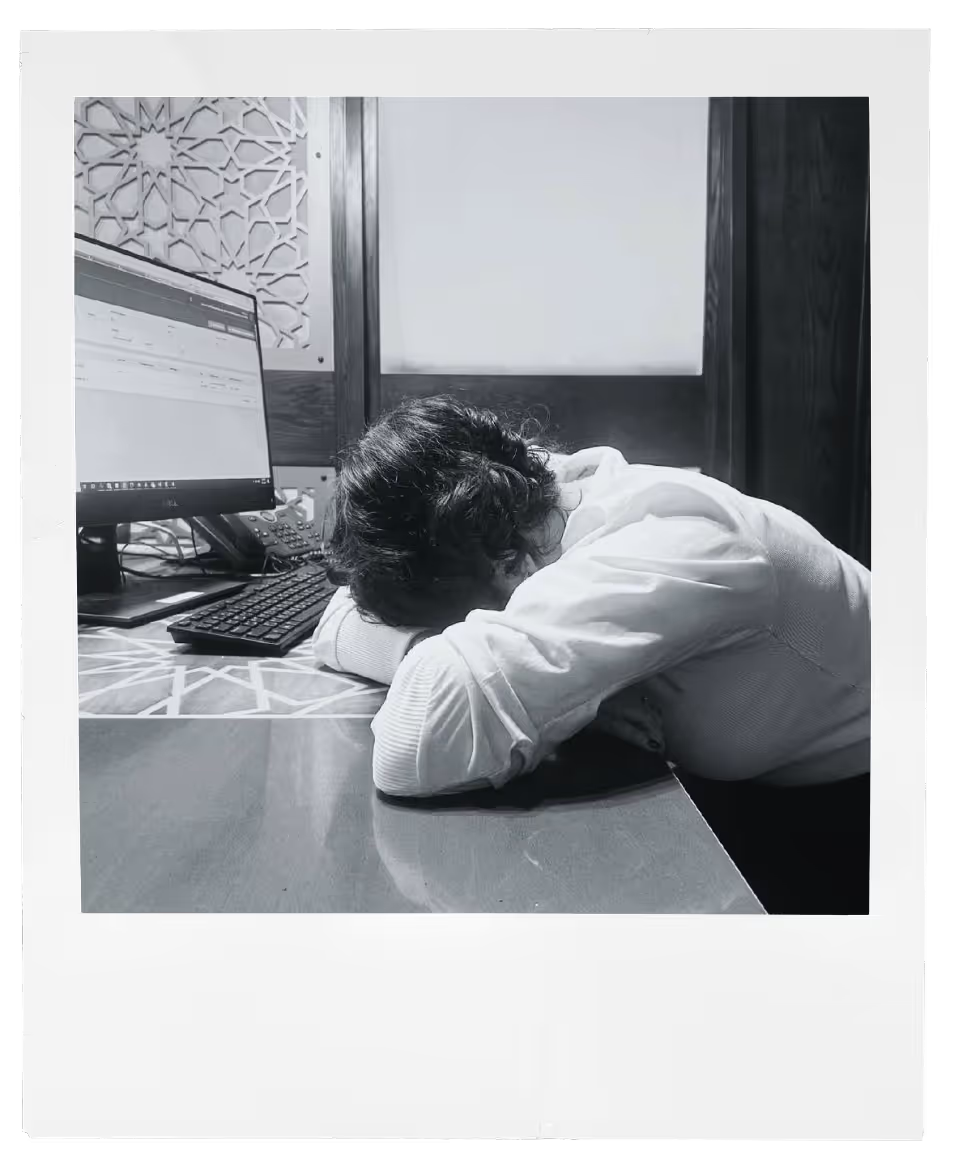
But before that meeting could come, I had to finish my day in hell, or as it’s officially called, “work.”
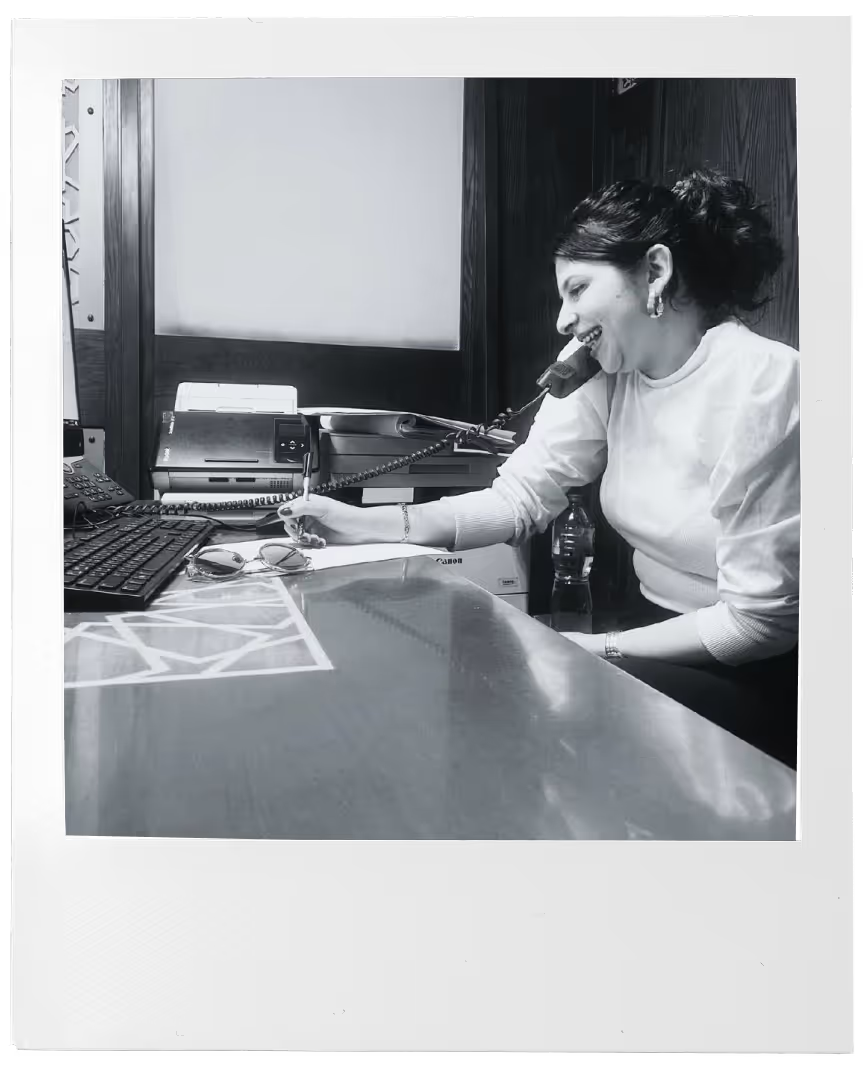
I’m a Public Relations Manager at a bank, which is just a polished phrase hiding a grim reality: I spend most of my time arranging fancy words to please people I don’t know, and sometimes can’t stand. My job is like painting over cracked walls: everything looks perfect on the outside, but it’s brittle within. Every morning, I put on my formal clothes and step into an air-conditioned office that drains every sense of life out of me.
I feel like I’m always walking against the flow—everyone else is heading one way while I’m going the opposite. And despite the endless crowds, I feel alone, lost.
Cairo is a city of concrete, like being trapped inside a mold. For all its opportunities, its mix of cultures, and the faces that fill its streets, you still need a basic survival instinct. Otherwise, you’ll get crushed by the speed, the noise, the chaos—people bumping into you constantly, as if the city itself is pushing you out of place.
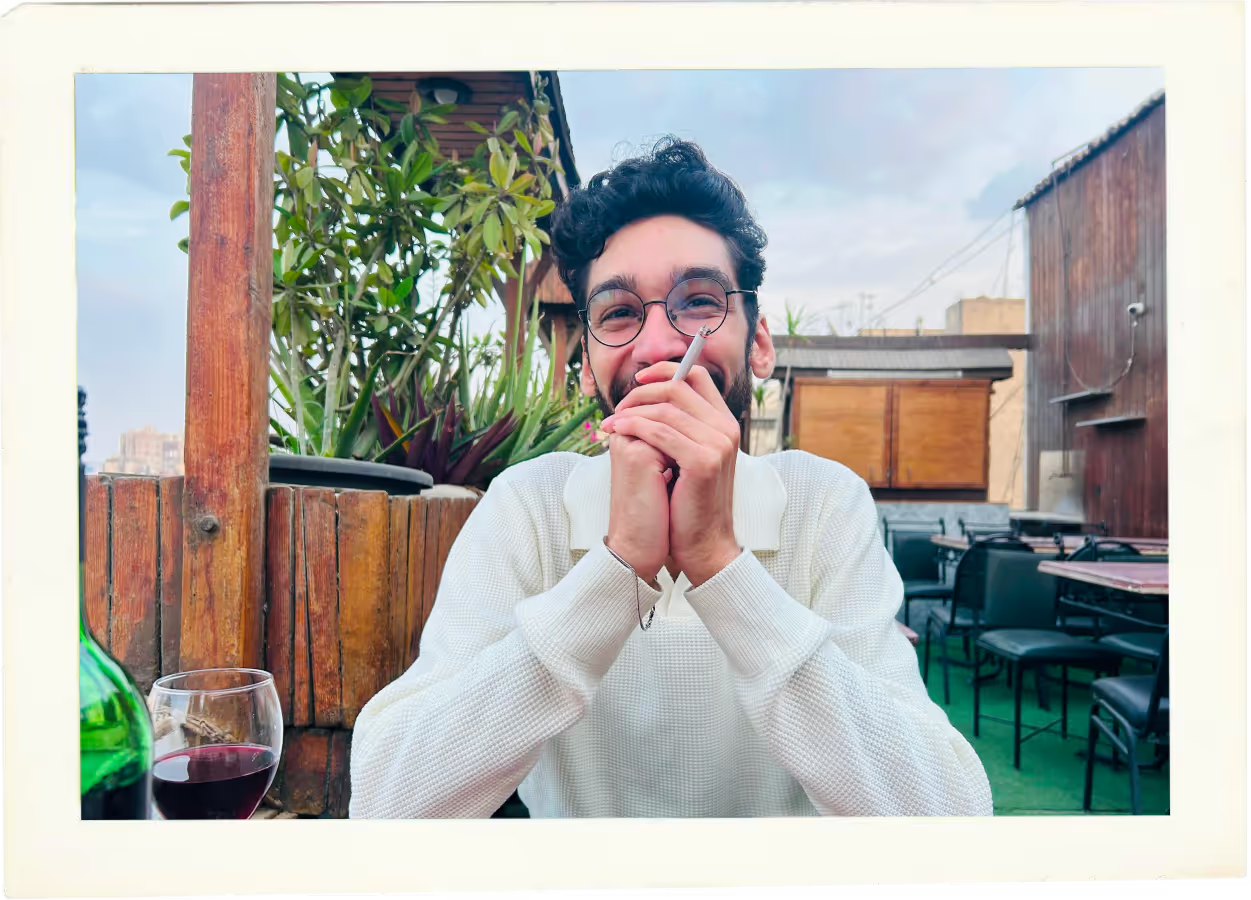
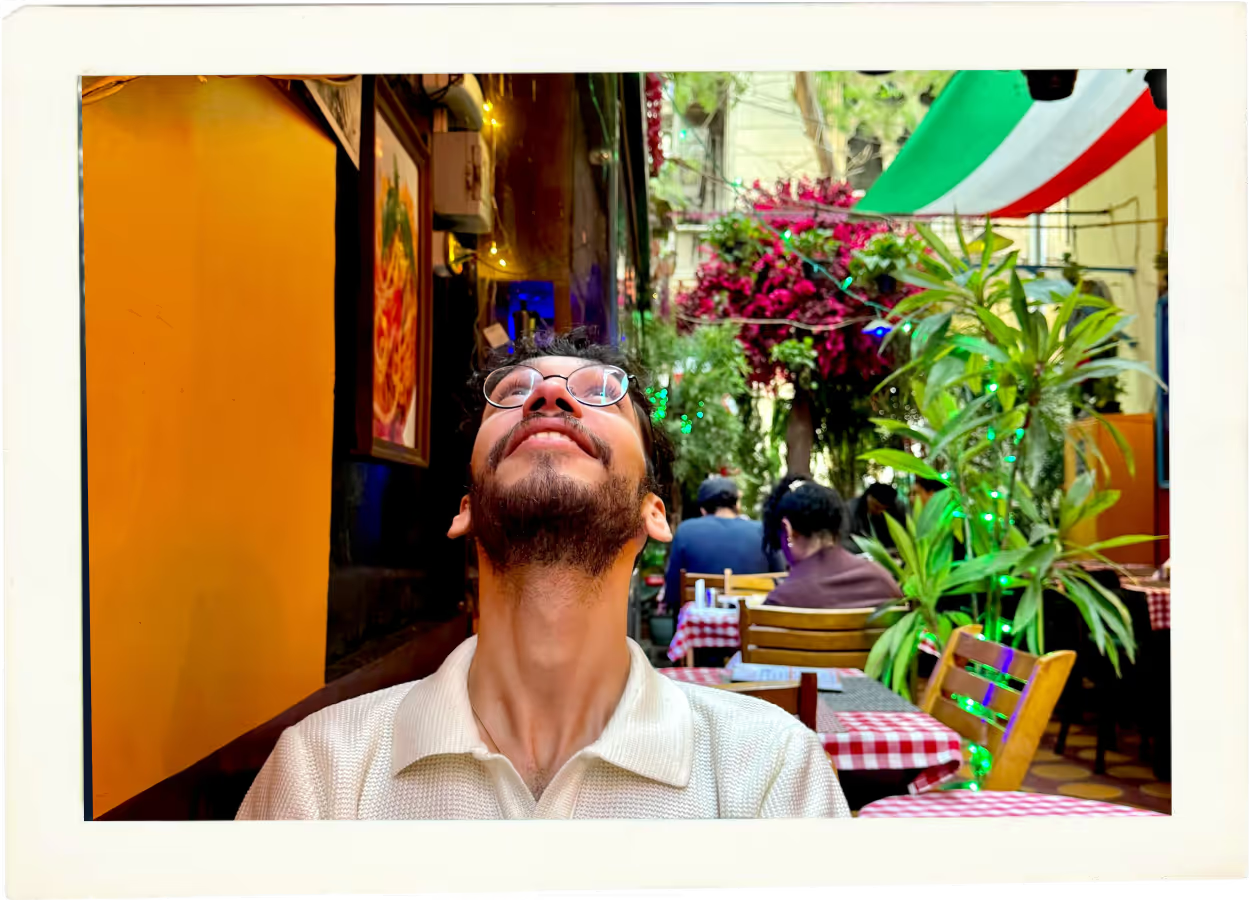
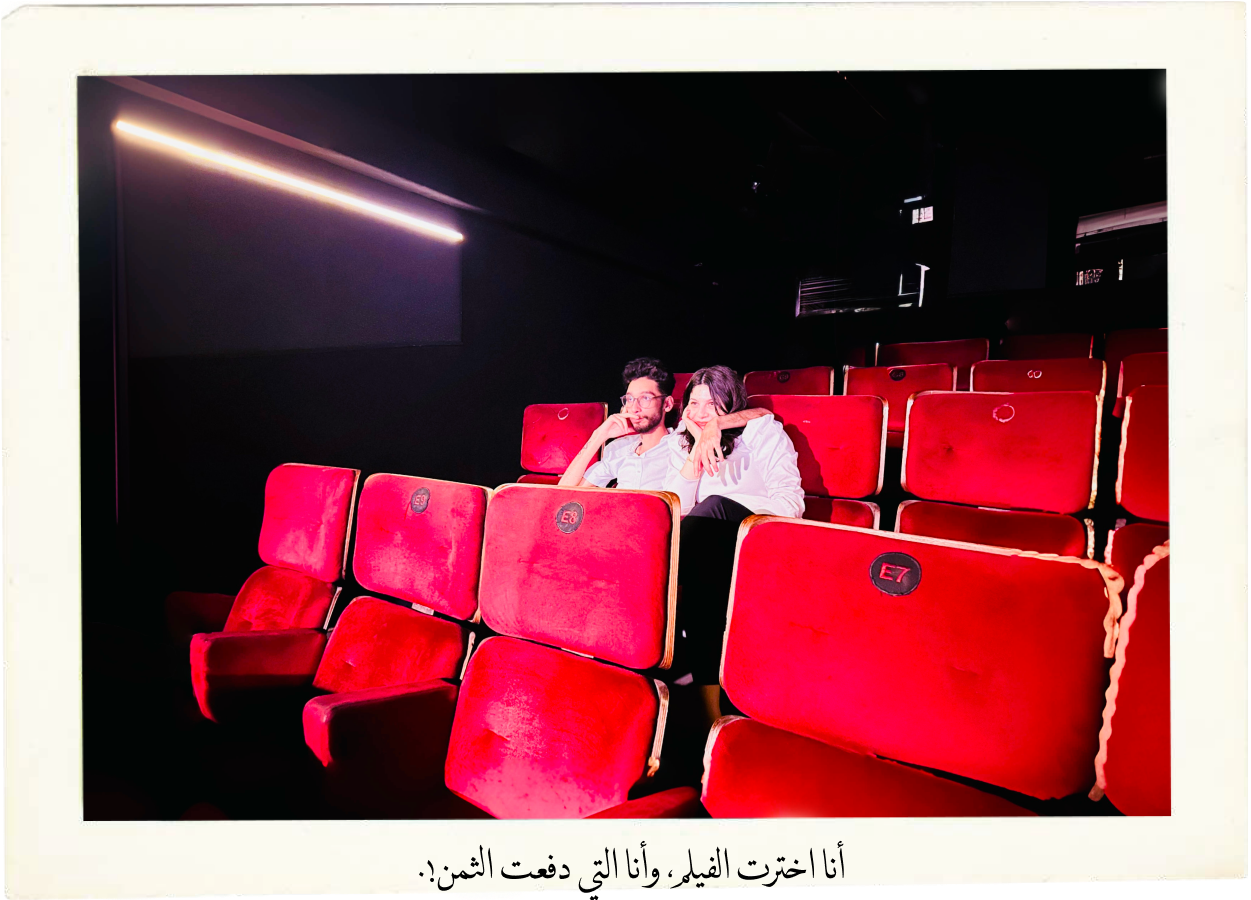
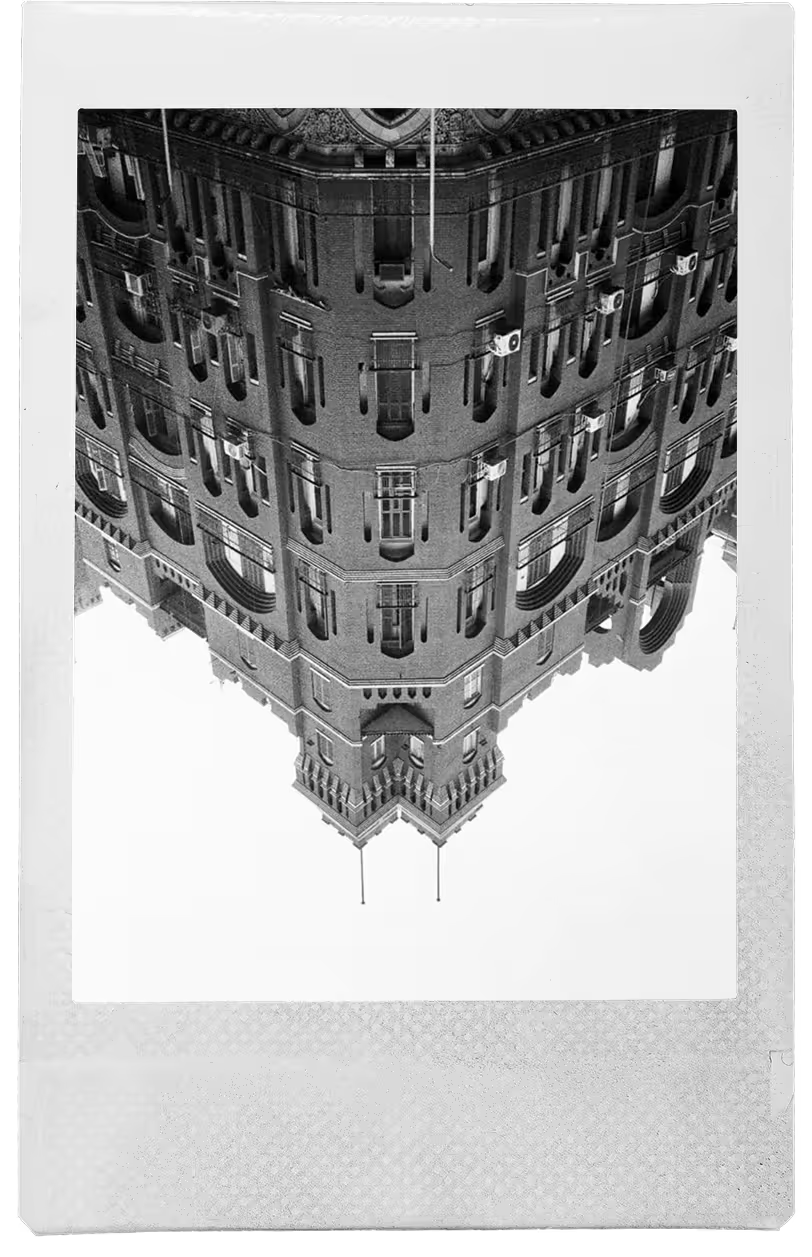


I realized that every time we left a place together, I left behind something small like a movie ticket, a blurry photo, a voice note I never sent. I was afraid our relationship would turn into nothing more than a beautiful archive of a love that couldn’t survive the distance.
But we were never just a story tucked away in a memory box. In our own small ways, we tried to defeat the cities that kept us apart, to turn every picture, every sound, into proof that we were here, together, if only for a single moment.
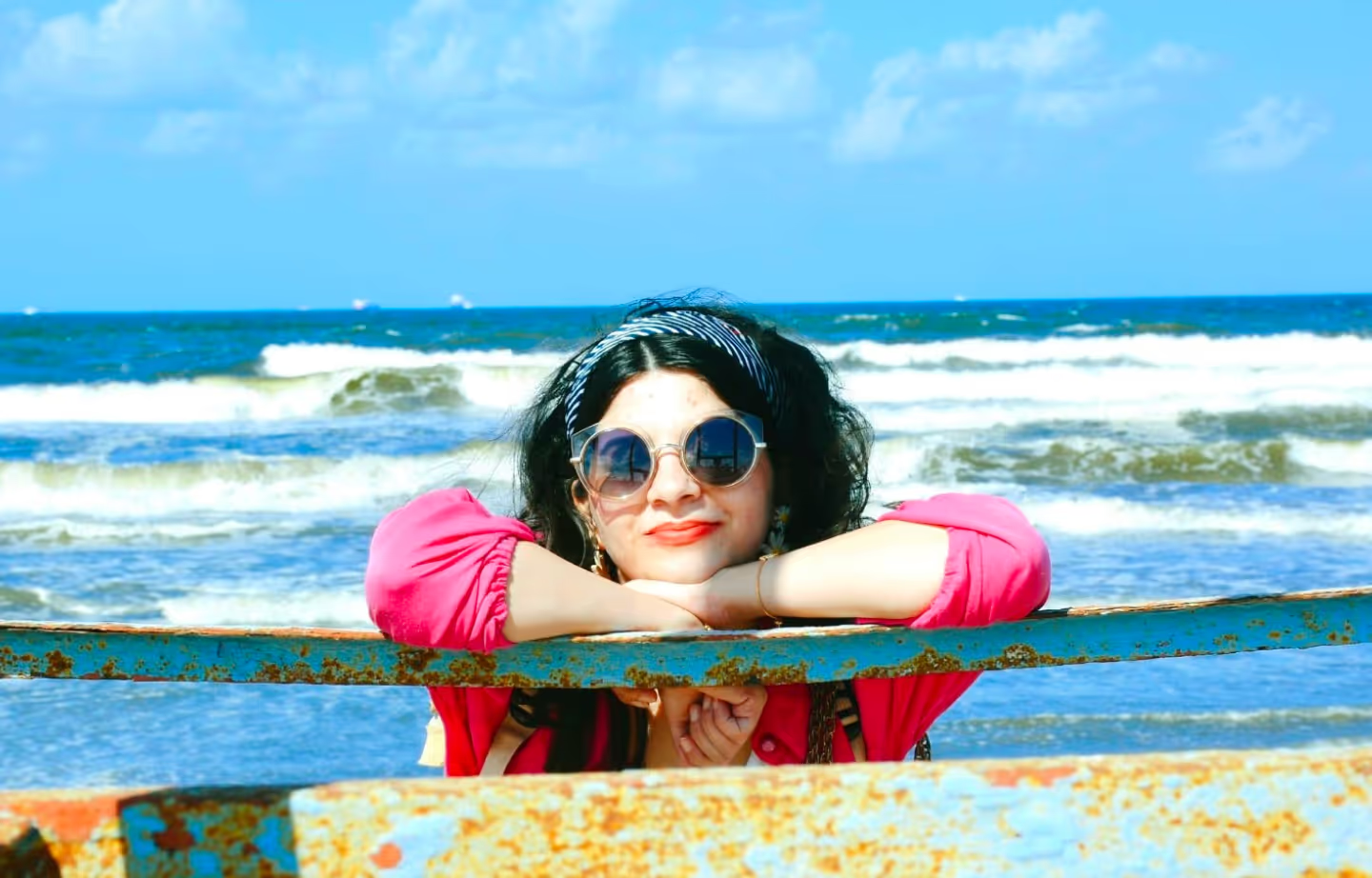
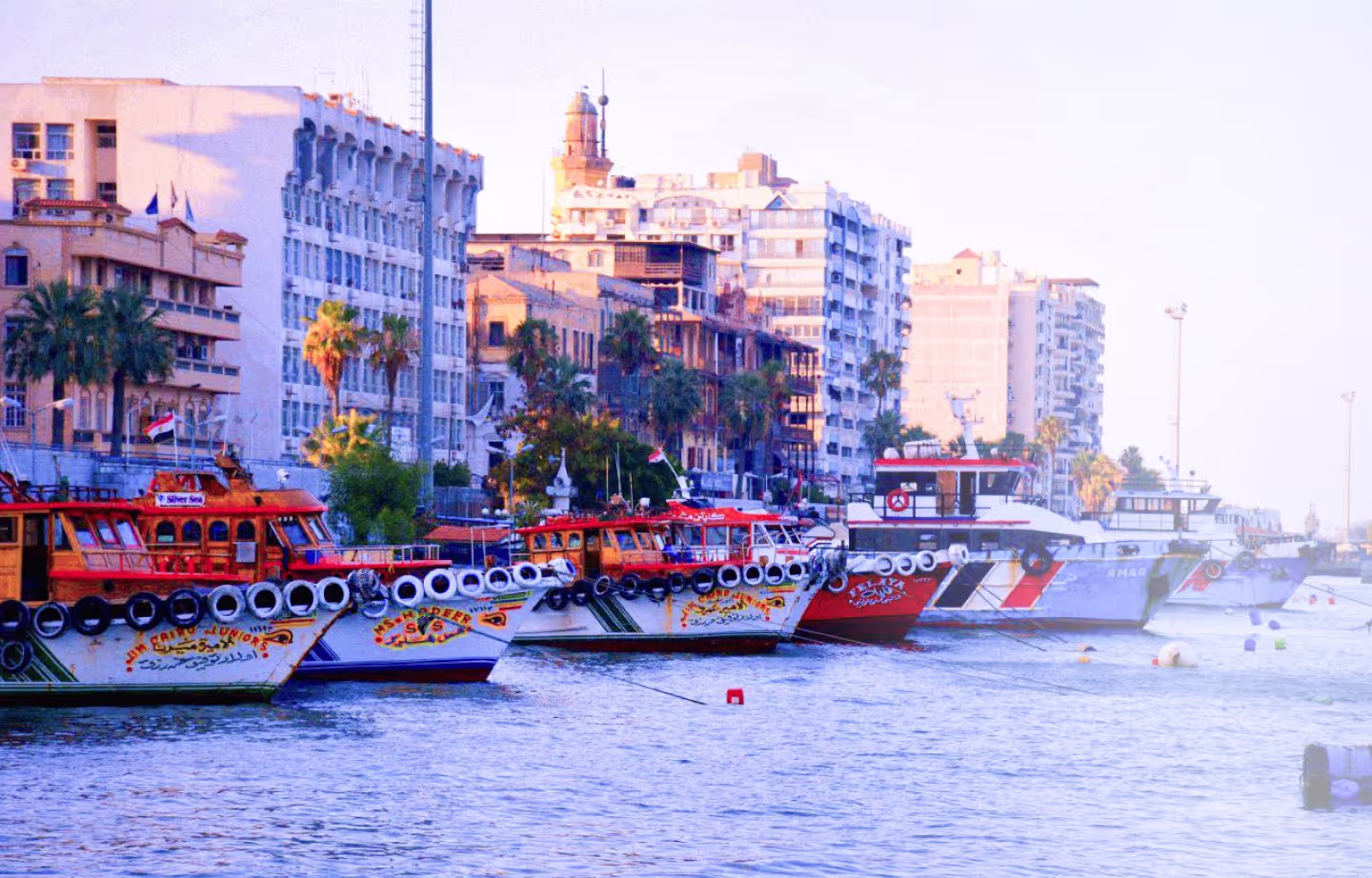
When I visited Port Said for the first time, I expected a lively city, full of stories. But it was the complete opposite, so quiet and it was almost frightening, as if it had stopped speaking long ago.
“Why does this city feel like it’s waiting for something that will never come?” I asked Fares as we walked along the corniche, the boats shimmering on the sea. “Because that’s exactly what it’s doing,” he replied with a faint smile. “Everything here changes with unbearable slowness, as if the sea is watching but never stepping in.”
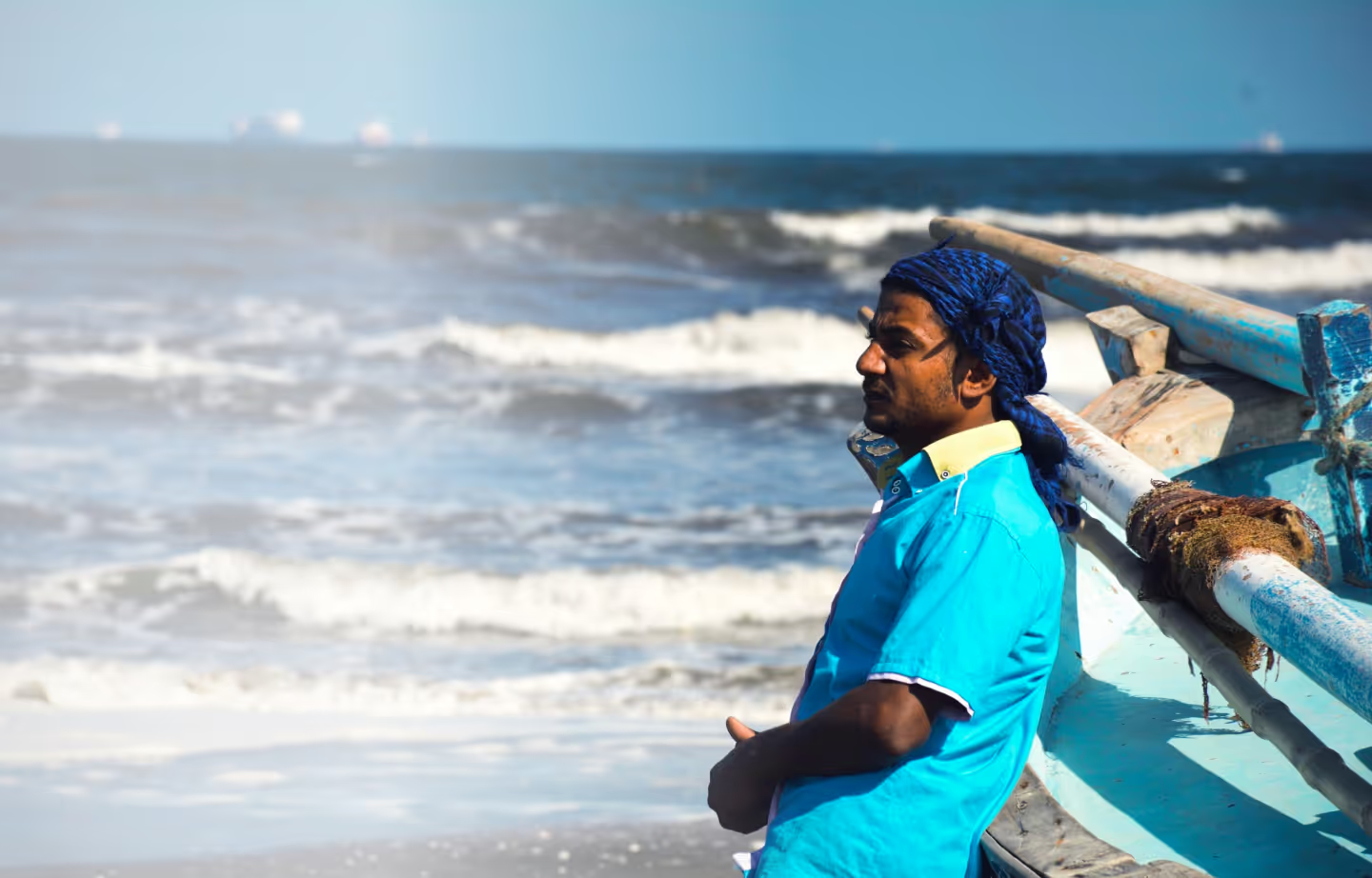
He told me that the people here are like the port, always in a state of waiting, always expecting a ship, an opportunity, a new beginning that could arrive from anywhere in the world. But I saw it differently. “I think this city is afraid of change.”
He thought of me as part of Cairo’s chaos, and I thought of him as part of the sea’s silence. We saw each other the way we saw our cities. Yet every time we tried to draw closer, I felt the distance between us was larger than just the highway connecting the two cities. The sea reflected its silence in Adam, and the crowd lived inside me. And maybe that’s why we were always searching for a place that didn’t entirely belong to me, nor to him, but somehow belonged to us both.
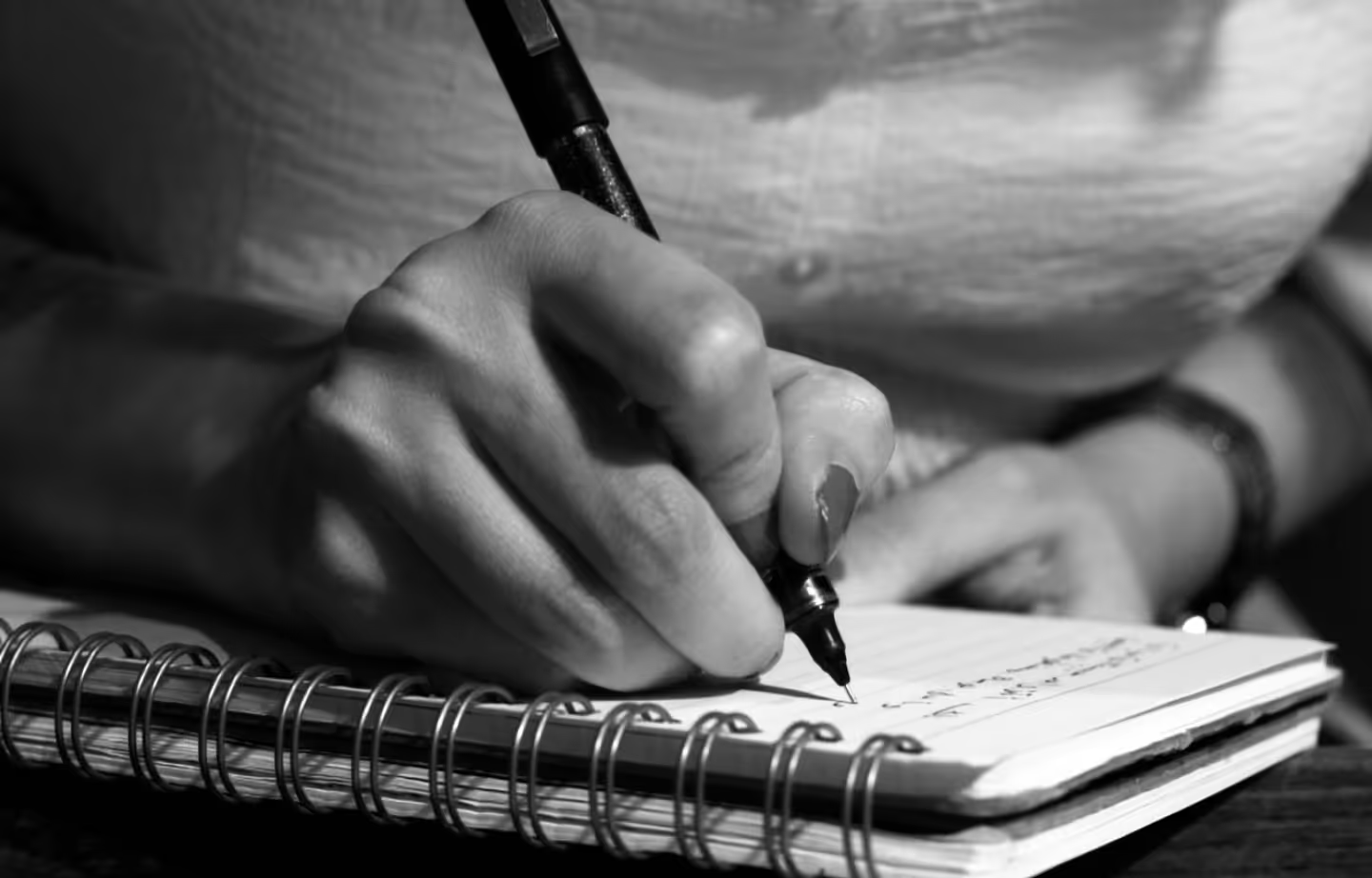
Do you see?
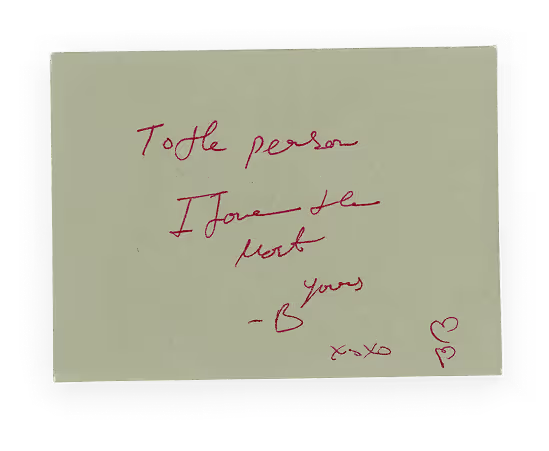
My fingers are stained with your absence!
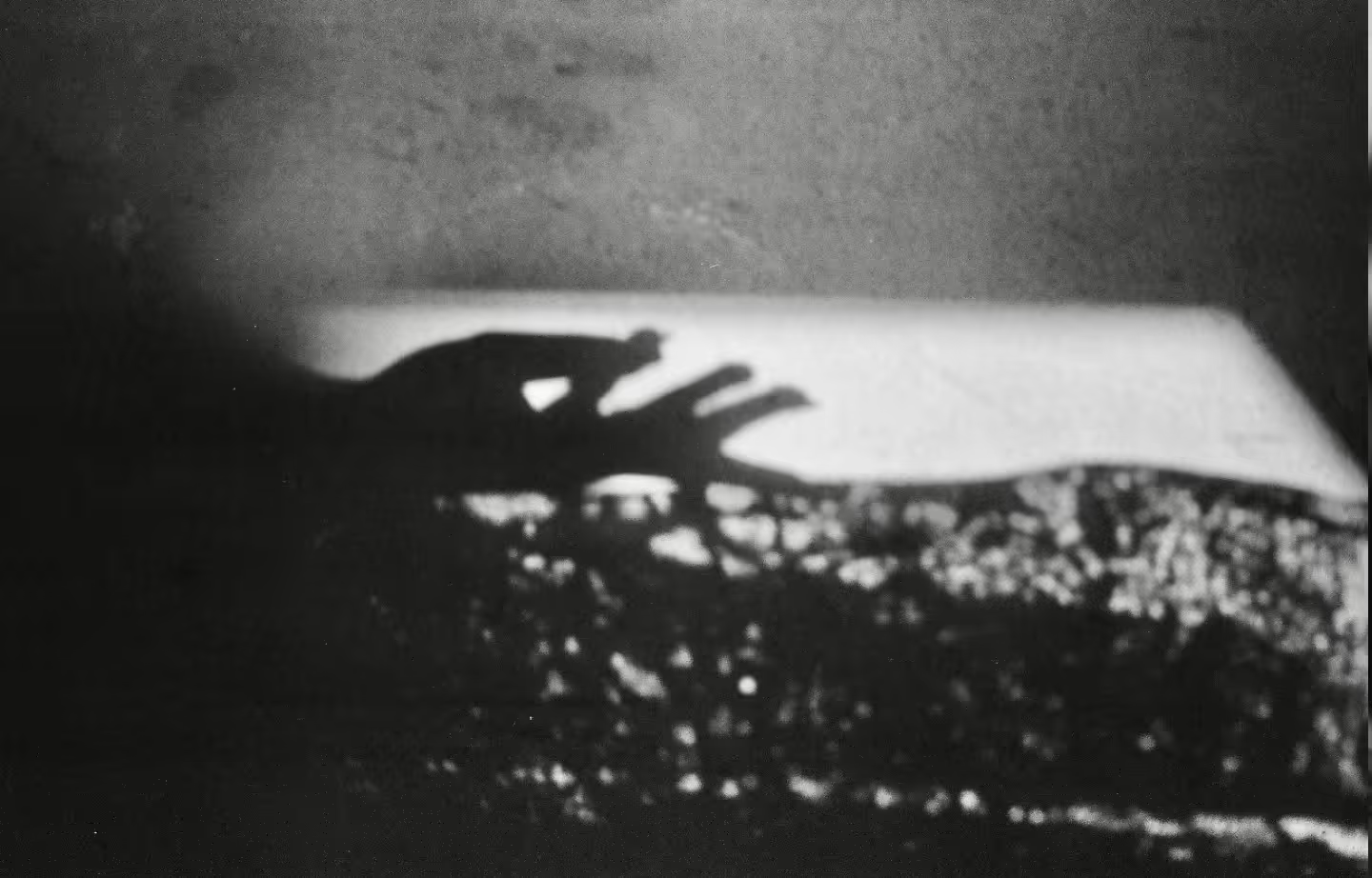
I promised my ghosts I would shake their hands whenever my hands and heart felt lonely!
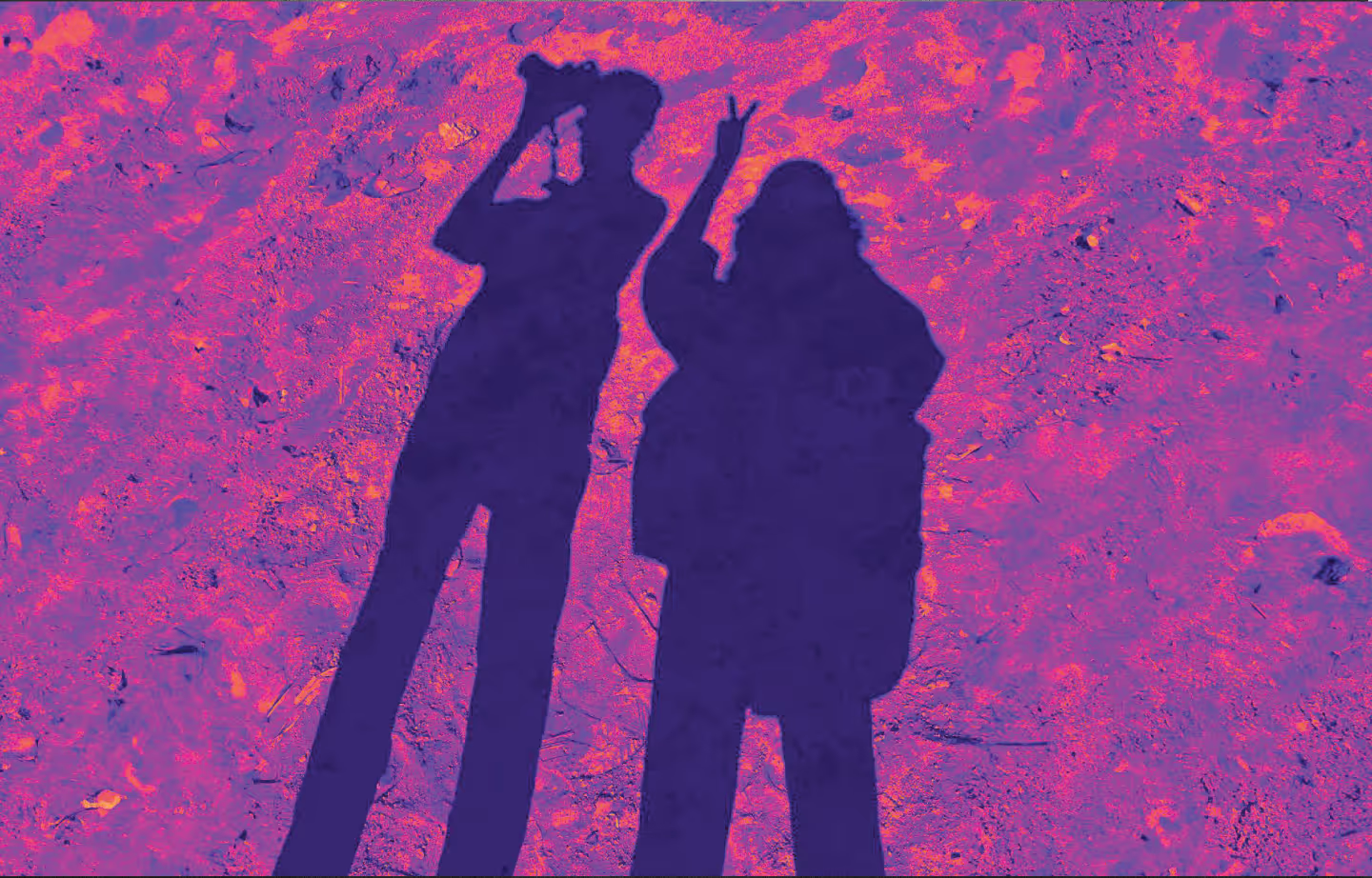
Everything began to take a different turn. The messages were no longer enough, and the sea no longer brought any comfort. We lived in two cities, yet we tried to create a third place between them.
Then came the question we never wanted to ask: “Now what?”
There are stories that never truly end. They simply return in different forms, hidden within new messages, in late encounters, in train stations and harbors we have yet to visit.
I do not know what will happen next, but I know there will be another message written. And maybe this time, it will not be the end of the story.
Distance was never just a long road stretching between two cities. It was a shadow slipping through words, hiding in silences that lingered too long, stealing the little details until nothing was left to say.
In the beginning we tried to write love down, to document it, to turn it into an archive that could withstand absence. The photos, the letters, the recordings each one was an attempt to hold onto something slowly fading away. But an archive doesn’t save a moment; it only keeps it frozen, unmoving, distant from life.
In the end, there was no grand farewell, no final dramatic scene. There was no clear decision, no audible word of “we’re done.” Only the messages stopped arriving, the eyes stopped searching in the crowd, and the cities stopped resembling one another.
And so, Adam disappeared into his city, and Eve into hers. All that remained was a memory, a passing image, an old letter that may never be opened again.
This is what real endings look like.
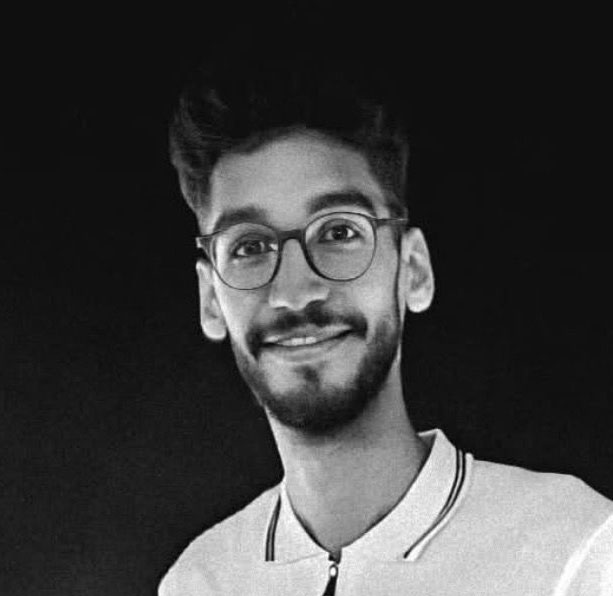
Fares El Tabey
He is an Egyptian filmmaker and visual storyteller based in Cairo. His work explores personal memory, identity, and the emotional distance within human relationships through a blend of documentary and fiction. He graduated from the Jesuit Cairo Film School and Le CinéFabrique, where he developed a deeper understanding of how films can shape the way we see, feel, and relate to love, family, and the self.
He has directed several short films, including "In the Name of the Son", "Uncaptured Photo" (French/Egyptian co-production), and he is currently developing "Between Two Shores" (French/Egyptian co-production). His films have been screened in regional and international festivals. He currently works as the General Coordinator of the Cairo Film Market at the Cairo International Film Festival.

Basma
Once upon a time, there was a girl whose favorite movie was Amelie but went out with Marline Monroe impersonator, she liked shiny things, and learning everything from movies, she began to wonder how it's made, facing the fact that death is inevitable with the blurred images of her father, she decided to go after his footsteps for a quest to be remembered by her movies , embarking on a personal odyssey to reclaim his likeness. Through the lens of old photographs and cherished stories, she began to piece together the puzzle of his life.
Driven by a desire to explore the power of storytelling, I pursued a filmmaking career through formal studies and practical experience, working on various projects and volunteering at festivals. Each role, from co-director to sound recordist, offered a new perspective on the Filmmaking process.
And like a director crafting her protagonist, I knew that mine also had to make some tough choices and the paths she had to take.
Through the magic of storytelling, she found a way to connect with her father, understand her place in the world, and inspire others to share their stories.